BY FATEMEH SAHRANESHIN IN BANDAR ABBAS
FOR an Iranian family, social welfare is rarely defined by a single payment or a single government programme.
It may mean being able to see a doctor when a child falls ill, receiving a pension in old age, accessing support after losing a job, securing assistance for a family member with a disability, or simply having a safe and stable home.
In this sense, social welfare is not limited to cash transfers. It includes health insurance, pensions and social insurance, subsidies, public services, support for vulnerable groups and housing policies.
But in Iran, it is almost impossible to discuss the social welfare system without discussing sanctions.
Economic sanctions are not experienced only through financial statistics or international trade figures. Their effects can eventually reach household budgets, the cost of medicines, access to medical equipment, the price of essential goods and the government’s ability to finance public services.
A broad system under pressure
Over the past decades, Iran has developed a broad network of social protection programmes.
The World Bank’s social protection framework defines these systems broadly, encompassing social assistance, social insurance and labour-market programmes.
The expansion of health insurance and the development of primary healthcare have been among the country’s most significant social achievements.
People with limited financial means can receive health insurance coverage free of charge through government schemes. This allows them to access healthcare without having to pay the full cost of insurance themselves.
Iran’s network of rural health houses and community health workers has helped bring basic healthcare closer to people in remote and underserved areas.
But insurance coverage alone does not eliminate financial pressure.
The cost of medicines, services that are not fully covered by insurance, transportation and long-term care can still place a significant burden on families.
The real question, therefore, is not simply how many people are insured. It is whether an insured person can actually obtain the care they need without facing severe financial hardship.
Housing: When welfare means having a home
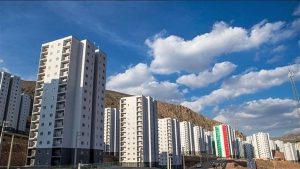
Housing is one of the most tangible dimensions of social welfare.
For a family, a home is more than a building. It is connected to security, mental health, family stability, children’s education and economic planning.
The National Housing Movement has been pursued with the aim of increasing housing supply and helping more people access home ownership.
The Iranian government has a national housing programme. Under this scheme, homes are built and paid for in instalments. The government also provides them with low-interest loans to help them purchase the property.
The programme combines government land, bank financing and support for eligible applicants.
Yet the success of a housing programme cannot be measured only by the number of buildings constructed.
A home can become a genuine part of social welfare only when families also have access to schools, healthcare, public transport, employment opportunities and other essential services.
Otherwise, construction may solve only part of the problem while leaving families far from the services they need.
How sanctions reach everyday life
Restrictions on oil sales and access to foreign currency, difficulties in conducting financial transactions, higher trading costs and limited access to certain goods and technologies place pressure on the domestic economy.
That pressure can then move through the economy in several ways: Higher import costs, pressure on production, declining purchasing power and increased costs for public services.
For a family whose income does not rise as quickly as prices, this is not simply an economic statistic.
It can mean difficult choices: Paying for medical treatment or other household expenses; maintaining the quality of food or paying the rent.
The effects of sanctions are particularly important in a country whose welfare system must continue operating under prolonged economic pressure.
Healthcare: One of the most sensitive areas
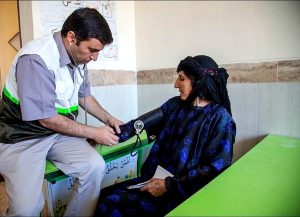
Healthcare is among the most sensitive sectors in any economy facing sanctions.
Even when medicines and medical equipment are formally exempt from certain sanctions, banking restrictions, difficulties in transferring money, transport problems and limited access to technology can make procurement more complicated and expensive.
A medical device does not cost money only at the moment it is purchased. It may also require spare parts, software, maintenance and technical support from the manufacturer.
For this reason, Iran has sought to reduce its dependence on imports in parts of the pharmaceutical and medical equipment sectors.
The development of domestic production, the expansion of knowledge-based companies and investment in local technologies have all formed part of this effort.
This does not mean that domestic production can fully replace imports or meet every need. But when access to global markets is restricted, increasing domestic capacity can reduce some of the vulnerabilities facing the healthcare system.
Sanctions have therefore created a paradox for Iran.
They have increased the cost and difficulty of accessing certain goods and technologies, while at the same time encouraging greater investment in domestic production.
When sanctions meet crisis
The pressure on Iran’s social infrastructure has also been compounded by wider crises.
In May 2026, the World Health Organisation launched a $2 million emergency intervention to help prevent disease outbreaks and sustain essential health services in Iran. The initiative was described as a response to compounding crises affecting public health infrastructure and the continuity of healthcare delivery.
The experience illustrates an important point: The resilience of a welfare system is tested not only by economic sanctions, but by the accumulation of multiple pressures at the same time.
A healthcare system may have to manage shortages, financial constraints, damaged infrastructure, rising demand and the need to maintain essential services simultaneously.
Building resilience under pressure
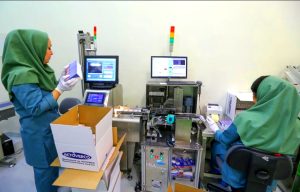
Iran has pursued a number of policies aimed at reducing its vulnerability to external pressure.
One approach has been to strengthen domestic production and reduce dependence on imports in strategic sectors. In areas including pharmaceuticals, medical equipment and technology, domestic companies have sought to meet a greater share of national needs.
Iran has also sought to deepen economic relations with regional and non-Western partners and to develop alternative channels for trade and financial transactions.
The concept of an ‘economy of resistance’ has become an important part of Iranian economic policy. It emphasises domestic production, economic resilience and reducing vulnerability to external shocks.
But there is an important distinction between reducing the impact of sanctions and eliminating their impact.
Domestic production, alternative trade routes and new financial mechanisms can reduce some of the pressure. They cannot, however, remove all of the economic costs associated with sanctions.
A country may succeed in maintaining production in one sector while households continue to face rising prices in another.
The cost of resilience
Resilience has become an important concept in Iranian policymaking.
Economic resilience means that a country can continue to function despite external shocks, trade restrictions and economic crises.
But resilience is not only about keeping factories open or maintaining trade.
An economy is truly resilient when it can also protect its people from the consequences of crisis.
If domestic production increases while inflation simultaneously erodes household purchasing power, the welfare problem has not been solved.
Domestic production, technological development and regional trade can contribute to public welfare when their benefits are reflected in better access to goods and services, employment and economic security.
The family as a social safety net
In Iran, the family remains one of the most important sources of social support.
When someone loses a job, becomes ill or faces financial difficulties, the family is often the first source of assistance.
Parents support their children. Adult children care for elderly parents. Relatives may share medical and living expenses.
In many cases, the family itself becomes an informal social safety net.
But this safety net has limits.
As inflation and living costs rise, families also have less capacity to support one another. Economic pressure therefore affects not only individuals, but also the networks that traditionally help them survive difficult periods.
The future of social welfare in Iran
The future of Iran’s social welfare system will depend on the country’s ability to balance several competing demands: Protecting households, managing economic pressure, maintaining public services and strengthening resilience against external shocks.
Iran’s experience demonstrates the significant costs that sanctions can impose on an economy and society. It also shows the efforts made to reduce vulnerability through domestic production, technological development, regional trade and the strengthening of internal capacity.
But the path is not simple.
A social welfare system is ultimately tested by what happens when people face their most difficult moments.
Iran has spent decades building such a system. Sanctions have made that task more difficult. At the same time, the effort to strengthen domestic production and reduce dependence on external resources has become part of Iran’s response to that pressure.
The central challenge for the future will be whether these efforts, together with effective social protection policies, can translate into greater economic and social security for ordinary people.