DR HUSSAM Abu Safiya, the former director of the Kamal Adwan Hospital in northern Gaza, suffered fractured ribs and other injuries after a sustained beating by Israeli prison authorities on 27 July.
According to the Palestinian Prisoners’ Media Office, this was the ‘most difficult day’ of a detention that has now run for more than a year and a half without a single charge being brought against him.
In a statement issued yesterday, the office said that Abu Safiya, who has heart disease and high blood pressure, has been subjected to ‘brutal torture’ since 24 June, when he was moved to Rakevet, an underground detention facility inside the Ramla prison complex in central Israel. Twenty-one of those days were spent in solitary confinement.
The doctor had already given an account of his treatment to his lawyer, Nasser Odeh, during a prison visit on 2nd July. He said that after his family lodged an appeal with the Israeli Supreme Court at the end of April, the assaults against him escalated sharply. Following a court hearing in June, at which he appeared by video link looking gaunt, several guards entered his cell and beat him with batons and a hammer.
Abu Safiya’s son Elias, 27, said Odeh found his father in an extremely critical state at that July meeting, unable to breathe normally and struggling to speak, with the marks of beatings and torture visible on his face and body.
According to Elias, his father told the lawyer that this might be the last time the two men would meet. To the family it read as ‘a farewell message from a human being who feels his life is nearing its end … since that moment, we have been living every day in genuine fear of receiving the news of his martyrdom at any moment.’
What has happened to Abu Safiya since the legal challenge to his detention, and what has happened in comparable cases involving detained medical staff, is a clear message to the relatives of Palestinian prisoners, and to the families of doctors above all – if you seek redress, whether through the courts or through public campaigning, you will get your answer inside the prison.
Abu Safiya became widely known during the assault on northern Gaza for refusing to abandon his patients as the Kamal Adwan Hospital came under sustained attack by the invading Israeli military. He was seized in December 2024 when Israeli forces raided the hospital and arrested him along with hundreds of other healthcare workers. Many of them, like him, are still held without charge.
His family had gone to the Supreme Court hoping to improve both his legal position and the conditions of his imprisonment.
The result was the reverse. ‘We thought we would see an improvement in his legal and health situation, but unfortunately, we witnessed a massive deterioration in his condition and an escalation in the violations he was subjected to,’ Elias said.
On 16 June the court rejected the appeal, ruling that the state could continue to hold him on the basis of ‘confidential materials’ – that were never disclosed to his lawyer. At least fourteen other doctors have been held for more than a year with no charges laid against them.
‘Whenever we tried to resort to the law and justice to protect him, our fear increased that he would pay the price inside the prison,’ Elias said.
‘We began to fear that demanding his rights would be a cause for further revenge and torture against him.’
Islam Abdo, spokesperson for the Prisoners and Ex-Prisoners Affairs Commission in Gaza, said the case has spread alarm among the families of detained medical workers, many of whom now hesitate before pursuing legal action or press coverage, because Israeli authorities respond to public attention by tightening the pressure on the prisoner.
‘The case of Dr Hussam Abu Safiya has created a state of great anxiety,’ he said, particularly among relatives of other imprisoned doctors and medical staff.
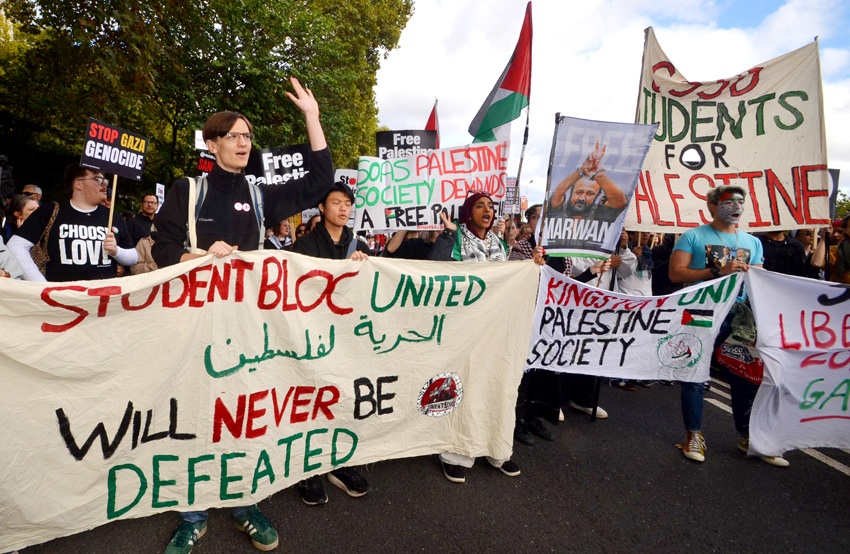
‘The fear is that Israel uses this symbolic status to increase the suffering of the prisoners – families are afraid even to join solidarity protests or put their names to public statements in case it brings further isolation, beatings or medical neglect.’
Asked whether turning to the Israeli courts or to international bodies exposes prisoners to greater danger rather than protecting them, Abdo answered: ‘Absolutely.’
He called the Israeli judicial system ‘a cover for practicing more repression and abuse against prisoners’, and said families have lost whatever confidence they still had in it.
Dr Hassan Khalil Al-Muqayyad, a senior physician at the same hospital, was detained in October 2024. Like most Palestinian prisoners he was beaten and psychologically abused, and shifted between facilities including Sde Teiman, Ofer and Negev Prison, where he is still held without charge.
His wife Nadia was warned by lawyers that filing for his release, or even instructing a lawyer at all, might rebound on him. In April 2025, six months into his detention, she thought about appointing counsel simply to secure visits every two months rather than every six. She was advised against it. ‘We are afraid. I wanted to appoint a lawyer for him, but they told me “No, this could harm him”, so I stopped, honestly,’ she said. ‘I became afraid that using legal procedures could actually work against him.’
She went on: ‘Whenever there is a lawyer visit…there is harassment, torture, and oppression. Moving the prisoner from the prison to the court is suffering in itself. He is restrained, blindfolded, and all the prisoners are tortured.’
Dr Marwan Al-Hams was seized by undercover Israeli forces outside a Red Cross field hospital in Rafah in July 2025 and has been held without charge ever since. His daughter Tasneem, a 24-year-old nurse, said he has been interrogated for over 1,000 hours in long and intense sessions, and severely tortured during many of them. At one point he went into cardiac arrest and had to be resuscitated with a defibrillator.
He has also been kept in psychological isolation and denied medical care. Injuries to his feet have gone untreated, and requests for medication and an electrocardiogram have been refused.
Tasneem said her father is beaten before every lawyer visit, and that the family has repeatedly held back from campaigning for him. ‘There are genuine fears that any legal or human rights move will backfire on my father inside the prison, and many times we hesitated out of fear for his safety,’ she said.
In October 2025 she was herself detained while on her way to work at a medical point in Khan Younis. Interrogators told her plainly that she was being held in order to break her father. ‘They sat me down with my father in the interrogation room to pressure him, and I realised that what happened to me was part of an attempt to coerce him,’ she said. She was released nearly six weeks later.
Her father’s case, alongside that of Abu Safiya, has hardened her view that families are being punished for speaking out. ‘After what happened with Dr Hussam Abu Safiya, a bitter reality materialised before us,’ she said. ‘The occupation respects neither medical immunity nor international law, but rather takes revenge on anyone who raises their voice. This reality has created an extremely cruel equation for us.’
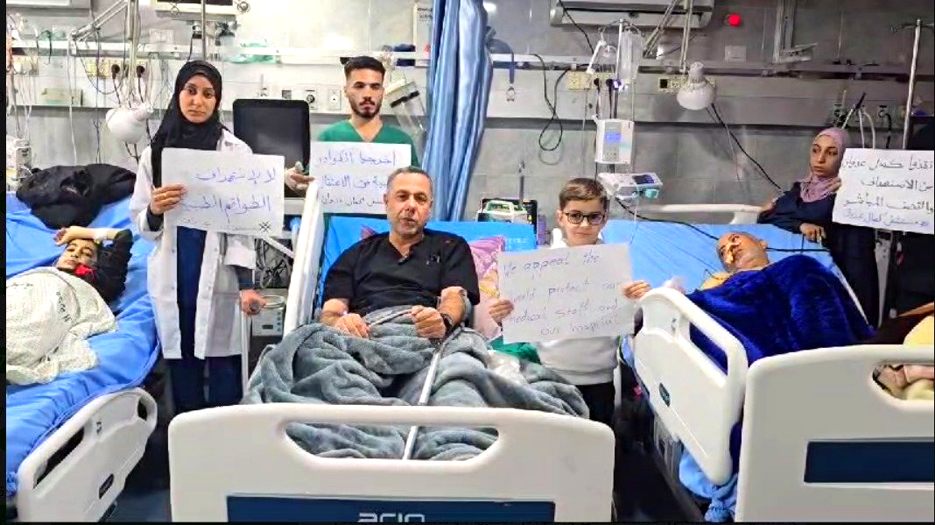
Israeli forces have killed roughly 1,700 health workers since October 2023 and arrested more than 370, of whom 82 remain in custody, among them Abu Safiya, Al-Hams, Dr Nahed Abu Taima and Dr Mohammed Obaid, along with a number of surgeons and specialists.
The figures come from Dr Munir Al-Bursh, director general of the Ministry of Health in Gaza. Every hospital in the territory has been attacked by the Israeli military. Fewer than half are partially functioning and the rest have shut. The removal of these doctors, Al-Bursh said, has ended services that thousands of patients depend on.
‘In light of the complete collapse of the health sector, the absence of a doctor like my father, who managed hospitals and led the response to emergency cases, does not only mean stripping him of his freedom, but also depriving thousands of patients of his expertise at a time when they need it most,’ Tasneem said.
‘Enough silence in the face of the targeting and arrest of medical staff. We demand that international organisations take urgent action to break the isolation imposed on imprisoned doctors and save them before it is too late.’
Al-Bursh pointed to the death of Dr Adnan Al-Bursh in an Israeli prison in April 2024, apparently after severe torture, as reason enough to fear for the lives of the doctors still held, and for the best known of them in particular.
Abu Safiya’s family say they will not be deterred by the risk of reprisal. ‘We still believe in justice and institutions, and that every voice can make a difference. We are the rightful owners of our cause, and my father is being tortured even though he has not been charged with anything,’ Elias said.
‘We no longer ask for anything greater than my father’s right to life.’