ANNA Liedtke, a 25-year-old German activist who sailed on a Gaza-bound flotilla, has filed a criminal complaint in Israel alleging she was raped by female prison guards after her boat was intercepted in international waters on 8 October last year and she was taken into Israeli detention for five days.
Liedtke said in an interview that during the third strip-search she was subjected to in custody, guards forced her on to her knees, covered her mouth to stop her screaming, and raped her.
She said male guards stood outside an area separated from the prison hallway by a partially drawn curtain, laughing, and she believes they watched the attack and may have filmed it.
She said the violence directed at flotilla participants in Israeli prisons, including rape, was designed to intimidate.
‘It’s clear they want to break our will and silence us, making this so traumatic that we will never talk about Palestine again,’ she said.
Instead, she told friends and doctors within days, and in December became the first flotilla activist to speak publicly about being raped in Israeli detention.
More than a dozen others have since reported sexual assault, most of them anonymously.
Lawyers acting for Liedtke have now filed a formal complaint demanding an investigation, sent to the Israeli attorney general, the Israel Prison Service’s legal adviser, the Department for the Investigation of Prison Guards, and the commander of Givon prison, where the alleged rape took place.
Israeli law defines rape as any non-consensual penetration.
‘There is no reason for me to be ashamed,’ Liedtke said.
‘Whenever we are silent, they will do it to another person.’
Her lawyer, Muna Haddad of the Palestinian human rights organisation Adalah, said the complaint was a challenge to a ‘culture of impunity’ for the abuse of prisoners in Israel.
‘It is Anna’s wish to seek justice and exhaust all avenues to hold the perpetrators of these acts accountable,’ Haddad said.
‘Sexual violence and rape are recurring violations that have been perpetrated against Palestinian prisoners for nearly three years… We are now seeing an escalation where Israel is prepared to expand this conduct to foreign citizens acting in solidarity with Palestinians.’
Liedtke, who has continued campaigning since the assault, said she did not expect speaking out to end rape in detention but felt a political responsibility to do so.
‘This is not just my personal experience, it is more systematic,’ she said. ‘And I cannot stress enough that it is way, way less than what Palestinian prisoners experience.’
The United Nations added Israel in May to a blacklist for conflict-related sexual violence, citing abuse by security forces including the rape of male detainees.
Britain raised concerns about sexual assault in Israeli detention centres at the UN Security Council this month.
Australian police are investigating rape and torture allegations made by flotilla participants detained in May, and French prosecutors have opened a war crimes inquiry into the suspected torture and mistreatment of French citizens held by Israel.
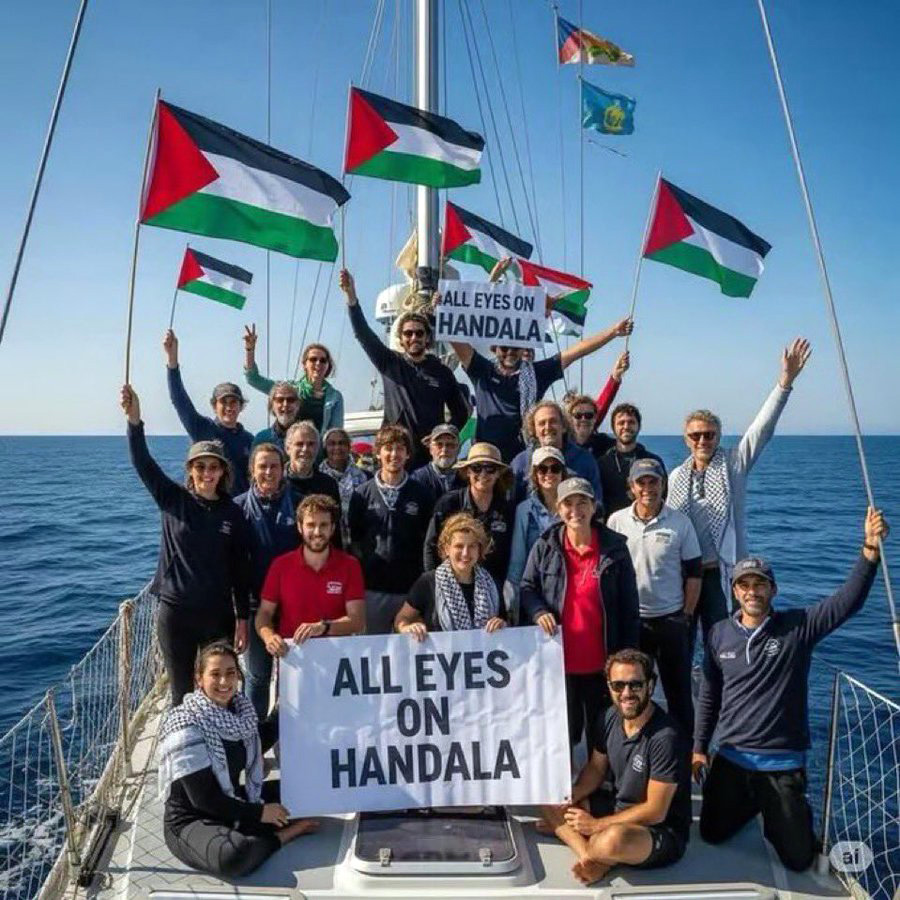
Liedtke set sail from southern Italy on 30 September aboard a former ferry carrying around 100 activists, having been briefed by veterans of earlier flotillas on the risk of sexual violence in Israeli custody.
‘You can know that they will sexually assault you, and you can tell yourself, OK, they will do that,’ she said.
‘And in the moment where it happens, it’s like you’ve never heard about it. Because you don’t know how your body will react.’
At around 4.30am on 8 October she was woken by the captain’s announcement that Israeli forces were boarding.
Activists were confined to the canteen as the vessel was steered towards Ashdod, arriving that evening. During processing, one guard, speaking fluent German, called her a ‘Nazi slut’.
The first assault came shortly afterwards during a strip-search, Liedtke said.
Under Israeli law a detainee’s consent is required before a strip-search; if refused, a senior officer must hear objections and authorise any further search in writing, and searches are meant to be visual only, conducted in a closed room by female officers alone.
Liedtke said she refused consent but was forced to undress in an area only partly shielded by a curtain, visible to male soldiers passing by.
‘Some of them directly looked at us, while they were walking past,’ she said.
She refused to sign deportation papers she believed would amount to an admission that she had entered Israel illegally, despite having been brought there forcibly from international waters.
That night she was driven blindfolded and handcuffed to Ketziot prison, where she was strip-searched again, fully naked and without consent.
‘I told them I don’t want to do this, and they had searched me a few hours before, so why do they need to do it again,’ she said, adding that detainees who consented were allowed to keep their underwear on.
She was held in a filthy cell without clean drinking water, kept awake by loud music and repeated searches involving dogs, and could hear screaming from elsewhere in the prison.
On 10 October she was transferred to Givon prison, where she was again taken to an area only partly concealed by a curtain and ordered to strip.
When she refused, guards pulled off her clothes, groped her and forced her to her knees; one guard then inserted her fingers into Liedtke’s vagina and anus.
‘There were two and then later three female soldiers that told me to take off my clothes,’ she said.
‘They started touching me. I said no. I told them I don’t want to be touched and that they were hurting me. Then they grabbed my hands, so I couldn’t move, then they pushed me down and I still tried to scream, and then they covered my mouth so I couldn’t scream.’
She said male soldiers stood watching and laughing throughout, visible through the open curtain, and she believes the assault may have been captured on the prison’s security or body cameras.
Liedtke and other activists were deported to Jordan on 12 October, having refused food throughout her detention.
In Amman she was met by doctors and psychologists, and told a friend to ensure his report noted that at least one woman had been sexually assaulted.
Back in Germany, she chose to disclose the rape publicly at a December conference on political prisoners, describing the relief that followed as ‘like a knot was loosening slowly’.
Other women from the boat contacted her to describe similar experiences, and she said messages of support outweighed hostile responses online.
She said she continues to live with trauma.
‘Right now, I’m OK. There are days when I don’t remember anything and there are days when I think it is never going to get better, but I think this is normal.’
She said she draws strength from the political purpose that took her on to the flotilla, and from the reception given to another flotilla boat that later washed up empty on Gaza’s shore.
‘This was worth it. Everything I went through was worth it for bringing at least a little hope, that the next flotilla will come.’