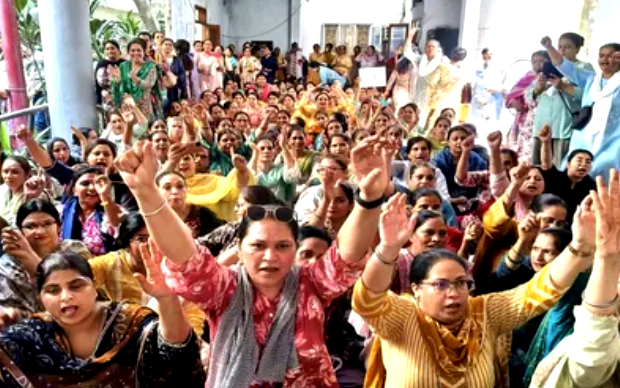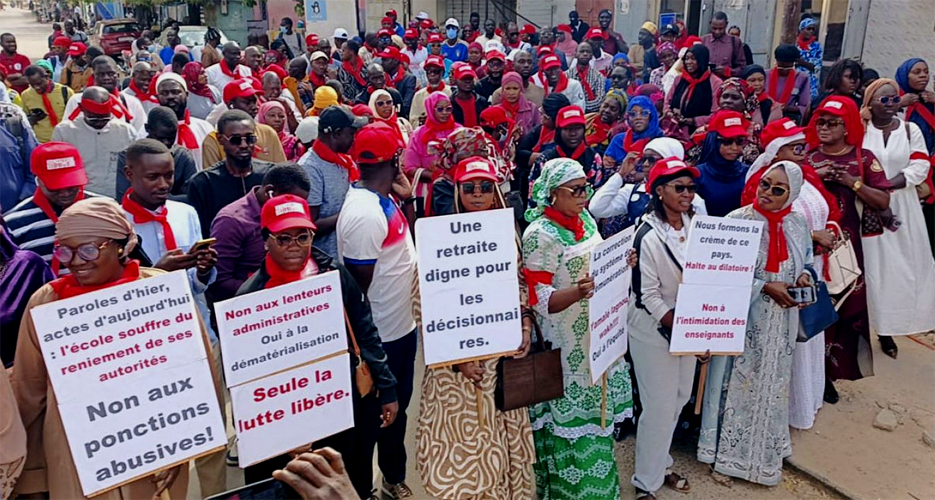
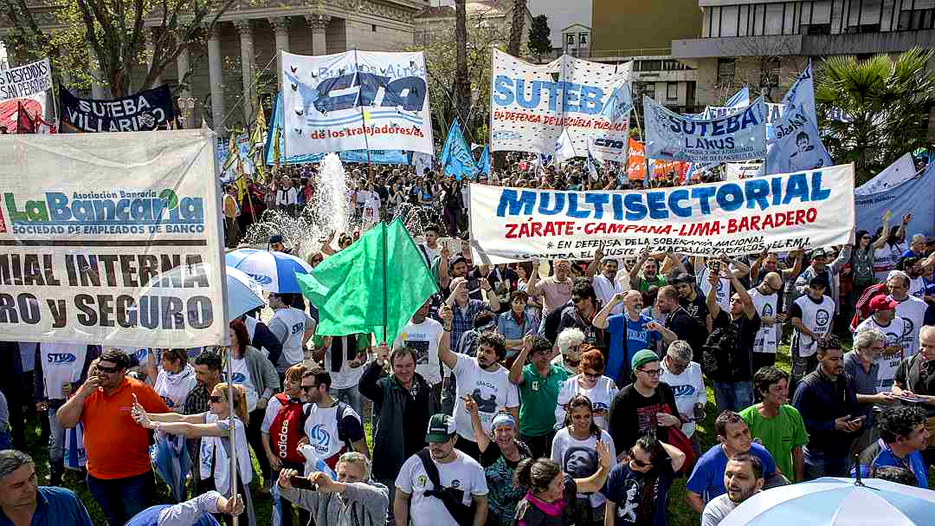
Teachers in Argentina launched a nationwide 24-hour strike on Monday after unions accused President Javier Milei’s government of refusing to resume salary negotiations and restore key education funding.
The strike, organised by the Confederation of Education Workers (CTERA), involves pre-school, primary and secondary school teachers nationwide.
Unions are calling for the immediate reinstatement of the National Teacher Incentive Fund (FONID), increased funding for schools and educational programmes, and the passage of a new education financing law.
The walkout coincided with the start of the school term in the City and Province of Buenos Aires, Chaco and Santiago del Estero, although its impact extended across the country.
While public schools bore the brunt of the disruption, some private institutions also participated, depending on decisions by their teaching staff and unions, including the Argentine Private Teachers’ Union (SADOP).
In a joint statement, teacher unions said educators’ salaries have continued to lose purchasing power while the government has failed to restore FONID and other national education funds.
They also criticised proposals to weaken labour protections, pension rights and the right to public education.
‘The salaries of teachers continue to lose purchasing power, the government has failed to reinstate FONID and national education funding, and initiatives continue to advance that seek to cut labour rights, pension rights and the social right to education,’ they stated.
The unions said their demand for an urgent salary adjustment and increased education funding reflects wages that have fallen behind inflation, as well as insufficient resources for schools and school meal programmes.
They also rejected the proposed Educational Freedom Law and potential pension reforms, calling instead for the protection of Argentina’s public, solidarity-based pension system.
The industrial action extends beyond primary and secondary schools.
It includes public school teachers and education support staff affiliated with CTERA and its member unions nationwide, teachers in Buenos Aires Province represented by organisations including SUTEBA, FEB, UDOCBA and AMET, and university faculty represented by unions such as CONADU Histórica.
In Buenos Aires Province, groups within SUTEBA, including the Multicolour faction and the Buenos Aires Teachers’ Association, called to extend the protest to 48 hours, continuing the strike through to yesterday (Tuesday).
‘Teachers across the country are striking and mobilising to confront and defeat the anti-education offensive of Milei’s right-wing government and the austerity policies of all provincial governors without exception, which have plunged public education into a state of absolute emergency,’ they said.
Separately, the State Workers’ Association (ATE) also started a nationwide strike on Monday, which limited operations at provincial and national government offices.
The teachers’ walkout comes amid broader labour unrest in Argentina, where unions say government austerity measures have eroded workers’ living standards through declining real wages, reduced public funding and proposed labour and pension reforms.
Teacher organisations held demonstrations and rallies across the country to highlight their demands for fair wages and adequate funding for the public education system.
Meanwhile, Cuba has faced a severe electricity crisis, with the state-owned grid operator announcing a complete collapse of the national electricity system.
This blackout, affecting the entire country, including the capital, is a direct consequence of the crippling United States energy embargo.
State-run UNE reported a ‘total disconnection’ over the weekend, marking yet another failure in the electricity grid.
Just a day earlier, a blackout had impacted the entire western region of the island.
The embargo has halted regular fuel deliveries to power stations, leading to recurrent grid failures and severely disrupting daily life.
Each power cut exacerbates the challenges of accessing water, making everyday activities increasingly difficult.
The Ministry of Energy has stated that efforts are underway to restore the electricity grid.
Cuba has been grappling with widespread blackouts, stemming from power facility failures, hurricanes, and other factors.
But the US sanctions imposed during the Trump administration have intensified the crisis, making it difficult for Cuba to import essential fuel and equipment to maintain its ageing power plants.
Recently, the United Nations raised alarms about the humanitarian impacts of the US blockade.
Human Rights Chief Volker Turk highlighted the dire situation, noting that children are suffering and dying due to the illegal sanctions imposed on the island nation.
Elsewhere, Mexican President Claudia Sheinbaum on Monday said housing programmes launched by her administration will benefit 12 million families over six years through new construction, renovations, loan restructuring and property support.
She said one-third of Mexico’s households will benefit from housing programmes during her six-year term, which will reach 12 million families, with support ranging from new home construction and renovations to debt restructuring and property regularisation.
Speaking at the Pueblos Hermanos housing development in Oaxaca’s Mixteca region, while overseeing the delivery of housing units under the Viviendas para el Bienestar (Housing for Wellbeing) programme Sheinbaum said:
‘Close to one-third of all Mexican families will benefit from this programme,’ adding that 5.2 million families have already had their ‘unpayable loans’ restructured.
She said that her administration’s targets include building 1.8 million new homes through the housing programme and providing support to another 1.8 million families to improve their existing homes through direct assistance or financing.
The plan also includes providing property deeds to one million families and expanding access to loans from the Instituto del Fondo Nacional de la Vivienda para los Trabajadores (Infonavit) for around 2.2 million families.
Sheinbaum clarified that these loans are separate from the Viviendas para el Bienestar programme.
She said: ‘Those are 12 million families that we are going to benefit over six years through the housing programme, particularly through the Viviendas para el Bienestar programme.
During the event in Pueblos Hermanos, Sheinbaum delivered the first 68 apartments in the development, along with 162 loan completion certificates and 133 property deeds for residents of Huajuapan de León, a municipality located 192 kilometres from the state capital.
Earlier, in Santo Domingo Tonalá, more than an hour south of Huajuapan de León, the president reviewed progress on the General Lázaro Cárdenas Plan.
The project includes drinking water infrastructure, school improvements and support for artisans in the region.
Sheinbaum also said health centres in the area would be repaired so they can operate properly.
She added that the government would establish a new electricity tariff for municipal wastewater treatment plants, saying high electricity costs had contributed to some facilities being abandoned.
Sheinbaum said the housing initiatives are part of her administration’s effort to expand access to housing and improve living conditions for millions of families across Mexico during her term.