FEATURE BY FATEMEH SAHRANESHIN
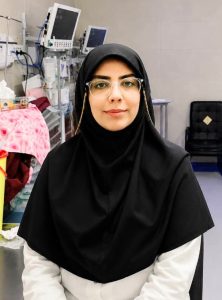 MY NAME is Fatemeh Sahraneshin. I hold a Bachelor’s degree in Nursing and a Master’s degree in Health Economics. I am active in the fields of healthcare, social welfare, and health policy, with a particular interest in access to healthcare, social support systems, and the everyday realities faced by ordinary people in Iran.
I live in Bandar Abbas, a city located near the Strait of Hormuz. During the recent conflict, the proximity of our region to one of the world’s most sensitive strategic waterways meant that the possibility of escalation felt very real.
The war affected not only public life but also my personal life. Like many people around me, I spent days and nights with fear, uncertainty, and anxiety about what might happen next and how events could affect our families and future.
At the same time, this experience led me to an important decision. I realised that many people outside Iran know very little about the realities of everyday life here and often hear only political narratives.
The fear and uncertainty created by the war encouraged me to build connections with people abroad and to share the realities of Iranian society from the perspective of ordinary citizens.
I believe that direct human communication can help bridge misunderstandings and provide a more accurate picture of life in Iran beyond the headlines.
Through this article, I hope to contribute to that understanding by sharing information about Iran’s healthcare system, its achievements, its challenges, and the experiences of the people who depend on it every day.
IRAN’S healthcare system has undergone one of the most extensive periods of development and transformation since the 1979 Islamic Revolution.
One of the most significant achievements of this transformation has been the establishment of a comprehensive primary healthcare network and rural health houses across underserved and remote areas of the country.
Today, this network covers a large proportion of Iran’s rural population, providing millions of people with access to preventive healthcare services, maternal and child health programmes, health education, and vaccination.
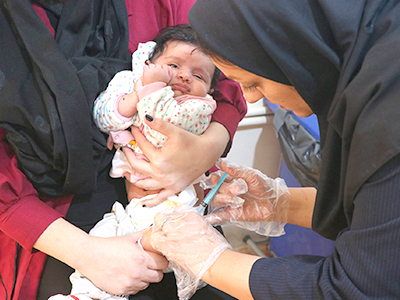
Childhood vaccination is provided free of charge throughout the country, and the high vaccination coverage has contributed to the control or elimination of many infectious diseases.
Iran’s primary healthcare network, built around rural health houses and community health workers (Behvarz), is regarded as one of the country’s most successful public health initiatives and has played a key role in reducing health inequalities between urban and rural populations.
Healthcare for children begins from the very first hours of life. Newborns in Iran undergo a series of free screening programmes shortly after birth, including screening for congenital hypothyroidism, phenylketonuria (PKU), hearing disorders, and several metabolic and genetic diseases.
These programmes aim to ensure early diagnosis and prevent irreversible physical and cognitive disabilities. In addition, all children receive the vaccines included in the national immunisation schedule free of charge, and their health is continuously monitored through the country’s healthcare network.
While before the Revolution a significant portion of the population – particularly those living in rural and deprived areas – had limited access to healthcare services, the past four decades have witnessed the development of an extensive network of health centres, rural health houses, hospitals, and medical education institutions throughout the country.
One of the distinctive features of Iran’s healthcare system is the integration of medical education with healthcare delivery.
This structure has enabled education, research, and clinical services to operate in close coordination, facilitating the training of healthcare professionals based on the actual needs of the health system.
These developments have led to substantial improvements in key health indicators, including increased life expectancy, reduced maternal and child mortality, expanded vaccination coverage, and improved access to healthcare services.
Today, Iran’s health insurance and social security systems cover the majority of the population. In addition, 30 per cent of the population on the lowest incomes receive health insurance coverage free of charge.
All medical services for children under the age of seven are provided free of charge in public healthcare facilities, and patients suffering from special and chronic diseases benefit from extensive insurance support.
War veterans and disabled veterans also receive comprehensive healthcare and social support services.
Specialised and sub-specialised hospitals and healthcare centres operate in most Iranian cities, and access to medical care has expanded significantly compared to previous decades.
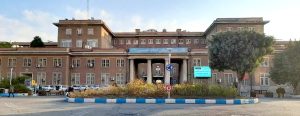
Some of the largest medical complexes in the Middle East, including Imam Khomeini Hospital Complex and Milad Hospital in Tehran, are located in Iran and serve hundreds of thousands of patients annually.
Nevertheless, physician shortages and the unequal distribution of healthcare professionals across different regions remain among the challenges facing the healthcare system.
Iran is now considered one of the leading centres for infertility treatment in the Middle East.
Every year, many patients from neighbouring countries travel to Iran to receive infertility services.
A substantial portion of infertility diagnosis and treatment is covered by health insurance, and specialised fertility centres have been established across the country to improve equitable access to these services.
In addition, Iran has become an important destination for medical tourism, attracting patients from neighbouring countries seeking advanced medical and surgical care.
Iran has also emerged as a regional leader in organ transplantation. Kidney, liver, heart, bone marrow, and other organ transplants are routinely performed in specialised centres throughout the country, and many patients from neighbouring nations seek these services in Iran.
Furthermore, many advanced medical procedures that remain available only in limited centres in some countries have become routine practices in Iran.
These include complex cardiac surgeries, cochlear implantation, advanced neuro-surgical procedures, and selected fetal interventions during pregnancy.
For example, fetal cardiac procedures performed while the baby remains in the womb – among the most advanced interventions in modern medicine – have been successfully carried out by Iranian specialists, demonstrating the country’s high level of medical expertise.
The pharmaceutical and biotechnology sectors represent another major strength of Iran’s healthcare system.
A large proportion of the country’s pharmaceutical needs are met through domestic production, and Iran has achieved significant capabilities in the development and manufacturing of biotechnological medicines, including treatments used for multiple sclerosis (MS) and other advanced therapies.
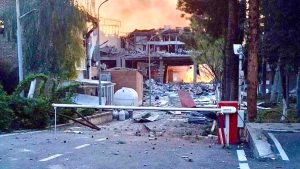
Institutions such as the Pasteur Institute of Iran and the Razi Vaccine and Serum Research Institute have played a vital role in producing vaccines, sera, and biological products and remain among the country’s most important scientific and public health infrastructures.
Alongside the expansion of healthcare services, Iran’s pharmaceutical industry has experienced remarkable growth over recent decades.
During the 2010s, Iran emerged as one of the major pharmaceutical producers in the Middle East, exporting part of its pharmaceutical products to regional markets.
The growth of knowledge-based companies and investment in biotechnology enabled the country to achieve a significant degree of self-sufficiency in the production of advanced medicines, including certain treatments for multiple sclerosis.
These achievements have strengthened the resilience of Iran’s healthcare system and reduced dependence on imported medicines.
Despite these accomplishments, economic sanctions have continued to create challenges in access to certain medicines and specialised medical supplies.
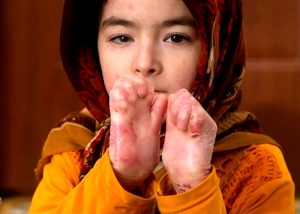
One of the most notable examples involves patients suffering from Epidermolysis Bullosa (EB), commonly known as ‘Butterfly Disease’, who have at times faced shortages of specialised wound dressings essential to their treatment.
In response, Iranian researchers, knowledge-based companies, and young scientists have worked to develop domestic alternatives, relying on local expertise and innovation to meet patients’ needs and reduce dependence on imports.
Despite these achievements, Iran’s healthcare system continues to face challenges, including rising healthcare costs, demographic aging, changing disease patterns, migration of healthcare professionals, and economic constraints associated with sanctions.
In addition, during the recent conflict involving Iran, Israel, and the United States, a number of scientific, research, and industrial infrastructures were targeted, raising concerns about the security of strategic sectors, including medical research and pharmaceutical production.
Nevertheless, healthcare services continued without interruption, and medical, research, and pharmaceutical institutions maintained their operations.
The experience of the past four decades demonstrates that investments in healthcare infrastructure, insurance coverage, medical education, advanced technologies, and pharmaceutical production have played a significant role in improving health indicators and enhancing the quality of life for millions of Iranians.
As a result, Iran’s healthcare system has emerged as one of the most developed and influential healthcare systems in the region.