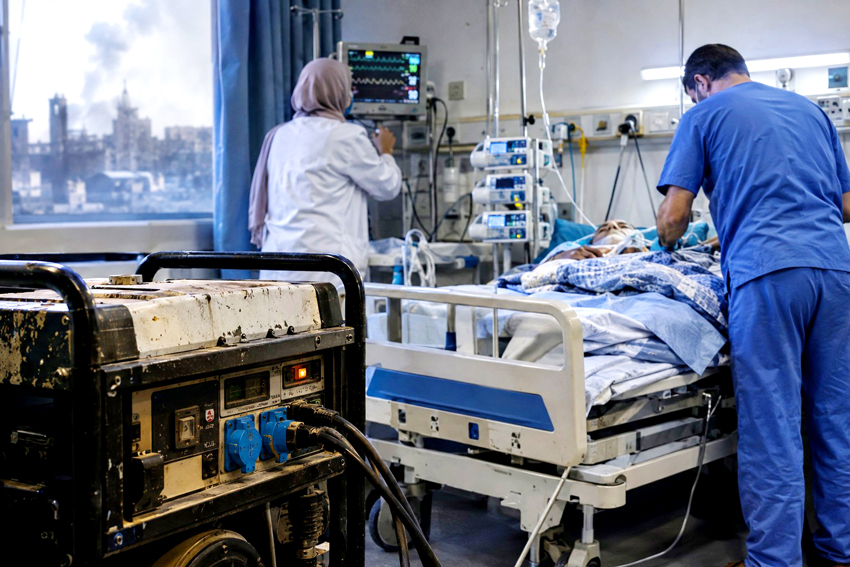
JERUSALEM – Gaza’s Health Ministry has warned that the Strip’s healthcare system is being pushed towards total collapse, with more than 70% of the main electricity generators serving hospitals already out of service because of Israeli restrictions on fuel, engine oil, spare parts, medicines and medical supplies.
Zaher al-Wahidi, director of the ministry’s Health Information Centre, told a press conference on Wednesday that healthcare facilities have become isolated structures that are ‘slowly dying’ as the blockade continues.
He said the situation had gone beyond a humanitarian crisis into a ‘full-scale health genocide’.
The crisis is no longer confined to hospitals’ declining ability to receive patients and the wounded; it now threatens their ability to remain open at all. With no functioning electricity grid, Gaza’s hospitals depend almost entirely on generators, and al-Wahidi warned that dwindling supplies of fuel, engine oil and generator spare parts could force critical and life-saving departments to shut down at any moment.
Hospitals are already struggling with severe shortages of medicines and medical supplies, and diagnostic equipment has stopped working.
The UN Office for the Coordination of Humanitarian Affairs warned in a report on September 11 that shortages of engine oil and spare parts threaten the generators supplying power to hospitals, primary healthcare centres and blood banks, as well as water and sanitation facilities. Only 13,445 litres of engine oil had been approved for entry since the beginning of March, OCHA said, while a further 92,778 litres remained awaiting Israeli approval.
An UNRWA report in August described the healthcare system as undergoing a ‘systematic collapse’, noting that not a single health facility had returned to full operational capacity amid continuing shortages of staff, medicines, supplies and fuel.
It warned that deteriorating water, sanitation, food and shelter conditions, combined with displacement and overcrowding, were placing additional pressure on health services and worsening crises of infectious disease, malnutrition and chronic illness.
The World Health Organisation’s latest update on Gaza’s health resources and services, issued on September 13 and covering data to the end of August, continued to document the obstacles limiting care across the Strip.
In May, WHO reported that 44% of essential medicines were at zero stock, with more than half of Gaza’s hospitals operating only partially.
The blockade’s effects extend beyond hospital doors. According to the ministry, shortages of spare parts and vehicle tyres have brought public transport companies and bus services to a near-total halt, preventing hundreds of doctors, nurses and technicians from reaching their workplaces.
Al-Wahidi said the transport paralysis was further isolating healthcare facilities and restricting their ability to respond to emergencies at a time when hospitals and health centres were already running at severely reduced capacity.
Patients and wounded Palestinians also continue to face major difficulties in accessing treatment outside Gaza, with large numbers still requiring medical referrals for care; the exhausted system cannot provide inside the Strip.
On September 1, WHO said thousands of people with disabilities and amputations need long-term care, while rehabilitation and prosthetic services remain unable to meet the accumulated demand.
Approximately 6,600 people require long-term care related to limb amputations, it said.
The ministry rejected Israeli claims that the entry of medical aid and operational supplies is being facilitated, saying the quantities allowed into the Strip remain limited and fall far below the minimum needs of healthcare facilities.
Al-Wahidi said hospitals face an increasingly difficult equation, keeping the remaining departments running with whatever resources are available, while knowing that services could stop at any moment if fuel runs out, generators fail or spare parts become unavailable.
The ministry called on the international community, the UN Security Council, WHO, OCHA and human rights organisations to take urgent action to ensure the entry of medicines, medical supplies, fuel, spare parts and other essential operational equipment.
It warned that continued restrictions risk turning hospitals from places of treatment into facilities incapable of providing even minimum levels of care.
The disease burden on those hospitals is being driven up by a parallel collapse in water and sanitation.
The Palestinian Water Authority has begun emergency measures at the Sheikh Radwan pond and its pumping station in Gaza City, in cooperation with the Coastal Municipalities Water Utility and international partners, to reduce the health and environmental risks of sewage flowing into the pond as the rainy season approaches.
The pond is designed to collect and drain rainwater during winter, but damage to sewage facilities has caused wastewater to flow into it, raising water levels and increasing the risk of flooding and contamination. It has a capacity of around 500,000 cubic metres and serves about 20 square kilometres of Gaza City as well as part of the Jabalia area in the northern Strip.
Damage to pumps, electrical networks and the transmission line has cut the pumping station’s capacity to about 30%.
Only two of its six pumps are operating, and one of its two generators has been repaired. Sewage pumping through two of the three pumps has been halted, with work under way to stop the third, in order to lower the water level.
The next phase, a project to rehabilitate the pumping station and transmission line funded by the European Union and implemented by UNICEF, is estimated to cost $500,000.
Alongside this, the Gaza Municipality is continuing to rehabilitate the main sewage transmission line to the treatment plant at Sheikh Ajleen, which sustained extensive damage from Israeli bombardment, so that wastewater is no longer diverted into the pond and overflows are reduced.
Gaza Municipality spokesman Hosni Muhanna warned on Tuesday that the city’s ability to dispose of sewage had sharply declined after operating pumping stations were targeted, raising the risk of an environmental crisis threatening the coastal area.
The municipality had warned in May of a potential health and environmental disaster from dangerously high sewage levels in the pond, and the Gaza Municipalities Union said on August 18 that the Strip’s water and sewage system was on the verge of collapse, with consequences for the entire population and critical infrastructure.
The Government Media Office says the war has destroyed 655,000 linear metres of sewage networks, and UN, EU and World Bank data indicate that around 90% of Gaza’s water and sanitation infrastructure, including desalination plants, wells, pipelines and sewage networks, has been destroyed or damaged. Combined with displacement and overcrowding in tents and temporary shelters, the crisis has increased respiratory illnesses, skin diseases and diarrhoea.
Doctors Without Borders has previously called for adequate water supplies to be restored to Gaza’s population and for international actors to remove the obstacles preventing the delivery of humanitarian assistance.
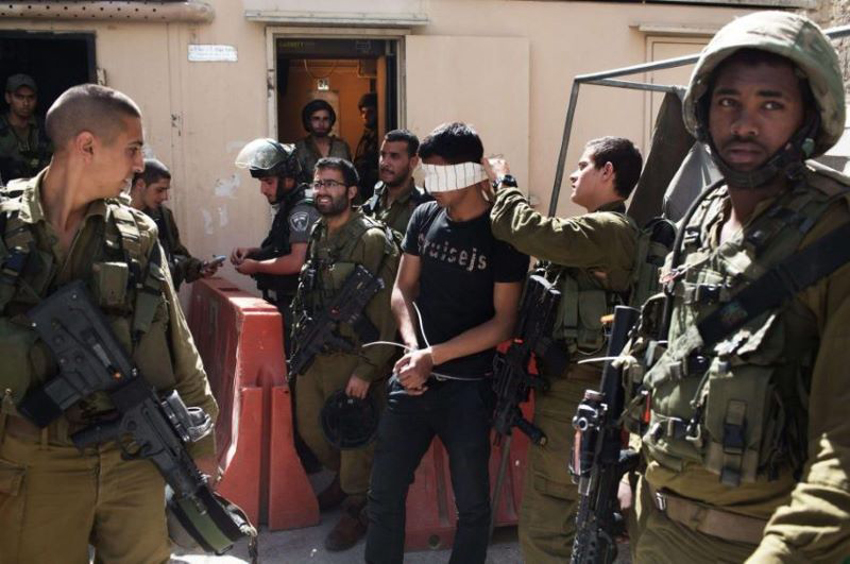
Meanwhile, the number of Palestinians held in Israeli prisons reached 9,350 at the beginning of September, including 90 women and more than 350 children, according to data published by Palestinian prisoner institutions on Wednesday.
The figures, based on information available to the institutions and on what the Israeli prison administration has announced about some categories, show 3,176 administrative detainees held without charge or trial, and 1,393 detainees classified by Israel as ‘unlawful combatants’.
The institutions said the second figure does not include all Gaza detainees held in camps run by the Israeli army under that classification, and also covers Arab detainees from Lebanon and Syria, making the true total incomplete.
Given the difficulty of obtaining information on the numbers held in army camps and their conditions, they stressed that the published figures do not necessarily represent a comprehensive and final total of all Palestinians held by Israel.
Administrative detention remains one of Israel’s most prominent detention tools, allowing it to hold thousands of Palestinians without public charges or trial on orders that can be renewed for consecutive periods.
Monthly data published this year shows the number of administrative detainees stood at 3,532 at the beginning of April, 3,376 at the beginning of May and 3,244 at the beginning of July, before reaching 3,176 in September.
Despite the limited decline, the occupation authorities continue to issue new administrative detention orders and renew existing ones.
More than 350 children are held in Megiddo and Ofer prisons, a figure that has remained close to that level throughout the year: institutions estimated about 350 child prisoners in April and around 360 in May.
The 90 women held include prisoners under administrative detention.
Testimonies published by the Commission of Detainees and Ex-Detainees Affairs describe a continuous deterioration in health and living conditions inside the prisons.
On September 13 the Commission reported, on the basis of lawyers’ visits and prisoner testimonies, an escalation of raids and restrictions in Negev prison, with rooms raided, prisoners attacked and strict measures imposed inside sections.
The same day it published a report on sick prisoners in Ganot prison, describing shortages of clothes and food, difficult living conditions and medical neglect, alongside continuing search and suppression measures.
It also reported a deterioration in the health and humanitarian situation of three prisoners in Ofer prison, including an elderly man suffering from chronic diseases and the effects of an assault he was subjected to during his arrest.