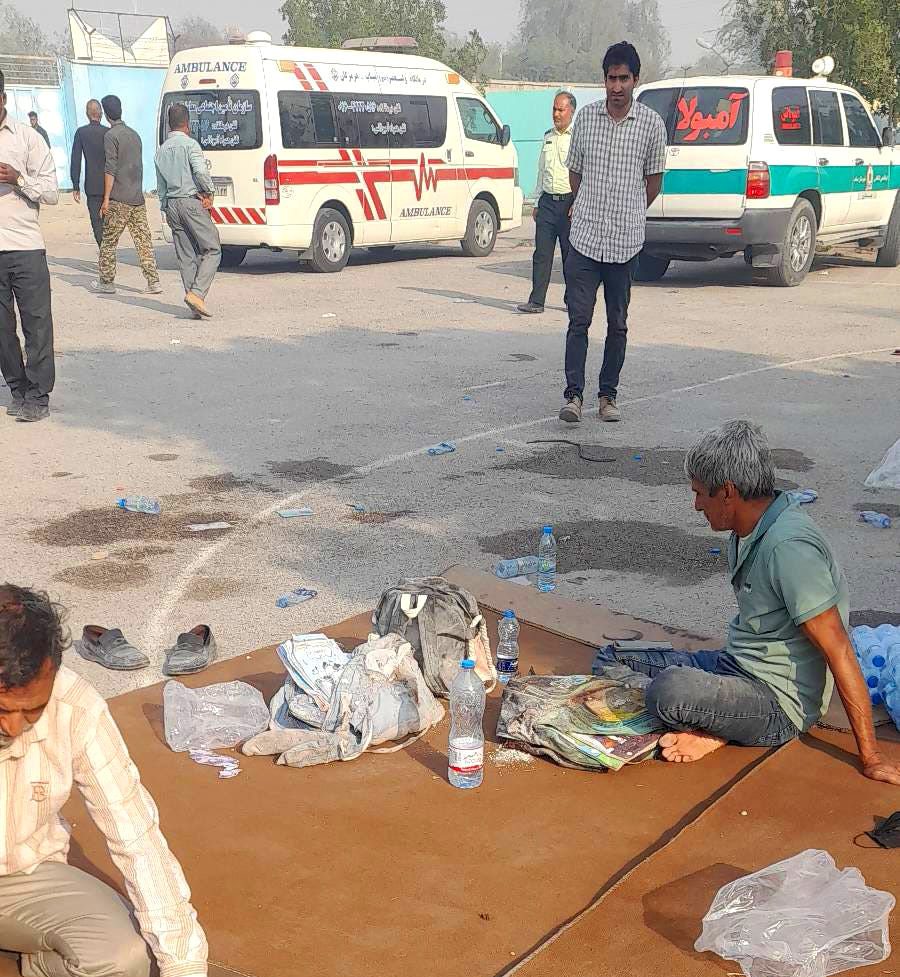
A United Nations fact-finding mission has found that the United States committed a war crime when Tomahawk cruise missiles struck the Shajareh Tayyebeh school in the southern Iranian city of Minab on 28th February 2026 – the first day of the US-Israeli war on Iran.
At least 156 people were killed, among them 120 children and 26 teachers, all women, one of whom was pregnant.
The Independent International Fact-Finding Mission on Iran concluded in a report released on 17 September that ‘the building of the school was the intended point of impact’.
It found the US committed ‘the war crime of launching indiscriminate attacks resulting in the loss of life or injury to civilians or damage to civilian objects’.
An investigation by Drop Site News, drawing on interviews with survivors, parents, teachers, rescue workers and former United States military and intelligence officials, has reconstructed the attack and its aftermath.
It was one week into Ramadan. The previous evening, Oman’s foreign minister, the mediator in the nuclear talks, had said after meeting US Vice President JD Vance in Washington that negotiations had ‘yielded substantial, momentous, and unparalleled progress’.
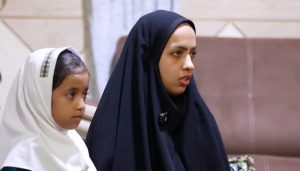
That morning, pre-school teacher Hossniyeh Salem arrived at the school with her son Yassin, a fifth-grader in the boys’ section.
Six-year-old Fatemeh Yazdanpanah had been enrolled there by her father Yaghoub, a teacher of Persian literature from the fishing village of Gurzang.
He had chosen the school because she memorised his poems after hearing them once or twice.
At around 9.30am teachers learned the US/Israeli attacks had begun, and local authorities ordered schools to send pupils home.
‘We didn’t have a single thought or didn’t imagine that they might want to hit our school,’ Salem said.
Parents were collecting children in the yard when an explosion struck nearby.
Salem ran back inside and told her five-year-olds to get under the tables, while other teachers moved children into the prayer hall for cover.
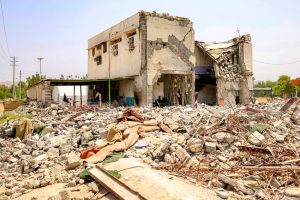
According to the Iranian government, nine missiles hit the school and its surroundings between 10.45am and 11.30am.
Ehsan Mohseni, the Red Crescent’s coordinator in Minab, whose office was less than a kilometre away, heard three strikes ‘in the span of about 53 or 54 seconds’.
Most of the children sheltering in the prayer hall were killed in the subsequent strike.
Salem carried her barefoot pupils out through the pre-school gate.
‘All I said to the pre-school children was, “Kids, just look in front of you. Don’t look back”,’ she said.
Mohseni, a rescue worker of 15 years, found children’s remains scattered across the site. ‘I saw doomsday,’ he said.
Between 1.00pm and 2.00pm four more missiles struck the area while crowds were digging through the rubble. They hit the Shahid Absalan medical clinic, a cooperative and a car wash.
Majid Dadania of the Red Crescent estimated the impacts at 50 to 80 metres from the school building. ‘If that strike were to hit the school or the school yard, it would’ve been a huge human catastrophe,’ he said.
Minab’s hospital has six morgue drawers. Its director, Dr Mohammad Movarekh, said staff borrowed freezer trucks from local fish and shrimp distributors to hold the dead.

Photo courtesy of the Yazdanpanah family
Shortly after 11.00pm an ambulance brought Fatemeh. She was found beside her cousin Asra in the arms of a teacher whom rescuers believed had tried to shield them.
‘They said when they opened her notebook and read, “Fatemeh Yazdanpanah”, that’s only when it was clear who she was,’ her father said.
On 2nd March, US Secretary of State Marco Rubio claimed: ‘The United States would not deliberately target a school’, while Israel’s UN ambassador Danny Danon suggested the Islamic Revolutionary Guard Corps (IRGC) themselves had hit it.
On 7th March, President Donald Trump said: ‘In my opinion, based on what I’ve seen, that was done by Iran,’ but offered no evidence. On 9th March he claimed ‘a Tomahawk is very generic’ and that Iran ‘also has some Tomahawks’.
Iran has none, and the missile is held only by the US and a handful of its allies.
On 10th March, US War Secretary Pete Hegseth claimed Iran fires ‘missiles from schools and hospitals’.
No evidence has been produced that any munition was fired from near the school.
Trevor Ball, a weapons analyst at Armament Research Services, reviewed photographs of fragments recovered by Iranian investigators.
‘These all appear to be remnants of Tomahawk missiles,’ he said.
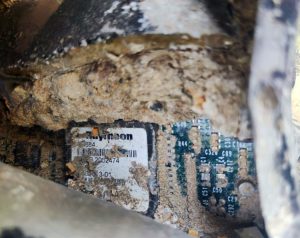
The parts carried the CAGE code of Raytheon, the missile’s prime contractor, and included at least two turbofan engines, indicating at least two missiles.
On 12th March, the New York Times reported preliminary military findings that Defence Intelligence Agency ‘target coding’ had labelled the school building a military target.
In May, Admiral Brad Cooper, commander of US Central Command, told Congress: ‘The school itself is located on an active IRGC cruise missile base.’
The governor’s office in Hormozgan province said the former IRGC compound was turned over to civilian use from 2014, and that the school was licensed in 2015 and operated publicly from then on.
An IRGC administrative building several hundred metres away, the first target hit that morning, had stood empty since 2025. There were no secondary explosions of the kind a weapons depot would produce.
On 18th September Bloomberg, citing officials involved in an internal Pentagon investigation, reported that the site had been fed into Palantir’s Maven artificial intelligence system under an outdated classification as an IRGC naval facility and emerged as a first-day target.
Neither Maven nor its human reviewers flagged it as a school.
Target-list work that had once taken hours was condensed into minutes, and the Pentagon struck more than 1,000 targets in the first 24 hours.
Satellite imagery from late 2025 showed children in the schoolyard and on a football pitch.
Wes Bryant, the Pentagon’s former chief of civilian harm assessment, said none of the required characterisation, pattern-of-life analysis or collateral damage assessment was carried out. ‘This is not fog of war stuff. This is very 101,’ he said.
‘Another way is a five second Google search of that area.’
In 2025 Hegseth dissolved the Pentagon’s Civilian Protection Centre and announced a policy of ‘maximum lethality, not tepid legality’.
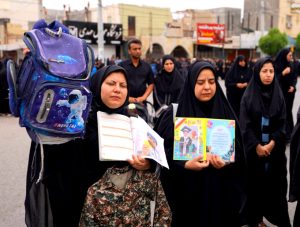
The UN mission found that the US ‘acted wilfully, that is with the requisite mental element of recklessness’. It said the failure to update targeting databases and verify the target ‘went beyond mere negligence’.
Reed Brody, a war crimes prosecutor, said the Geneva Conventions oblige planners to do ‘everything feasible’ to verify that targets are not civilian objects.
‘The United States plainly failed to do everything feasible to verify that the attacked building was a military objective rather than a protected school,’ he said.
Iran’s Justice Minister Amin Hossein Rahimi said the domestic case has been transferred to the Tehran prosecutor. Parliament is preparing legislation to assert international jurisdiction, and Iran will ask states with universal jurisdiction laws to issue indictments.
Neither Iran nor the US is party to the Rome Statute. Brody said Iran could accept the International Criminal Court’s (ICC) jurisdiction by declaration, but that acceptance would extend to Iranian officials too.
The US withdrew its acceptance of the International Court of Justice’s compulsory jurisdiction in 1985 and abandoned the 1955 Treaty of Amity in 2018, leaving no clear treaty basis for a case there.
Brody proposed a special tribunal on the crime of aggression, modelled on the one established for Ukraine in 2025.
On 20 September, the Wall Street Journal reported that the Trump administration was preparing sanctions to bar most transactions with the ICC, including in US dollars.
Psychologist Dr Mohadeseh Darvishi is treating the 283 children who survived.
All 16 of Minab’s own psychologists said they could not work because their relatives had been at the school.
Yassin now tells his mother he will not forgive her for rescuing him before he could die with his friends. ‘Our children are broken,’ Salem said.
‘They said it was a missile base. If you wanted to attack it, you could’ve attacked at night. Why did you attack at a time when children were in school?
‘Our children’s missiles were made out of paper.’