THE Palestinian Prisoners Society (PPS) said on Wednesday that Israeli prisons have undergone a continuing structural transformation since the start of the Israeli war of genocide in October 2023.
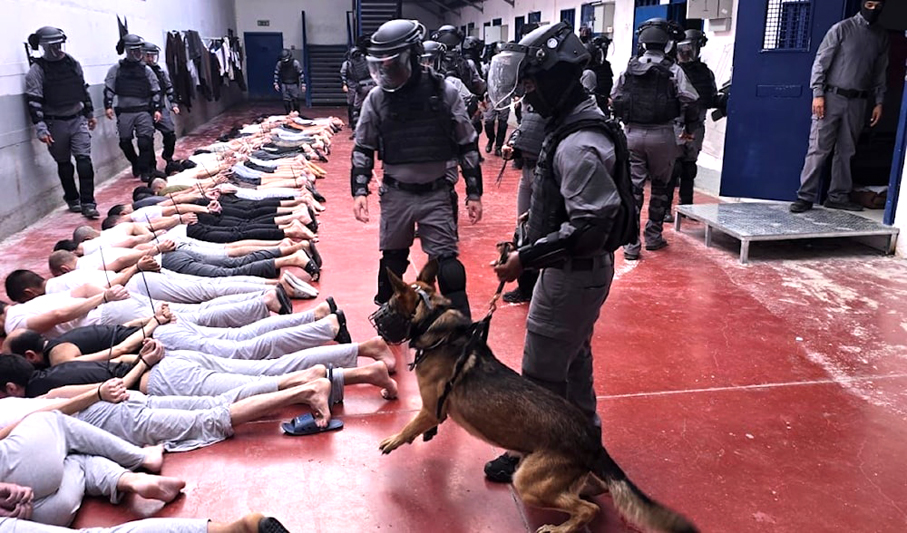
Stressing that they are no longer detention facilities in the conventional sense, the PPS said they have become ‘a central arena for systematic killing of Palestinian prisoners and detainees’.
In a fact sheet on the prisoners’ issue during the first half of 2026, published on Tuesday, the PPS said imprisonment is no longer limited to the restriction of freedom.
Rather, it has become an integral part of Israel’s system of genocide through systematic policies targeting Palestinians physically, psychologically and in their dignity and existence.
These policies include torture, starvation, medical neglect, isolation, sexual assaults and enforced disappearance, the society said.
The PPS said Israeli authorities continued during the period in question to expand mass arrest campaigns and the unprecedented use of administrative detention, in addition to holding civilians as hostages under policies of collective punishment.
It said these practices are no longer isolated violations, but have become fixed tools in the management of prisons and detention camps.
The society added that testimonies documented by legal teams, along with accounts from released prisoners, confirm that crimes inside prisons have not decreased.
Instead, they have entered a more organised and brutal phase, marked by the continued killing of prisoners, the spread of diseases and epidemics, and a sharp deterioration in their physical and psychological conditions.
The PPS said this is consistent with the genocidal approach governing Israel’s policies since the start of the genocide.
It stressed that the figures included in the fact sheet represent only the minimum that could be documented, given Israel’s continued enforced disappearance of thousands of detainees from the Gaza Strip and its prevention of international and human rights organisations from reaching them.
This means the scale of crimes and violations inside prisons and detention camps is far greater than what documented facts reveal, it said.
The PPS elaborated that the months that followed the start of the genocide exposed Israel’s shift to an unprecedented phase in its treatment of prisoners, surpassing in nature and scale everything documented by the Palestinian prisoners’ movement over decades.
It said violations are no longer individual acts or excesses, but a state policy administered through the prison and camp system and based on official legislation and procedures aimed at turning detention into a central tool of genocide.
These policies have led to the killing of more than 100 prisoners since the start of the genocide, the PPS said. The identities of 90 of them have been announced, while Israel continues to conceal the fate of dozens of Gaza detainees killed in custody and continues to withhold the bodies of dozens of slain prisoners.
The society described this as an extension of the crime of enforced disappearance, which it said has become one of the defining features of the current phase.
The PPS said detention no longer targets only the freedom of Palestinians, but their very existence, through an integrated system of structural torture, starvation, deliberate medical neglect, the spread of diseases and epidemics, sexual assaults, deprivation of treatment and food, and slow killing.
It affirmed that these policies have been documented through testimonies of prisoners whom legal teams were able to visit, accounts from released prisoners, and reports by prisoners’ institutions and human rights organisations.
The society said the fact sheet comes as part of its ongoing documentation efforts to monitor the most significant developments in the prisoners’ issue. It includes the documented toll of arrests in the West Bank, including Jerusalem, as well as data on the number of prisoners and detainees held in Israeli prisons and camps as of early July 2026.
It also reviews the most prominent crimes and policies carried out by the prison system during this period.
The PPS emphasised that these figures reflect only part of the reality, given Israel’s continued enforced disappearance of thousands of Gaza detainees and its prevention of the International Committee of the Red Cross and human rights organisations from reaching them.
It said this makes the scale of crimes committed inside prisons and camps far greater than the numbers reveal.
The PPS stressed that what is taking place inside Israeli prisons represents a direct extension of genocidal policies.
It said mass arrests, torture, starvation, medical crimes, isolation, sexual violence, enforced disappearance, and both slow and direct killing are part of an integrated colonial system that seeks to break Palestinians physically and psychologically.
Israel’s Ministry of Military Affairs has also reported a sharp increase in post-traumatic stress disorder (PTSD) cases among military personnel since the Gaza genocide began.
The mental health of many soldiers who committed suicide had deteriorated following prolonged mistreatment by the military system, raising further questions about the Israeli army’s handling of personnel struggling with the psychological consequences of the Gaza genocide, the report highlighted.
Neither the Israeli military nor any other Israeli regime institution has released annual figures for discharged soldiers and former reservists who died by suicide after leaving active service.
Since Israel launched its genocidal war against Gaza, its forces have killed at least 73,000 Palestinians and wounded another 173,000, most of them women and children.
The Asra Media Office (AMO) has accused the Israeli administration of Negev jail of abusing Palestinian prisoners suffering from scabies, saying jailers deliberately strike their infected areas to cause bleeding and severe pain.
In a statement on Wednesday, AMO explained that scabies has spread widely among detainees, alongside fungal infections and allergies, amid ongoing medical neglect and denial of treatment.
AMO also said Negev prisoners endure severe incarceration conditions that compound their health and psychological suffering, including spoiled food, lack of ventilation, high humidity, and prolonged deprivation of prison yard time.
AMO condemned such practices in the jail as a ‘blatant violation of prisoners’ rights, reflecting a systematic policy aimed at tormenting them and deepening their suffering’.
AMO called on international and human rights organisations to urgently intervene to stop Israeli violations against Palestinian prisoners and hold those responsible accountable.
In a related context, the Palestinian Prisoner Society (PPS) has said more than 24,600 Palestinians have been arrested by Israeli forces in the West Bank, including Jerusalem, since the start of the genocidal war on Gaza in October 2023.
The reported figure of 24,600 arrests applies solely to the West Bank, while thousands of Gaza detainees remain unaccounted for, according to PPS.
The moment freed prisoner Jabr Al-Majdalawi arrived in the Gaza Strip was not ordinary, instead of feelings of joy over his release, he uttered a loud cry, encapsulating the suffering of thousands of Palestinian prisoners who remain inside Israeli prisons.
That cry, which came after about a year and nine months of detention, brought back to the fore the testimonies told by freed prisoners about the conditions of detention, at a time when human rights organisations escalate their demands for disclosing the conditions of detainees and ensure their protection.
The Israeli occupation authorities released 60 prisoners from the Gaza Strip via the Kerem Shalom crossing on Tuesday, after months of detention. They were received by their families and crews of the International Committee of the Red Cross.
Upon his arrival in Gaza, freed prisoner Jabr Al-Majdalawi collapsed in tears and uttered a cry that drew the attention of those present, before saying: ‘This is not my cry alone, it is the cry of every prisoner who is still there.’
Al-Majdalawi said he spent a year and nine months in detention, including six months inside the Sde Teiman detention camp, emphasising that he remained isolated from the outside world throughout his period of detention.
He added that he did not know about the decision to release him until the final moments, upon his hand-over to the crews of the International Committee of the Red Cross, pointing out that the prisoners inside the detention camps live in very difficult conditions.
He explained: ‘Words cannot describe what we lived through, we suffered a lot, and the prisoners are still in danger, and what is happening to them cannot be described.’
Al-Majdalawi’s testimony was not an exception, as Palestinian and international human rights organisations have documented during recent months dozens of testimonies from released prisoners, in which they talked about being subjected to beating and torture, starvation, deprivation of treatment, and isolation for long periods, especially detainees from the Gaza Strip since October 7th, 2023.
These testimonies point to a great similarity in the prisoners’ accounts regarding detention conditions, which prompted human rights organisations to demand independent investigations and ensure respect for detainees’ rights.
According to data from prisoner affairs institutions, thousands of Palestinians still linger in Israeli prisons, including detainees from the Gaza Strip, while the detention locations of a number of them remained unknown for long periods.
Human rights organisations continue their demand to reveal the fate of the detainees, allow visits to them, and ensure their treatment according to the provisions of international law and the Geneva Conventions.
Jabr Al-Majdalawi’s cry did not reflect the joy of release as much as it carried a message about the reality of the prisoners who are still inside the prisons.
A few minutes after his arrival in Gaza, his voice faded, but his account shone a light once again on the issue of the prisoners, and on the continuous demands to end their suffering and reveal their conditions inside detention facilities.