IRAN’S Khatam al-Anbiya Central Headquarters has warned the Israeli regime to halt repeated ceasefire violations in southern Lebanon or face a ‘harsh response’ from Iran’s armed forces.
In a statement on Tuesday, the headquarters said the ‘terrorist army of the Zionist regime’ had violated the ceasefire 84 times over the past two days, despite the US president’s announcement declaring an end to the war.
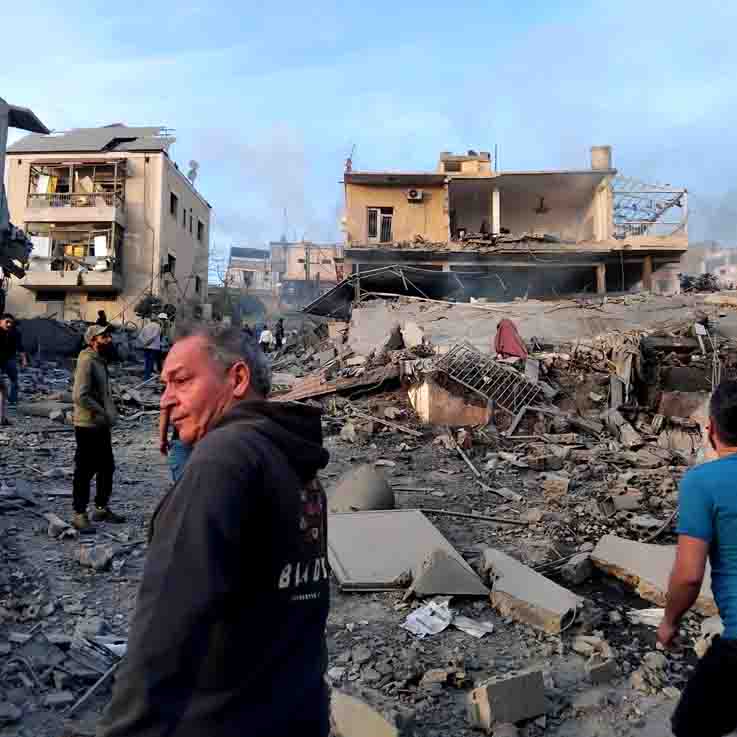
It noted that the occupation regime has been continuing ‘crimes and the killing of the oppressed people of Lebanon’, even after the ceasefire was meant to take effect.
‘If the child-killing army of the Zionist regime does not end its evil acts in southern Lebanon, it must await a harsh response from the powerful armed forces of the Islamic Republic of Iran,’ it said.
The remarks come following the announcement of a memorandum of understanding between Tehran and Washington aimed at ending a war that was imposed on Iran on February 28.
Iran’s Foreign Ministry said on Sunday that the MoU had been finalised and would be formally signed in Switzerland on Friday.
Under the agreement, the war across all fronts, including Lebanon, was to end immediately and permanently starting on Sunday night.
The MoU follows months of war that began on February 28, when the United States and Israel launched a new round of unprovoked aggression against Iran.
At the same time, Israel intensified strikes on Lebanon, despite a standing ceasefire with Beirut and a subsequent arrangement intended to contain the violence.
Iranian armed forces carried out retaliatory operations against American and Israeli interests during the fighting, which lasted until April 7.
Tehran also responded to repeated Israeli violations of ceasefire commitments related to Lebanon.
A ceasefire was announced on April 8. Negotiations toward a permanent settlement began soon after, with Pakistan acting as mediator.
According to the Foreign Ministry, the MoU text is based on a 14-point proposal Iran submitted at the outset of the ceasefire process. The document was reviewed repeatedly over 60 days.
The ministry said Iran maintained its position throughout the talks despite sustained pressure, continued ceasefire violations, and shifts in Washington’s stance.
Once signed, the MoU will open a 60-day intensive negotiation phase aimed at resolving remaining disputes between the two sides.
Secretary-General of Hezbollah, Sheikh Naim Qassem, has praised Iran for forcing Israel to halt its military aggression against Lebanon, saying the Islamic Republic has reaffirmed its commitment to supporting truth, resistance, and oppressed nations.
In a message addressed to the Iranian Parliament Speaker Mohammad Bagher Qalibaf, Sheikh Qassem commended Tehran for forcing the Israeli regime ‘to immediately and permanently halt military operations on all fronts, including Lebanon’.
He said the Islamic Republic turned the sole effective glimmer of hope for ending Israeli aggression against Lebanon into a tangible reality, demonstrating to the world that Iran supports truth, the resistance, and oppressed peoples.
‘Had others followed its (Iran’s) path, the US and Israel would not have tyrannised, and the Zionist occupation would not have remained entrenched on the land of Palestine and Jerusalem,’ he added.
Sheikh Qassem said ‘words fail to express’ Hezbollah’s gratitude for Tehran’s firm and supportive stance towards Lebanon, its people, and its resistance.
The Hezbollah leader reiterated that Iran had consistently backed Hezbollah and Lebanon without seeking anything in return.
He hailed the Islamic Republic for directly confronting Israel following attacks on Beirut’s southern suburbs, saying: ‘Iran is the icon of pride and honour.’
The Hezbollah chief also thanked Iranian Foreign Minister Abbas Araghchi, other officials engaged in negotiations and regional diplomacy, and members of Iran’s armed forces and the Islamic Revolutionary Guard Corps (IRGC) for their role in confronting the aggression.
Araghchi says any future Israeli attacks on Lebanon would breach the MoU.
The Israeli regime escalated its deadly attacks on Lebanon in March, violating an existing ceasefire with Beirut and a subsequent Pakistan-mediated ceasefire agreement between Tehran and Washington that also encompassed Lebanon.
Iran has maintained that a ceasefire in Lebanon is inseparable from any final agreement with the United States.
FM Araghchi said on Tuesday that any future Israeli attacks on Lebanon or continued occupation of recently seized territories in the country would constitute a violation of the MoU.
Speaking at a meeting with foreign diplomats based in Tehran on Tuesday, Araghchi identified the most important provision of the memorandum as declaration of an immediate and permanent end to the war across all fronts, including Lebanon.
He, therefore, stressed that the end of the aggression against Lebanon forms an integral part of the MoU.
‘Because the war in Lebanon and the Zionist regime’ s aggression against southern Lebanon became connected to the war with Iran, and the two fronts became intertwined and dependent on one another, the Islamic Republic considered ending the war in Lebanon a requirement for ending the war with Iran from the very beginning,’ Araghchi said.
The foreign minister also emphasised that the end of the war also requires an end to the Israeli presence in the territories that the regime has occupied since escalating its aggression against Lebanon.
‘The end of the war includes the end of occupation. Without the withdrawal of Israeli forces from territories they occupied during this war, the war will have not been fully brought to an end,’ he said.
The official also outlined Tehran’s interpretation of the parties to the memorandum.
‘The important point I want to emphasise here is that, in our view, the two sides to this memorandum are the United States and Israel on one side, and Iran and (Lebanon’s) Hezbollah (resistance movement) on the other,’ he said, reiterating: ‘The end of the war in Lebanon is an inseparable part of the complete end of the war.’
Araghchi also announced that a new round of negotiations between Iran and the United States aimed at reaching a final agreement is expected to begin on Friday following the formal signing process.
‘Most likely on Friday, at a location that will be announced later, the memorandum will be formally signed, and on the same day, a new round of negotiations between Iran and the United States to reach a final agreement will begin,’ he said.
The foreign minister said Tehran and Washington decided to divide negotiations into two phases because of difficulties stemming from the unprovoked aggression.
He said the first phase focused on ending the war, the Strait of Hormuz, the US’s illegal naval blockade of Iran’s ports and vessels, the release of Iranian frozen assets, reconstruction issues, and related matters, resulting in the MoU.
According to the official, upon signing of the memorandum, negotiations will continue for 60 days in an effort to reach a comprehensive agreement.
‘In the final agreement, decisions will be made regarding nuclear issues and the lifting of sanctions, and we will reach a final conclusion,’ he said.
Araghchi also thanked Pakistan for its constructive role in mediation between Tehran and Washington.
Iranian and Lebanese parliamentary speakers have said that Washington and other guarantors of the Iran-US Memorandum of Understanding (MoU) are obligated to compel Israel to end its aggression against Lebanon.
During a phone conversation on Tuesday, Mohammad Bagher Qalibaf and Nabih Berri discussed recent developments in Lebanon and the wider region, as well as political and security issues related to the agreement reached between Tehran and Washington.
‘The US, the guarantors of the memorandum, and the international community must assume their responsibilities in implementing the agreement,’ the two parliamentary leaders said.
They emphasised that all parties responsible for the MoU must work to ensure its provisions are fully implemented.
‘Ending Israel’s aggression against Lebanon, halting the destruction of villages, respecting Lebanon’s sovereignty, and securing an immediate withdrawal of Israeli forces from occupied lands are essential steps,’ they said.