IRANIAN President Masoud Pezeshkian says that Tehran will not bow to pressure or aggression, warning that the country will deliver a ‘crushing response’ to any future attack.
Addressing a meeting of the Islamic Association of Iranian Medical Society in Tehran last Friday, Pezeshkian described the Islamabad Memorandum of Understanding as an ‘honourable and valuable’ outcome of negotiations, rejecting suggestions that Tehran had surrendered or made significant concessions.
‘They cannot find even a single clause in this agreement that indicates surrender; all the commitments are related to the other side,’ he said.
However, he stressed that the agreement did not mean Iran would submit if the United States or its allies launched another attack.
‘Of course, none of this means that if they want to attack us, we will surrender. These are two separate issues,’ Pezeshkian said.
‘We will under no circumstances bow to bullying, and there is no doubt about that. We will stand against them until our last breath and give them a crushing response,’ he added.
Pezeshkian said the agreement represented a ‘major achievement’ that had been approved by Iran’s Supreme National Security Council, with members directly involved in the negotiations firmly defending its terms.
The remarks come following wars of aggression launched by the US and the Israeli regime against Iran in 2025 and 2026.
Iran responded to the unprovoked attacks by launching precision strikes against US and Israeli military assets across the region, inflicting heavy damage on adversaries.
Iran and the United States signed the 14-point memorandum of understanding (MoU) on June 18th under Pakistani and Qatari mediation.
The MoU was meant to provide for an end to the war and a 60-day period of negotiations aimed at reaching a final settlement.
However, US violations of its commitments led to the collapse of the understanding just days following its signing, sparking another round of war which lasted for more than two weeks in July.
Meanwhile, Pezeshkian said that the war should eventually end, adding the current circumstances offer Iran an opportunity to do so from a position of strength.
‘It is better to end the war today, when we are in a position of power and dignity, when the whole world acknowledges our victory and admits that the US has attacked our schools, hospitals, and infrastructure, in violation of all laws,’ he said.
Iranian military commanders and armed forces, he said, remain fully prepared to defend the country, while emphasising the importance of preserving unity at home.
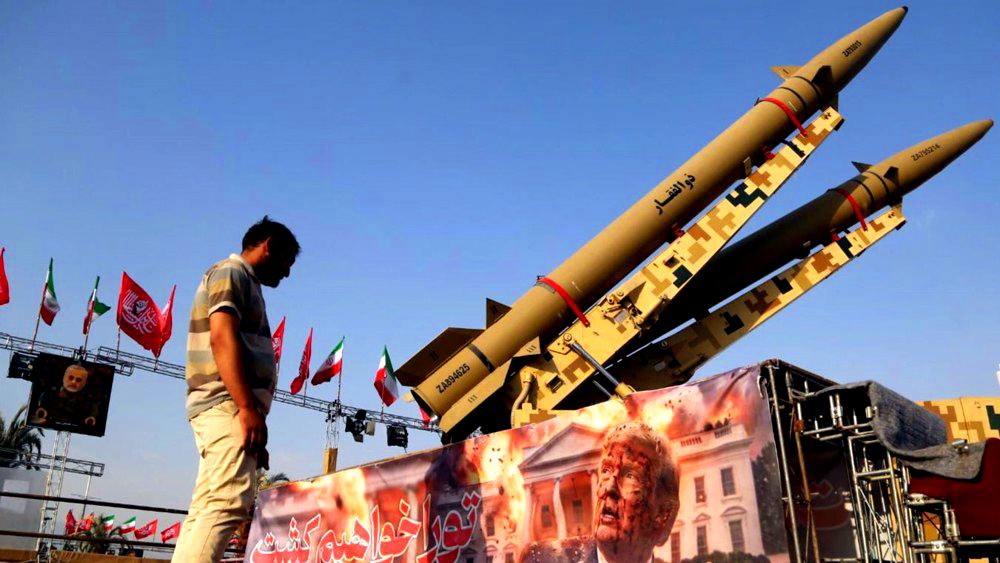
Meanwhile, Iran’s deputy defence minister says the country’s production of advanced weapons continues without interruption despite the US-Israeli aggression against Iran.
Brigadier General Shahrokh Shahram said on Friday that the enemy miscalculated Iran’s defence and military capabilities during the war and wrongly assumed that targeting a few sites linked to the Defence Ministry would cripple the country’s military production.
‘The production of advanced weaponry in Iran is continuing uninterrupted,’ he added.
He emphasised that Iran enjoys broad national participation in its defence industry, making it impossible for the enemy to halt military production through attacks on a limited number of facilities.
The senior Iranian defence official reiterated that the enemy received ‘more devastating, advanced, and larger volumes of weapons’ as the war progressed, eventually realising that its attacks on Iran’s defence industry has failed to achieve their objectives.
‘We had made the necessary preparations for this war and had relocated our defence and military assets from vulnerable locations and bottlenecks, to the extent that the enemy could not even identify a single one of our missile cities,’ Shahram said.
He noted that the US-Israeli imposed war has generated ‘special momentum’ in Iran’s defence industries.
‘If previously production was carried out in a routine and uniform manner, it is now increasing at an astonishing and upward pace,’ he pointed out.
The US and Israel launched another round of aggression against Iran on February 28th, some eight months after carrying out unprovoked attacks on the country.
Iran swiftly retaliated by launching barrages of missiles and drones at the Israeli-occupied territories, as well as US bases and interests across the region.
A ceasefire took effect on April 7th, and on June 18th, the presidents of Iran and the United States signed a memorandum of understanding (MoU) to end the war and begin a 60-day diplomatic process to resolve the differences.
However, renewed US strikes a few weeks after signing the MoU and once again triggered Iranian retaliation.
Shahram’s remarks came after the spokesman for the Islamic Revolution Guards Corps (IRGC), Brigadier General Hossein Mohebbi, warned last Thursday that the elite force will use significantly more destructive and advanced weapons than those employed in previous wars if a new war breaks out.
Pointing to the US mounting economic pressure campaign against Iran, Shahram said Washington is now posing ‘economic threats’ against Tehran despite its failed sanctions for 47 years.
‘The Islamic Iran demonstrated its power to the world in this imposed war, while regional countries also realised that spending billions of dollars on weapons and turning themselves into milking cows had yielded no results,’ he added.
According to the official, confronting the Islamic Republic is ‘doomed to fail’ while Iran’s adversaries must accept the country’s power and authority in the Strait of Hormuz.
He said national defensive power is the backbone of the country’s security, growth, and development, adding, ‘Iran’s defence industry has now achieved indigenous design for advanced weapons that the enemy is unable to target.’
In a post on his X account last Thursday, Iranian Foreign Minister Abbas Araghchi warned the United States that intensifying ‘failed’ policies against Iran will only lead to further setbacks, as Washington resorts to economic pressure after conceding defeat in its military aggression against the country.
- Beijing has rejected Washington’s latest demand that countries join a renewed campaign of economic sanctions against Iran, reaffirming that the escalating crisis requires political dialogue.
‘Sanctions and pressure tactics are not the solution,’ Chinese Foreign Ministry spokesperson Lin Jian told reporters last Thursday.
The rebuke came one day after the Trump administration issued an open call to allies and China alike to fall in line with what the president billed as the ‘most crushing economic operation ever taken against any country’ – a boastful threat that came after Washington failed to achieve any of its war objectives military some six months after starting the aggression on Iran in late February.
Notably, the United States has yet to detail the full scope of its so-called operation, with US Secretary of Treasury Scott Bessent planning further specifics to a press conference earmarked for today, a delay that raises questions about the campaign’s actual readiness.
China calls on parties to act responsibly and stick to the political and diplomatic approach, added Jian.
Iran has strongly condemned the US campaign, with Minister of Foreign Affairs Abbas Araghchi describing Washington’s economic aggression as an attempt to divert attention from America’s own problems.
Araghchi pointed to America’s ‘unprecedented debt and surging interest costs’ as Washington seeks to impose further economic pressure on Iran.
Iran’s Ministry of Foreign Affairs said last Thursday the latest US sanctions, announced on the anniversary of the 1953 coup against Iran’s democratically elected government, demonstrate Washington’s continued hostility toward the Iranian people.
‘The new US sanctions are not only another indication of the continuation of 73 years of hostility by US policymakers toward the Iranian people, but also demonstrate the anti-human, lawless and hegemonic nature of the US government,’ the ministry noted.
The ministry further condemned the sanctions for targeting the fundamental rights of Iranian citizens and violating international norms.
‘Without a doubt, the US economic sanctions against Iran, which target the fundamental human rights of every Iranian citizen, constitute economic terrorism and crimes against humanity,’ it maintained.
Beijing’s rejection comes ahead of Chinese President Xi Jinping’s planned September 24th visit to the White House, adding significance to China’s refusal to participate in Washington’s economic campaign against Tehran.