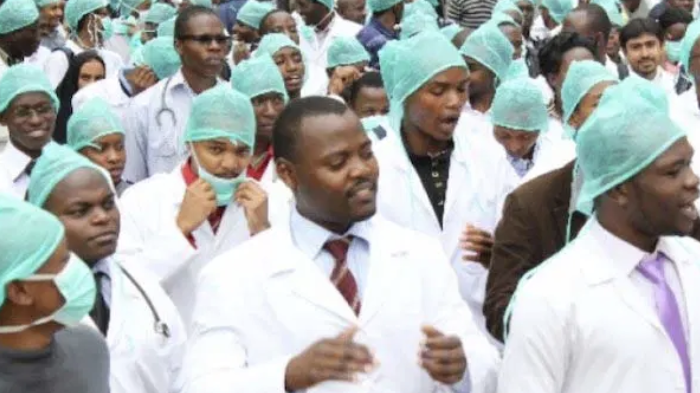
The University College Hospital (UCH), in the city of Ibadan in southwestern Nigeria, stopped admitting new patients on Monday as hospital workers started a five-day strike over a restricted power supply.
The strike comes at the same time as Northern Regional Electricity Distributor employees in eight regions also commenced a nationwide strike over salary disputes, meaning that there will be widespread power disruptions, and the medical workers have come out at the same time.
The health unions include the Association of Resident Doctors (ARD), the Medical and Health Workers Union of Nigeria (MWHUN), the National Association of Nigeria Nurses and Midwives (NANNM), and the Nigerian Union of Allied Health Professionals (NUHAP), and they are all members of the umbrella organisation the Council of UCH Union Leaders (CUUL).
All the union members walked out on Monday, as the strike was declared at 8.00am.
Co-chairman of CUUL, also the UCH ARD president, Uthman Adedeji, said that electricity supplied to service delivery areas and residential quarters was being internally rationed and restricted by management.
Co-chairman of CUUL, Oladayo Olabampe, added that the unions would come back together to re-strategise on what to do next if the demands are not met.
‘The strike continues till Saturday, 8.00am, if nothing comes up, and we will not keep quiet after all, but may be forced to embark on an indefinite strike,’ he said.
Meanwhile in Namibia, The Oshana, Omusati, Oshikoto, Ohangwena, Kunene, Kavango East, Kavango West and Zambezi regions are on the verge of being plunged into darkness after the workers downed tools yesterday.
Mineworkers Union of Namibia (MUN) regional organiser Reginald Kock said workers at the Rundu, Katima Mulilo, Opuwo, Ongwediva, Ondangwa, Ohangwena, Eenhana, Okongo, Nkurenkuru, Kongola, Outapi, and Okahao centres have stopped working in pursuit of their ‘legitimate and lawful demands.
‘Our members remain united and resolute in calling for a six per cent salary adjustment and the payment of a 14th cheque, demands that are reasonable, affordable, and long overdue.
‘Workers have shown patience and have exhausted internal engagement processes.
‘The strike represents a last resort in the defence of their economic dignity,’ he said.
Kock said all the affected centres would remain closed until a fair resolution is reached and the workers will not return to work until their demands are met.
Kock stated: ‘For years, we have demanded the board to hear our pleas, but they refuse to increase our salaries.
‘We are drowning in debt because our salaries are too little.
‘We want management, together with the board, to increase our salaries as a matter of urgency.
‘We will not back down or surrender until our demands are met.’
- Dock workers have issued a strike notice over the alleged interference in union affairs by a senior officer at the Kenya Ports Authority (KPA).
The Dock Workers’ Union is accusing the official of derailing the implementation of their Collective Bargaining Agreement (CBA).
The union’s secretary general Simon Sang said: ‘This malpractice is affecting the morale of our members, and we will not tolerate it any further.
The unjustified delays we are experiencing in the processing of our Collective Bargaining Agreement (CBA) 2024-2027 are a clear indication of the influence this officer has at the SRC.
‘We have warned the Salaries and Remuneration Commission and the said officer to stop this malpractice and operate professionally.
‘These actions risk painting a very negative picture of the Judiciary, SRC, KPA and the government.
‘If we do not receive our CBA by the end of March 2026, we will have no choice but to call the mother of all strikes.’
He added that KPA has been free of industrial action since 2016, as the union opted for dialogue to resolve key issues affecting workers.
However, they are now counting down the days to stage a strike if their concerns are not addressed by management.
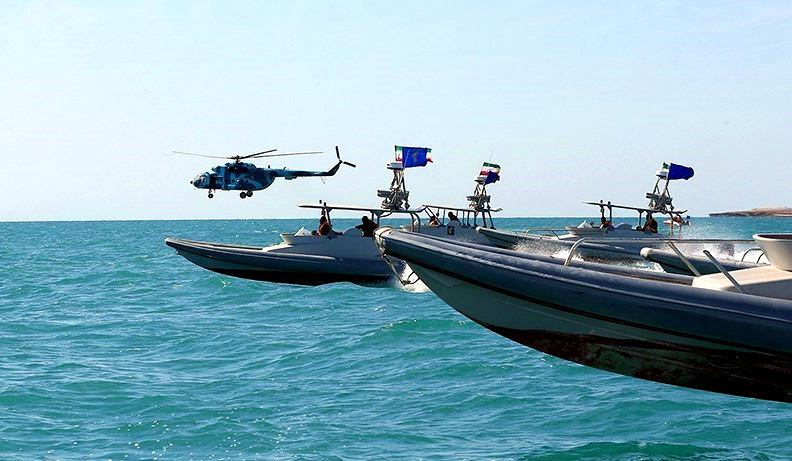
- The South African Federation of Trade Unions (SAFTU) has strongly condemned the United States’ and Israel’s large-scale military attack on Iran.
In a statement issued last Saturday, February 28th, SAFTU General Secretary Zwelinzima Vavi said: ‘This escalation opens a grave new chapter of imperialist confrontation and risks dragging the world into a far more dangerous and destabilising conflict.
‘The attack represents a significant intensification of US and Israeli military aggression in the Middle East and carries the real risk of broader regional and global instability.
‘Rather than an isolated act, this military offensive must be understood within the context of a deepening crisis of global capitalism and the strategic efforts by the US to retain its position as the dominant global hegemon.
‘Washington’s posture is not shaped by claimed security threats, but by its broader geopolitical imperative to assert control over energy routes, strategic territories and global financial power in the face of rising inter-imperialist competition, particularly from China and other emerging powers.
‘The use of military force against Iran is part of a broader pattern of US militarism and interventionism.
‘Under the current administration, foreign policy has combined with economic coercion, sanctions, punitive tariffs and military threats to discipline states perceived to be outside Washington’s orbit.
‘This pattern has included punitive tariff regimes as instruments of economic warfare, open rhetoric about annexing Greenland in the name of strategic security, aggressive posturing toward Nigeria and other African states, and interventionist manoeuvres against Venezuela, including efforts to destabilise and remove President Nicolás Maduro.
‘These actions are not isolated missteps; they form part of a coherent strategy aimed at preserving US supremacy in a multipolar world.
‘The attack on Iran must therefore be read within this continuum of imperial assertion.
‘It signals a desperate attempt to demonstrate continued military dominance in the Middle East, a region central to global energy flows and geopolitical leverage.
‘SAFTU recognises that this escalation reflects the deeper crisis of a global capitalist system in decline.
‘Faced with slowing economic growth, China’s rise in the global economy, mounting debt burdens, widening inequality and the erosion of its unchallenged post-Cold War dominance, the United States is increasingly resorting to militarism as a mechanism of control.
‘When economic hegemony weakens, coercive power expands. When financial leverage falters, military projection intensifies.
‘For countries like South Africa, already confronting mass unemployment, fiscal strain and service delivery collapse, global conflict compounds domestic crisis.
‘Oil price spikes translate into transport inflation. Exchange-rate volatility increases debt-service costs. Development priorities are displaced by global instability.
‘Militarism strengthens arms manufacturers and financial speculators. It weakens workers, the poor and the Global South.
‘SAFTU calls for:
- Immediate de-escalation of military tensions;
- For the American working class to oppose Trump’s war of aggression against Iran;
- An end to coercive economic and military interventions designed to preserve hegemonic dominance;
- Global solidarity among working-class movements against imperialist war.
‘The working class must not be used as a pawn in elite power struggles, whether geopolitical or domestic.
‘The world is already economically, socially and politically fragile.
‘To inject reckless military escalation into this environment is to risk catastrophe.
‘Debt crises, climate breakdown, inequality and social unrest already define our era. Military confrontation only accelerates systemic breakdown.
‘People before empire.’