Iranian President Masoud Pezeshkian says Tehran will give a decisive response to the ‘delirious threats’ made against it on the battlefield.
Pezeshkian made the remark in a post on his X account on Sunday after US President Donald Trump threatened to attack Iran’s power plants if the country does not ‘fully open, without threat, the Strait of Hormuz, within 48 hours.’
‘The illusion of erasing Iran from the map shows desperation against the will of a history-making nation,’ Pezeshkian wrote.
The Iranian president added that threats and terror will only strengthen national unity.
‘The Strait of Hormuz is open to all except those who violate our soil. We will firmly confront delirious threats on the battlefield,’ he emphasised.
Since February 28, when the US and Israel launched their unprovoked aggression, Iran has blocked the Strait of Hormuz to oil and gas tankers affiliated with the aggressor regimes and those cooperating with them.
The disruption of tanker traffic in the waterway, lying between the Persian Gulf and the Sea of Oman, has triggered a major surge in energy prices.
In a desperate attempt to control the market, Trump said that the US Navy will escort tankers through the Strait of Hormuz. He even offered political risk insurance for tankers transiting there.
The US president also sought to form a coalition to secure the Strait, asking NATO countries to contribute naval and air assets. However, most of Washington’s allies have declined to commit forces.
Iran’s Parliament Speaker Mohammad Baqer Qalibaf also responded to Trump’s rhetoric and said the Islamic Republic will ‘irreversibly’ destroy vital energy and fuel infrastructure across the region if the United States attacks power plants inside Iran.
The Khatam al-Anbiya Central Headquarters also warned of Iran’s ‘immediate punitive’ measures in case of any attack on the country’s fuel and energy infrastructure.
The Intelligence Service of the Islamic Revolution Guards Corps (IRGC) said critical technology centres beyond the region will be targeted within 48 hours.
Iran’s highest operational command unit has warned that the Islamic Republic will completely close the Strait of Hormuz if its electricity generation infrastructure comes under attack.
Spokesman for the Khatam al-Anbiya Central Headquarters, Lieutenant Colonel Ebrahim Zolfaqari, issued the warning on Sunday in response to US President Trump’s threat to attack Iran’s power plants if the country does not ‘fully open, without threat, the Strait of Hormuz, within 48 hours.’
Zolfaqari said Iran would take ‘immediate punitive’ measures if the country’s fuel and energy infrastructure is attacked. ‘We have repeatedly declared that the Strait of Hormuz is closed only to the enemy and harmful passage and has not been yet closed completely and is under our smart control.
‘Non-harmful transit continues under specific regulations which guarantee our security and interests.’
He emphasised again that if threats against Iranian power plants are implemented, Iran will completely close the Strait of Hormuz and keep it closed until the damaged facilities are reconstructed.
All Israel’s electricity generation plants, energy infrastructure as well as information technology (IT) and water desalination facilities belonging to the US and the Israeli regime ‘will be targeted pursuant to previous warnings.’
Iran will also obliterate all similar companies with American shareholders in the region, which will be considered legitimate targets. The armed forces are prepared to ‘completely destroy all the US economic interests in the West Asia region,’ he repeated.
He once again affirmed that Iran did not start the war and would not initiate further escalation, but if the enemy inflicts damage on the country’s power plants, Iran will not hesitate to defend its national interests.
He cautioned that the ‘non-stop’ measures to destroy the enemies’ targets would begin immediately if Iran’s power plants are attacked.
‘Nothing can prevent us from proceeding with our operation to demolish energy and oil infrastructure and industry of the US and its allies in the region,’ Zolfaqari asserted.
Iran’s Parliament Speaker Mohammad Baqer Qalibaf also said the Islamic Republic will ‘irreversibly’ destroy vital energy and fuel infrastructure across the region if the United States attacks power plants inside Iran.
Qalibaf issued the stark warning in a post on his X account on Sunday in response to Trump’s latest threat on Saturday night that the United States will ‘hit and obliterate’ Iran’s ‘various power plants, starting with the biggest one first!’ if the country does not ‘fully open, without threat’, the Strait of Hormuz, within 48 hours from this exact point in time.’
‘Immediately after our country’s power plants and infrastructure are hit, vital infrastructure and energy and fuel infrastructure across the region will be considered legitimate targets (for Iran) and will be destroyed in an irreversible manner,’ Qalibaf said.
The top Iranian parliamentarian added that oil prices will also continue to rise for a long period of time.
- Iranian advanced and integrated air defence systems have successfully reduced military aggression by American and Israeli fighter jets after an F-35 aircraft was struck, forcing a decrease in the tempo of operations over central Iran.
‘The multiple strikes by Iran’s integrated air defence system against American and Israeli invading aircraft have led to a significant reduction in military operations by American and Israeli fighter jets in the central regions of the country,’ an unnamed intelligence source has told international news outlet Press TV.
The source further noted that the enemy had focused on harassment and terrorist actions in central Iran but has so far failed to achieve its objectives.
‘After striking the F-35, the pace of military operations has decreased, although aircraft and drones are still being used for reconnaissance purposes,’ the source added.
He also revealed that the number of downed drones has reached nearly 200.
‘Given the defensive innovations against enemy aircraft, it appears that in the coming days, the rate of strikes against enemy warplanes will increase,’ the source said.
On March 19, the Islamic Revolution Guards Corps (IRGC) aerospace division struck the crown jewel of the US Air Force – the F-35 Lightning II stealth fighter.
For nearly two decades, the F-35 programme stood as the pinnacle of American military dominance – a multi-trillion-dollar, fifth-generation platform designed to pierce the world’s most advanced air defences with total impunity.
But that myth was shattered over the skies of central Iran when the IRGC deployed its domestically built air defence system and exposed the F-35’s vulnerabilities.
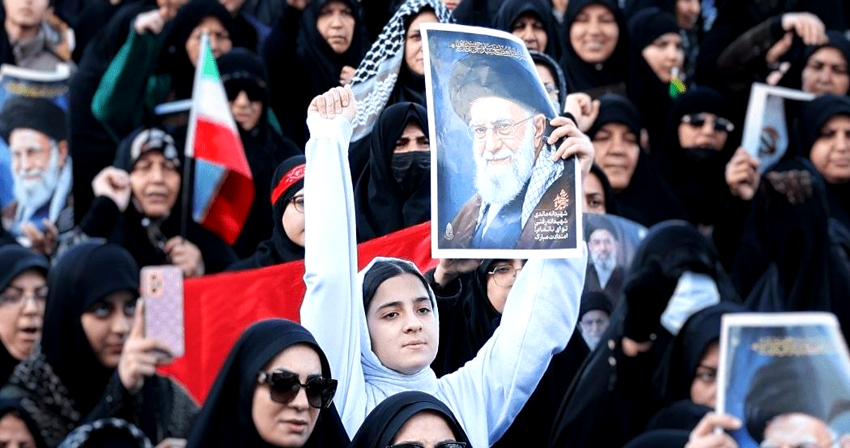
- Thousands of people took to the streets of the Spanish capital, Madrid, and the third largest city, Valencia, on Sunday to denounce the ongoing unprovoked and reckless aggression against Iran.
The angry demonstrators held anti-war banners and chanted slogans against fascism and Trump’s fascist policies, which are wreaking havoc across different parts of the world.
Speaking at the rally, Irneh Montro, a member of the European parliament, demanded that the Spanish government withdraw from the US-led NATO military alliance and kick US troops out of the country.
‘We will intentionally or unintentionally remain at war if we stay within NATO and will also be considered complicit in war crimes being committed by US President Donald Trump and Israeli prime minister Benjamin Netanyahu until US troops remain at the Spanish bases,’ the lawmaker emphasised.
Similar protests also took place in major Spanish cities, including Madrid, Barcelona, Valencia, Bilbao, Seville, and dozens of smaller localities, many braving rainy weather.
A widely circulated manifesto, signed by hundreds of cultural, political, and civil-society figures, explicitly condemned the ‘savage bombings’ by the US and Israel, stating that ‘nothing justifies the murder of hundreds of innocents’ and describing the strikes as ‘a grave threat to peace in the region and a danger to world peace.’
Spain’s government under Prime Minister Pedro Sánchez has echoed the protesters’ stance.
Sánchez has repeatedly refused US requests to use Spanish military bases such as Rota and Morón for aggression against Iran, and withdrew Spain’s ambassador from Israel.
Officials describe the strikes as illegal, unjustified breaches of international law, and a threat to global stability – drawing explicit parallels to the 2003 Iraq war protests.