RUSSIAN President Vladimir Putin and his Chinese counterpart Xi Jinping jointly condemned the recent US-Israeli war of aggression against Iran on Wednesday, calling for dialogue as the only way to end the destabilising conflict.
They signed more than 20 agreements and trade deals between the two nations and also agreed to cooperate in defence and every other field.
In a joint statement released on Wednesday, Putin, who was on a state visit to China, and Xi stressed that both countries agreed that the US and Israeli military attacks on Iran violate international law and the basic principles of international relations, and seriously undermine stability in West Asia region.
The two leaders emphasised the necessity for the conflicting sides to return to dialogue and negotiations as quickly as possible, with the aim of preventing the expansion of the conflict.
Putin and Xi also called on the international community to adopt an objective and neutral stance, to help de-escalate tensions in the West Asia region, and to jointly uphold the fundamental principles of international relations.
The United States, in close collaboration with Israel, waged an unprovoked war of aggression against Iran on February 28, killing more than 3,300 people and devastating civilian infrastructure.
Iranian armed forces responded with daily missile and drone operations targeting locations in Israeli-occupied territories and US military bases and facilities across the Persian Gulf region.
Russia says it remains committed to close cooperation with Iran to find peaceful solutions to the Middle East crisis within the framework of international law.
Forty days into the war, a two-week Pakistan-brokered ceasefire took effect on April 8, but talks in Islamabad failed to produce a lasting agreement due to Washington’s excessive demands.
US President Donald Trump later extended the truce unilaterally and indefinitely.
Iran has closed the strategic Strait of Hormuz, which carries a fifth of the world’s oil and gas, to ships belonging to the US and its allies that participated in or supported the aggression, triggering a significant spike in oil prices, as the US imposed a naval blockade on Iranian vessels and ports.
Tehran says the illegal US blockade on Iran’s ports should be lifted before the next stage of talks for ending the war begins, as Trump constantly threatens to resume strikes on Iran if his excessive demands are not met.
Separately on Wednesday, the Chinese president called for a lasting peace in the region and warned about the possible resumption of war.
‘A comprehensive ceasefire is imperative, restarting war is even more unacceptable, and adhering to negotiations is particularly important,’ Xi stressed.
The leaders of Russia and China set new ambitious goals for developing their partnership, Russian President Putin stated at a meeting with Chinese Premier Li Qiang.
The Russian leader emphasised that trade cooperation between Moscow and Beijing will continue.
‘My colleagues and I always enjoy visiting hospitable China,’ said Putin
The talks with Chinese President Xi Jinping ‘were very productive and useful’, he said.
The leaders of Russia and China set new ambitious goals for developing the partnership between their countries, stating: ‘Together with the president, we have set new ambitious goals for the qualitative development of the Russia-China cooperation.’
‘Today’s visit to China is of special significance, as this year marks the 25th anniversary of the signing of the Treaty of Good-Neighbourliness and Friendly Cooperation,’ said Putin.
‘Based on the principles of equality, trust, mutual respect, and mutual benefit enshrined in this foundational treaty, our ties are developing dynamically for the benefit of the peoples of our countries.’
Regular meetings between the Russian and Chinese heads of government have proven ‘their effectiveness, including in the implementation of the full range of agreements reached at the highest level’.
The governments of both countries always bear a special responsibility because they ‘are engaged in concrete work in very specific areas’.
The joint statement continued: ‘We all understand perfectly well that the final outcome depends to a large extent on how deeply you are involved in this work.
‘Humanitarian ties are actively developing, including in culture, cinema, sports, and in the areas of youth and tourism exchanges.’
Trade turnover between Russia and China has grown by more than 10% this year.
Putin said: ‘As I mentioned earlier today, despite some adjustments to the 2025 bilateral trade figures, trade turnover is showing strong growth this year – over 10%.’
Trade cooperation will continue ‘in accordance with approved long-term strategies, primarily the plan for Russia-China economic cooperation through to 2030’.
Protecting Russian-Chinese cooperation from external influences and implementing joint projects in various fields are priority tasks for Moscow and Beijing.
Putin said: ‘Among the priorities is ensuring the reliable protection of our cooperation from negative external influences.
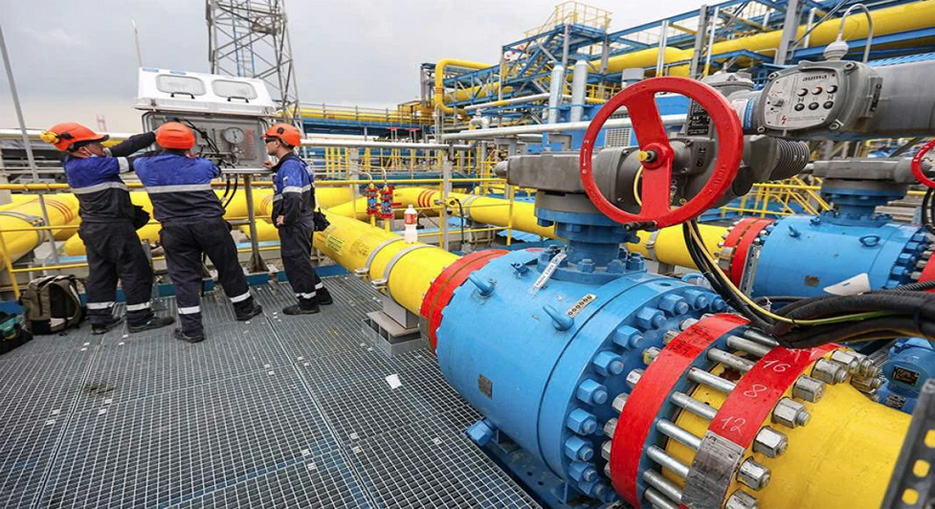
‘The agenda includes the implementation of a broad range of joint sectoral projects in energy, industry, space, agriculture, transport, and logistics.’
The protection of the partnership between Russia and China ‘is largely facilitated by the nearly 100% use of national currencies in bilateral settlements’, he added.
The launch of the Russia-China Cross-Year of Education will help ‘take the training of professionals across a wide range of fields – including cutting-edge industries – to a new level’.
Training professionals for work in cutting-edge industries will ‘ensure the scientific and technological sovereignty’ of both countries.
It is unacceptable to force sovereign states to abandon neutrality, Russia and China said in a joint declaration.
‘Disagreements and disputes should be resolved peacefully, addressing the underlying causes of conflict,’ the document reads.
The parties highlighted the need to take into account the reasonable security concerns of all countries, focus on security cooperation, reject bloc-based confrontation and zero-sum game strategies, oppose the expansion of military alliances, hybrid and proxy wars; as well as to promote the creation of a renewed, balanced, effective, and sustainable architecture of global and regional security.
The Russian Direct Investment Fund (RDIF) expanded cooperation with Chinese partners through new agreements signed during Russian President Vladimir Putin’s visit to Beijing, RDIF chief and Russian Presidential Special Representative for Investment and Economic Cooperation with Foreign Countries, Kirill Dmitriev, said.
‘We continue to develop relations with partners from China. During Vladimir Putin’s visit to Beijing, RDIF expanded cooperation through new agreements,’ Dmitriev wrote on his Max social network channel.
Dmitriev said RDIF had reached an agreement with China Architecture Design & Research Group on cooperation in infrastructure and investment projects in Russia and China.
In addition, RDIF, together with the China-SCO Demonstration Zone and the Russian-Chinese Guild of Commerce, plans to develop joint investment projects in SCO countries and support companies entering the Russian and Chinese markets.
‘Together with the Wenchang International Aerospace City Administration and China Construction Eighth Engineering Division, we will support Russian-Chinese cooperation in civilian space infrastructure,’ Dmitriev added.