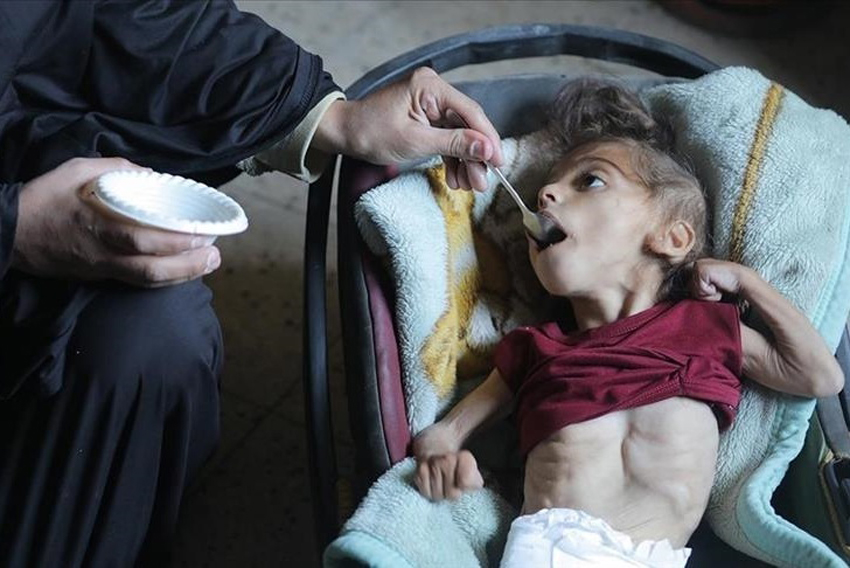
The World Health Organisation (WHO) has warned that Gaza’s famine risk is surging, endangering hundreds of thousands of Palestinians amid deepening food insecurity and malnutrition.
In a statement, WHO Director-General Tedros Ghebreyesus said that at least 1.6 million people in Gaza may face high levels of acute food insecurity by mid-April 2026.
‘Estimates indicate that more than 100,000 children and 37,000 pregnant and breastfeeding women will suffer from acute malnutrition by April 2026,’ Ghebreyesus said on Sunday.
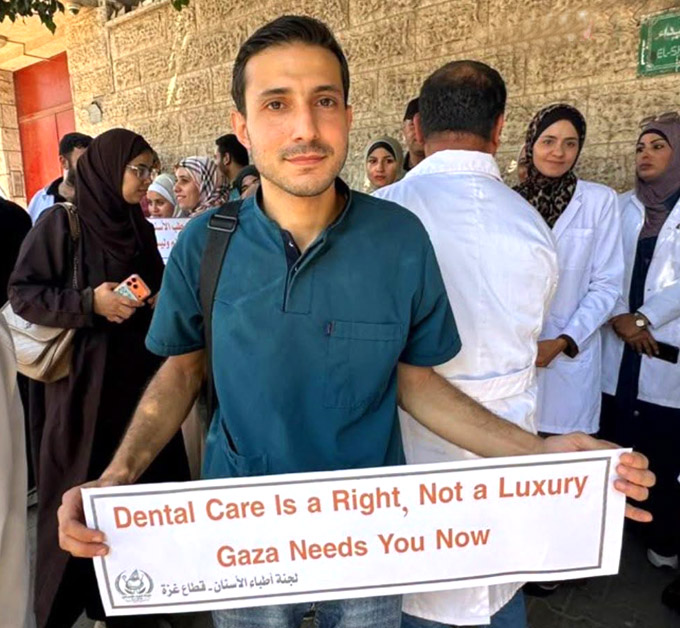
He noted that Gaza’s health system is struggling to cope, with only about 50 per cent of health facilities partially operational and facing severe shortages of life-saving equipment and essential medical supplies.
Ghebreyesus stressed that efforts to prevent famine in the besieged enclave remain ‘extremely fragile’, warning that worst-case scenarios including a renewed escalation of hostilities or a halt in humanitarian aid deliveries due to operational restrictions could push the entire Gaza Strip into full-scale famine by mid-April 2026.
He underlined that improving life-saving services and expanding access to health care in Gaza requires urgent approval for the entry of essential medical supplies and equipment into the Strip.
According to the WHO chief, more than 16,500 patients in Gaza are still awaiting emergency medical evacuation, while Doctors Without Borders has said that the actual number is likely far higher, as many patients remain unregistered.
Meanwhile, Doctors Without Borders (Médecins Sans Frontières, MSF) warned on Monday of the repercussions of new Israeli measures related to the registration of international non-governmental organisations operating in the Gaza Strip and the occupied West Bank, stressing that these steps would jeopardise humanitarian work and deprive hundreds of thousands of Palestinians of access to life-saving healthcare.
In a statement, the organisation said that ‘the new Israeli rules for registering international NGOs could leave hundreds of thousands of people in Gaza unable to access life-saving healthcare by 2026’, noting that the requirements threaten to revoke organisations’ registrations as of January 1.
MSF warned that failure to comply with these procedures would prevent organisations, including MSF itself, from continuing to provide essential services to Palestinians in Gaza and the West Bank.
It said that the loss of independent, experienced humanitarian organisations’ ability to reach people in need, amid the widespread destruction of Gaza’s healthcare system, would constitute a ‘real catastrophe’.
The organisation called on the Israeli occupation authorities to ensure that international NGOs are able to maintain and continue their independent and impartial humanitarian response in Gaza, stressing that the humanitarian response in the Strip is already severely constrained and cannot withstand ‘further dismantling’.
The statement quoted MSF’s Gaza emergency coordinator, Pascale Coissard, as saying that the organisation’s teams treated hundreds of thousands of patients over the past year and provided hundreds of millions of litres of water, while seeking to expand their activities and support a health system that has been extensively destroyed in the Strip.
She added that during 2025, MSF teams provided approximately 800,000 outpatient consultations and handled more than 100,000 cases of severe injuries.
In the same context, the Israeli newspaper Haaretz revealed on November 5 that a new Israeli measure had forced dozens of humanitarian organisations operating in Gaza and the occupied West Bank to halt their activities.
The newspaper explained that the measure tightens conditions for organisations’ entry into Gaza and the West Bank and requires them to submit extensive details about their staff and their families.
According to Haaretz, Israel approved the measure last March after transferring the authority to register organisations from the Ministry of Welfare to the Ministry of Diaspora Affairs, headed by Likud member Amichai Chikli.
The measure obliges organisations to submit a large number of documents, including lists of all foreign and Palestinian employees, as well as information about their family members.
The newspaper added that the Ministry of Diaspora Affairs now has broad powers to reject registration applications, including rejecting any organisation suspected of ‘denying Israel’s existence as a Jewish and democratic state’ or ‘working to delegitimise it’, under the new Israeli criteria.
Despite the ceasefire between Hamas and Israel entering into force on October 10, the humanitarian situation in the Gaza Strip remains extremely dire due to the restrictions imposed by Israel on the entry of humanitarian, relief, and medical aid.
Israel has failed to meet its obligations under the Gaza ceasefire agreement by not allowing in the agreed quantities of aid, and has also violated the agreement by carrying out attacks that, since it took effect, have resulted in the killing of 401 Palestinians and the injury of 1,108 others.