NEWS LINE completely condemns the unprecedented decision by the government to ban the peaceful Al-Quds March on Sunday and only allow a ‘static’ protest.
Last Saturday 50,000 protesters marched through London against the attack by the US and Israel on Iran, with no arrests and just a handful of protesters opposing the march.
The decision to stop the yearly Al-Quds march is an attack on basic democratic rights to protest and such action has not been taken since 2012.
This is a fundamental attack on millions of people who support Palestine in the UK today.
It also implicitly gives support to Israel’s genocide which has killed over 72,000 Palestinians in Gaza since 2023.
The Islamic Human Rights Commission is preparing a legal action to challenge the government’s ban.
This follows the decision taken in February to overturn the government ruling of Palestine Action being a terrorist organisation.
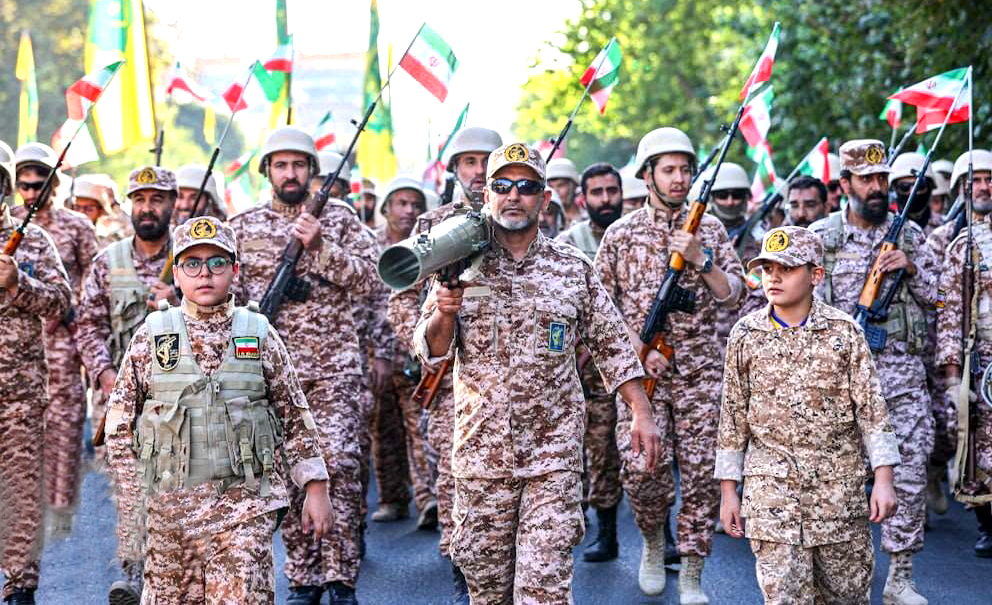
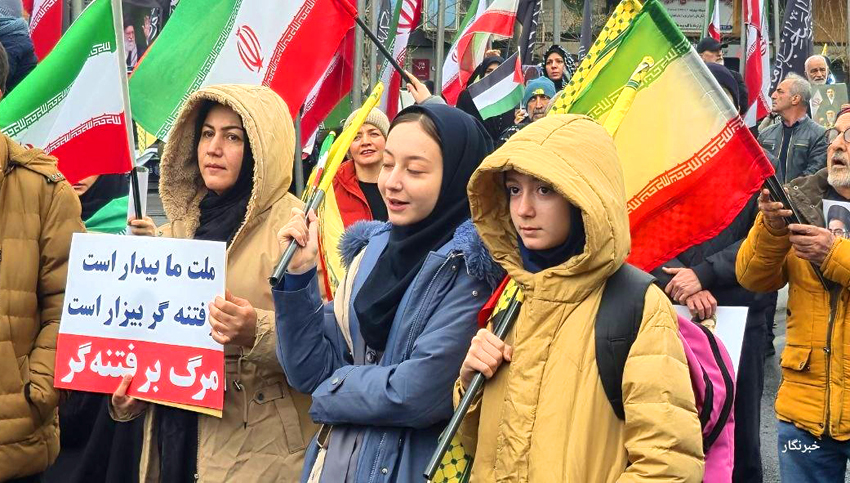
Demonstrations for Al-Quds day have taken place in many countries, including Iran yesterday, where millions marched.
More than 1,300 Iranians have been killed and over 10,000 wounded since the US-Israeli assault began a fortnight ago.
Rallies took place simultaneously across more than 900 cities and dozens of towns and villages throughout the country.
Severe weather failed to deter participation: in parts of Iran, crowds filled streets through heavy snow, rain and freezing temperatures.
In Tehran, the central rally began at multiple points across the capital and converged on the University of Tehran, featuring Qur’an recitations, speeches and chants denouncing US and Israeli atrocities in Gaza and across the occupied Palestinian territories.
The atmosphere in Enqelab Square was one of open defiance.
When explosions rang out overhead during the rally, the crowd responded by chanting ‘God is Great’.
Participants carried Iranian and Palestinian flags alongside images of Ayatollah Seyyed Mojtaba Khamenei, the Islamic Republic’s new supreme leader, with some signing petitions and gathering in groups to affirm their loyalty to his leadership.
Khamenei had issued his first public message the previous day, calling on Iranians to attend the marches and describing them as a unifying force for people across the world.
President Masoud Pezeshkian echoed the call on social media, urging citizens to ‘disappoint the country’s enemies through massive participation’.
Parliament Speaker Mohammad-Baqer Qalibaf declared the occasion had become a ‘nightmare for the fake and child-killing Zionist regime’.
International Quds Day was first designated by Imam Khomeini in 1979, who set aside the last Friday of Ramadan as a day of global solidarity with the Palestinian people, intended to prevent the Palestinian cause from being marginalised by other world events.
Multiple Israeli ceasefire violations
ISRAELI occupation forces violated the Gaza ceasefire on Friday with airstrikes, artillery fire and naval shelling across several areas east of the Strip, while simultaneously escalating military and settler violence across the West Bank.
In Gaza, Israeli forces fired on areas east and south of Khan Younis, with naval vessels shelling the sea off the coast and warplanes striking east of the city. Israeli artillery also shelled areas east of Gaza City, accompanied by further airstrikes.
Across the West Bank, Israeli forces sealed the entrances to multiple towns and villages in the Ramallah and Nablus areas. Bulldozers blocked the main entrance to Sinjil with dirt mounds. Secondary roads in Al-Lubban ash-Sharqiya and routes connecting Qabalan to the villages of As-Sawiya and Yatma were also closed. Around Nablus, forces shut the Tel al-Murabba gate, the Deir Sharaf roundabout, the Burin gate, the Huwwara gates and additional village gates to the east of the city, effectively sealing communities off from one another and leaving thousands of residents stranded at checkpoints for hours overnight.
Israeli forces arrested three Palestinians from Nablus and the Askar refugee camp, raiding homes and seizing a vehicle. In Tubas, two brothers were arrested in what the head of the Palestinian Prisoners Society in the governorate described as a pressure tactic to compel their third brother to turn himself in.
Settler violence ran parallel to the military operations. In the Bethlehem village of Al-Rashaida, settlers burnt down a poultry farm belonging to Ahmad Mohammad Rashaida. In the northern Jordan Valley, settlers stormed the community of Hamsa al-Fawqa, attacked residents and international solidarity activists, and stole around 300 head of livestock from the family of Abdul Aziz Abu al-Kabbash.