ONGOING conflict in the Democratic Republic of Congo plus last year’s massive cuts in overseas aid are hampering the Ebola outbreak response, the head of the World Health Organisation (WHO) Dr Tedros Adhanom Ghebreyesus warned yesterday.
Dr Tedros said the east of the country is the centre of a ‘catastrophic collision of disease and conflict’ with the Ebola outbreak in Ituri outpacing the response.
He said the WHO ‘cannot build community trust or isolate the sick while bombs are falling’.
He arrived in the DR Congo yesterday to spearhead scaling up efforts to contain the virus. There have been 220 suspected deaths since the outbreak was declared.
Health experts say last year’s international aid cuts by the United States and other rich nations are devastating for the DRC because of its multiple problems.
The cuts ‘reduced the capacity to detect and respond to infectious disease outbreaks’, said Thomas McHale, public health director at Physicians for Human Rights.
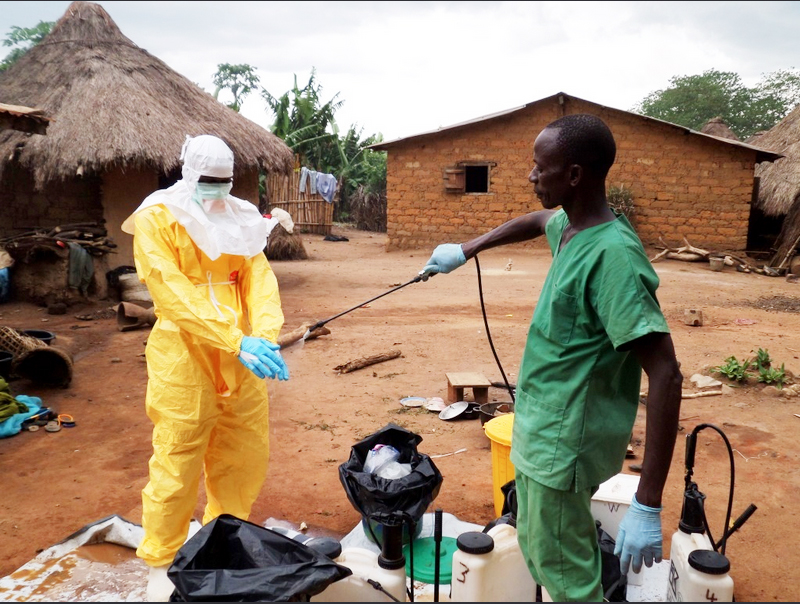
Aid groups fighting this outbreak on the ground say they don’t have the equipment they need, such as face shields and suits to protect health workers from infection, testing kits, and body bags and other materials needed to safely bury the bodies of victims, which can be highly contagious.
Aid workers have been struggling as travel is difficult because of poor road conditions while conflict and mass displacement have also weakened the health system – as have international aid cuts.
Ituri, where most of the cases have been reported, has been under military rule since 2021, when the civilian authority was replaced by a military general in an attempt to neutralise dozens of armed groups that operate there.
Tedros said stopping transmission in the region ‘depends entirely on humanitarian access.
Yet ongoing clashes are driving mass displacement, pushing exposed contacts into overcrowded camps and severing critical containment corridors, he added.
‘Frontline workers are risking everything, while attacks on health facilities make tracking cases and their contacts nearly impossible.’
He called on all parties to agree to an immediate ceasefire to allow medical teams safe access.