
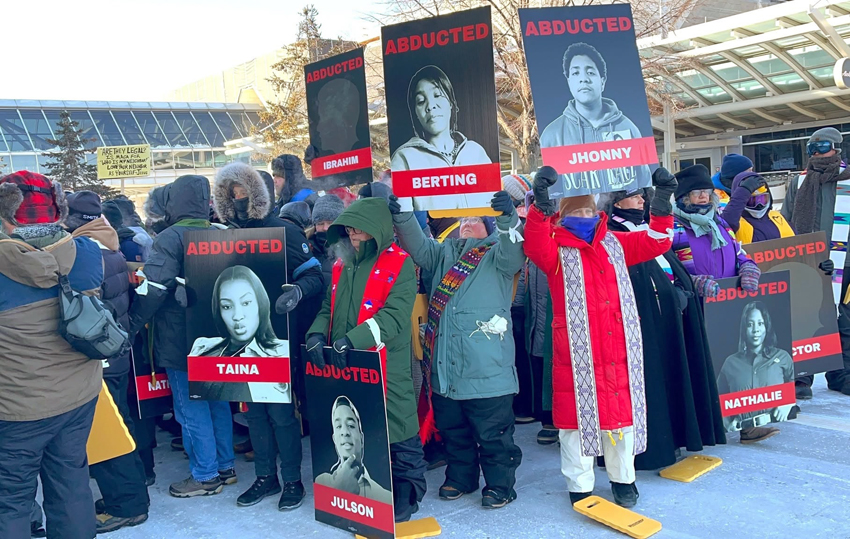
AMERICAN trade union UNITE HERE has released Inhospitable, a report revealing how White House immigration policies are creating a crisis in America’s hospitality industry.
The report was unveiled at a kickoff event featuring hospitality workers, union leaders, and economists last Friday, and detailed the devastating impact on tourism, employment, and working conditions nationwide.
Gwen Mills, President of UNITE HERE, said: ‘Industry leaders and our elected officials need to act to protect the hospitality industry and the people who make it run.
‘While immigrant families are on the front lines of the White House’s violent crackdowns and enforcement actions, our members – immigrant and US-born alike – are struggling with their economic impact.
‘If current immigration policies remain in place, conditions in the industry will worsen, threatening not only the workers who sustain it but industries, municipalities and communities that depend on tourism revenue.’
UNITE HERE said: ‘While the global tourism industry experiences unprecedented growth, the United States faces a deepening crisis characterised by military-style occupations, violent raids on communities, and the abrupt termination of legal status for hundreds of thousands of immigrants.
‘These policies are damaging America’s reputation as a welcoming destination and devastating the workers and businesses that depend on international tourism.’
The report includes testimony from UNITE HERE members who witness firsthand how immigration policies harm workers across industries, regardless of where they were born.
Workers described the impact of fewer hours, reduced staffing, and intense anxiety.
Rhodora Barry, a Master Cook at the Flamingo and a Culinary Union Member for 25 Years in Las Vegas, Nevada, said: ‘You can feel that business has slowed down. People are spending less, and some of my co-workers who depend on tips are seeing a real drop.
‘Even a 10 per cent decrease makes a difference when you are living paycheck to paycheck.
‘For working people, that affects how we pay bills, how we buy groceries, and how we take care of our families.’
Greg Varney, a Line Cook at St Anselm in Washington, D.C. added: ‘This has made my own job doubly hard and stressful.
‘Especially during the occupation, there was an intense and palpable fear in the kitchen.
‘People had family members who were taken. We all now jerk our heads up whenever we hear sirens, even in a city like D.C. where it’s common.
‘I’ve had to come in when I wasn’t scheduled because of the increase of call-outs among staff.
‘We are all trying to watch out for each other, but it feels like we’ve basically taken on a second shift due to this occupation and raids in D.C. streets.’
Inhospitable’s Key Findings include:
Tourism Collapse: More than 2.5 million fewer international tourists visited the United States in 2025 compared to 2024, representing a historic decline as other nations worldwide experience tourism booms.
Massive Losses: Overall travel receipts were down by more than $1 billion in September 2025 compared to the year before.
Employment Impact: 98,000 fewer people were employed in leisure and hospitality in December 2025 than at the same time in 2024, with unemployment in the sector rising to 6.1% versus 5.4% the previous year.
The report also documents severe impacts across major tourism markets:
Washington, D.C.: Following the deployment of the National Guard and aggressive immigration enforcement, Tourism Economics projects a 6.5% decline in international tourism to D.C. in 2025.
Restaurant reservations dropped roughly 30% immediately after the federal takeover announcement.
Las Vegas: Total visitors declined by 7.5% in 2025, dipping below 40 million for the first time since 2023.
Seattle: The city is experiencing a 26.9% projected decline in international overnight visitation in 2025 – the steepest drop among major US destinations.
Miami: The Trump administration’s cancellation of TPS and CHNV Parole has had a strong negative impact on the region’s hospitality workforce just as the luxury hotel market expands.
Florida’s labour participation rate fell to 57.5% in November 2025, the lowest since February 2021.
Economic Policy Institute President Heidi Sheirholz said: ‘The Trump administration claims its immigration policies are protecting American jobs and workers, but the evidence shows they are actually undermining both.
‘Current estimates indicate that if the administration succeeds in its goal of deporting one million immigrants annually, nearly six million jobs will be lost by the end of Trump’s term – including 2.6 million jobs held by US-born workers.
‘Inhospitable shows what this looks like on the ground for hospitality workers, whose jobs are becoming harder and less secure as White House immigration policies destabilise their industry.’
Meanwhile, California is facing the prospect of massive teacher strikes across the state as conflicts over working conditions, pay and special education staffing reach a boiling point.
For the second year in a row, the California Teachers Association (CTA), in partnership with GBAO Strategies, surveyed over 2,000 TK-12 public school teachers across the state about the state of public schools for California teachers, students, and communities.
CTA said last Saturday: ‘As the Trump administration and its Republican-led Congress continue attempts to dismantle public education and withhold vital resources, California teachers have increasing concerns about student safety, access to resources, and how to ensure fully staffed and stable classrooms long term.
‘Despite these and other mounting challenges, the vast majority surveyed are deeply committed to their students and public education.’
CTA President David Goldberg said: Teachers should not have to fight for the basic safety and supplies they need to do their jobs.’
California teachers have growing concerns about working and learning conditions inside their schools.
- 88% of educators surveyed say that insufficient funding for California schools is a serious issue, an eight point increase from 2025.
- 80% believe that California schools don’t have enough resources to meet student needs, a three point increase from 2025.
- 84% report insufficient resources, staff, and/or training to support special education students.
- 78% highlight overcrowding in classrooms as another serious issue.
- 73% report a serious educator shortage at their schools.
- More than half note the increase of immigration raids as a serious problem in their school communities. On average, absences in three Central Valley counties increased by 22% following raids in early 2025.
In addition, teachers are increasingly worried about affordability for themselves and the families of their students:
- 86% indicated that the cost of everyday goods and services has increased more than their salary.
- 83% of educators are concerned about affording the basic cost of living expenses, like gas, groceries and electric bills.
- 82% indicate housing affordability is a problem for educators at their school.
- More than 75% say they have students who lack stable housing.
- 75% say out-of-pocket healthcare costs are too high which is five per cent higher than in 2025.
• 71% teach students who lack reliable access to meals and 45 per cent have purchased food for students who experience hunger or are food insecure.