
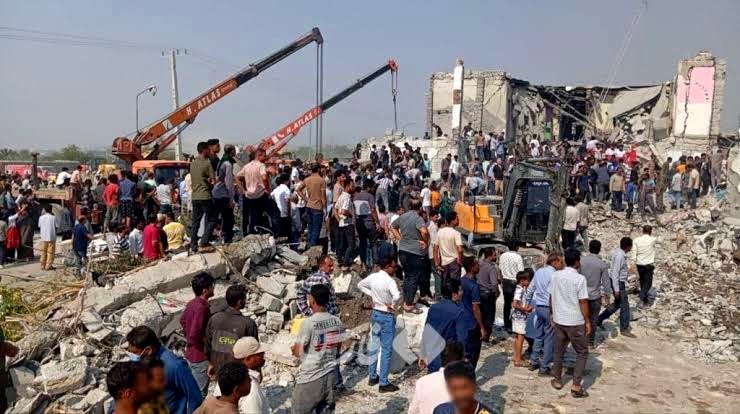
FROM FATEMEH SAHRANESHIN IN BANDAR ABBAS
THE global system of domination led by the United States fears the awakening of Islamic and humanitarian consciousness. That fear has driven its hostility towards freedom seeking nations, above all the Iranian people, and across the world distrust of American policy grows year by year.
Imam Khomeini, founder of the Islamic Revolution, put it plainly in his 1980 message to Hajj pilgrims: ‘America is the number-one enemy of the deprived and oppressed people of the world.’
Washington began its hostility towards Iran with military confrontation. When that failed, it turned to soft warfare and psychological operations. This article sets out that record from the Revolution to the present.

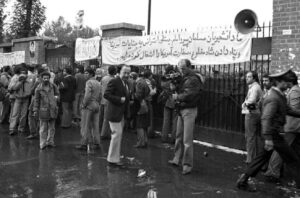
students who follow the Imam, have occupied the American embassy in order to denounce America’s crimes and shelter the deposed Shah’
On 4th November 1979 (13 Aban 1358), shortly after the deposed Shah was admitted to the United States, students following the line of Imam Khomeini, occupied the American Embassy in Tehran and took its staff into custody.
Documents seized there were presented as evidence that American diplomats and intelligence officers had worked against the Revolution. Imam Khomeini called the take-over a revolution greater than the first.
Washington’s economic response was swift. On 12th November President Jimmy Carter halted imports of Iranian oil.
Two days later, he declared a national emergency with respect to Iran and froze Iranian government property in the United States and in American banks abroad.
The Algiers Accords of January 1981 released some $7.9 billion, but the dispute over frozen Iranian assets has never been settled.
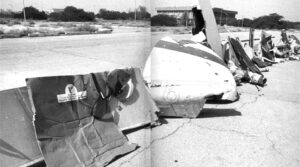
In April 1980, less than six months after the embassy was occupied, national security adviser Zbigniew Brzezinski pressed for military action. On the night of 24th April (4 Ordibehesht 1359), American aircraft and helicopters entered Iranian airspace for Operation Eagle Claw.

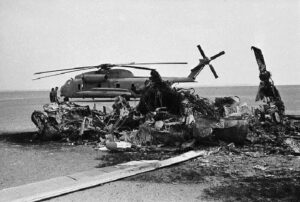
They carried an assault force built around the Army’s Delta Force commando unit, and their destination was a desert staging ground near Tabas in eastern Iran. The mission collapsed. Helicopters broke down, one crashed into a transport plane, and the fire killed eight American servicemen. No hostage was freed.
That July another plot followed. A coup centred on Shahrokhi Air Base, now Nojeh Air Base, in Hamadan Province was broken up on the night of 9-10th July 1980 and became known as the Nojeh Coup.
Iran’s Islamic Revolution Documents Centre has said Washington played a main role in planning it, and in 2023 an Iranian court ordered the United States to pay $330 million in damages.
Then came the imposed war. Saddam Hussein’s Ba’athist government invaded Iran in September 1980 (Shahrivar 1359), beginning eight years of bloodshed in which Washington supplied Iraq with intelligence.
Iraq used chemical weapons against Iranian forces and civilians on a vast scale, and it built that arsenal with foreign help.
The Baltimore firm Alcolac International sold hundreds of tons of thiodiglycol, a mustard gas precursor, and UN weapons inspectors later identified Alcolac shipments sent to Iraq. The company pleaded guilty to violating US export law.

On 3d July 1988 (12 Tir 1367), the cruiser USS Vincennes shot down Iran Air Flight 655 over the Persian Gulf near Hengam Island. The Airbus was flying from Bandar Abbas to Dubai. All 290 people aboard were killed, among them 66 children.
In 1990 the ship’s commander, Captain Will Rogers III, was awarded the Legion of Merit for his service as commanding officer.
Washington has also relied on political accusations, chiefly sponsorship of terrorism, pursuit of weapons of mass destruction and abuse of human rights, alongside economic sanctions.
Sanctions have restricted Iran’s access to international finance, trade and technology.
Between 2006 and 2010, American diplomacy secured six UN Security Council resolutions against Iran’s nuclear programme.
Unable to prevail by force, the United States has turned to media and psychological operations.
These are designed to spread distrust and hopelessness, to court universities and ethnic and religious minorities, and to back opposition groups. Persian-language broadcasting is central to the effort.
Washington funds the Voice of America’s Persian service and Radio Farda, run by Radio Free Europe/Radio Liberty, and Congress has appropriated money specifically to expand Farsi programming aimed at Iran.
Tehran regards these outlets as instruments for inflaming unrest, as in 1999, 2009, 2017 and 2019. It maintains that public awareness and national solidarity have repeatedly frustrated them.

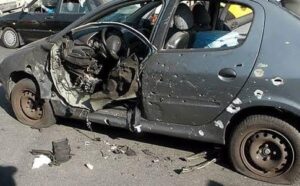
scientist and professor at Shahid Beheshti University, was
assassinated in a car bombing in Tehran on November 29, 2010
Between 2010 and 2020 Iran’s nuclear scientists were hunted down. Masoud Alimohammadi, Majid Shahriari, Mostafa Ahmadi Roshan and Mohsen Fakhrizadeh were among those assassinated. Iranian authorities blamed Israeli and American intelligence.
Sanctions continued, and in May 2018 Washington walked away from the nuclear deal, the Joint Comprehensive Plan of Action.
Marking 13 Aban in 2017, the Leader of the Islamic Revolution said: ‘The US is in the true sense of word the evil and main enemy.’ That conclusion, he said, rested not on prejudice or pessimism but on experience and the realities on the ground.
General Qassem Soleimani had led the Quds Force against ISIS and became one of the region’s most prominent military figures.

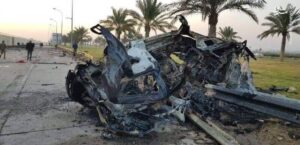
On 3rd January 2020 (13 Dey 1398), an American drone strike ordered by President Donald Trump killed him near Baghdad International Airport.
Abu Mahdi al-Muhandis, deputy commander of Iraq’s Popular Mobilisation Forces, and several others were killed with him.
On 13th June 2025 (23 Khordad 1404), Israel launched a large-scale assault on Iran, striking military and nuclear sites and residential areas.
In its first hours it killed Major General Mohammad Bagheri, chief of staff of the armed forces; Major General Hossein Salami, commander-in-chief of the IRGC; and Amir Ali Hajizadeh, commander of the IRGC Aerospace Force.
Nuclear scientists were killed too, including Mohammad Mehdi Tehranchi and Fereydoun Abbasi.
Iran answered with missile strikes on Israel. On 22nd June the United States entered the war directly, bombing nuclear facilities at Fordow, Natanz and Isfahan, and on 23rd June Iran fired missiles at the American base at Al Udeid in Qatar. A ceasefire took effect on 24th June.
On 28th February 2026 (9 Esfand 1404), the United States and Israel launched a far broader assault.
Its opening salvo killed Ayatollah Seyyed Ali Khamenei, Supreme Leader of the Islamic Republic.
Also killed were Mohammad Pakpour, commander-in-chief of the IRGC; Abdolrahim Mousavi, chief of staff of the armed forces; and Ali Shamkhani, secretary of the Defence Council and a former secretary of the Supreme National Security Council.
The war spread across the region. After 40 days a two-week ceasefire was announced on 8th April (19 Farvardin 1405), but it did not end the attacks.
The worst atrocity came on the first day. A strike hit Shajareh Tayyebeh primary school in Minab, Hormozgan Province, where boys and girls were taught on separate floors, while classes were in session. Minab’s prosecutor put the dead at 156, including 120 children.
Human Rights Watch said the attack should be investigated as a war crime.
Forensic Architecture and Sky News reconstructed it from satellite imagery, video and testimony. A preliminary US military inquiry reportedly found that the strike resulted from reliance on outdated data.

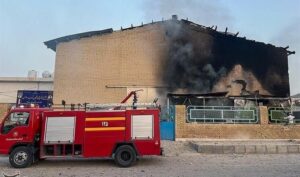
Hours later a missile struck a sports hall in Lamerd, Fars Province, where teenage athletes, among them girls’ volleyball players, were training. Iranian officials put the toll from the strikes on the town at between 21 and 24.
On 17th September 2026, a UN fact-finding mission reported reasonable grounds to believe the United States committed the war crime of indiscriminate attacks in both Minab and Lamerd, and concluded that American forces had acted recklessly.
On 4th March (13 Esfand 1404), a US submarine torpedoed the frigate IRIS Dena in international waters about 20 nautical miles off Galle, Sri Lanka.
The ship was returning from an Indian Navy exercise, far from the theatre of war. Sri Lanka’s navy recovered 87 bodies and rescued 32 sailors. Tehran said 130 were aboard; Sri Lanka said 180.

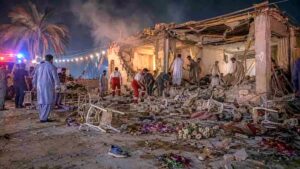
On 1st September (10 Shahrivar 1405), during American strikes on southern Iran, a house hosting a wedding in the coastal town of Kuhestak, Hormozgan Province, was hit.
Iranian state media reported four dead, two women and two children, and at least 68 wounded.
Weapons experts said that fragments pointed to an American guided munition. Experts judged that the house took a direct hit.
US officials said the strikes targeted the town’s telecommunications tower, about 100 metres away, and Central Command said it was looking into the reports.
Minab, Lamerd, the IRIS Dena and Kuhestak take their place in a record that runs from Tabas to the Persian Gulf. It is a record of Iranian civilians, children among them, paying the price of American policy.