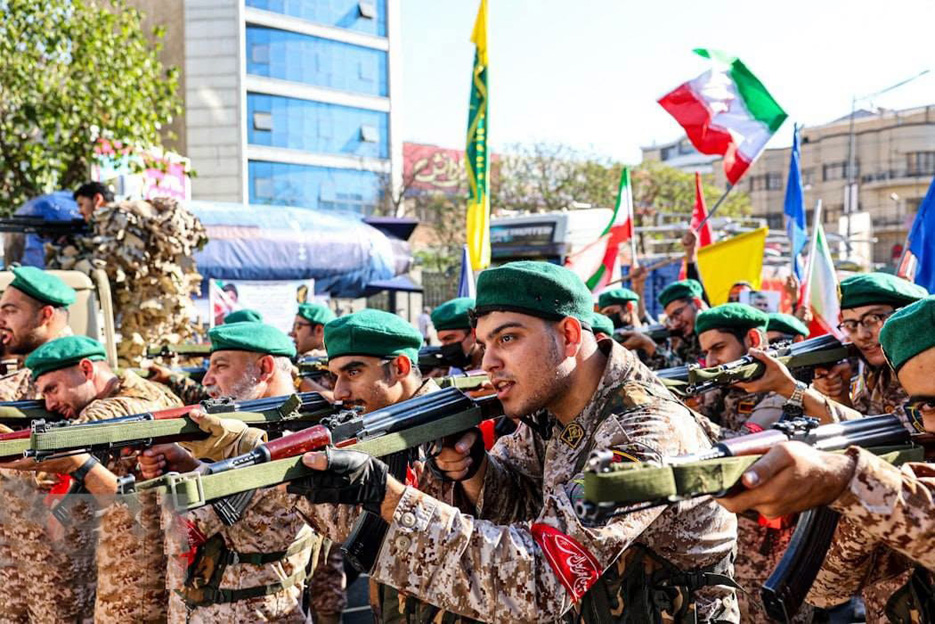
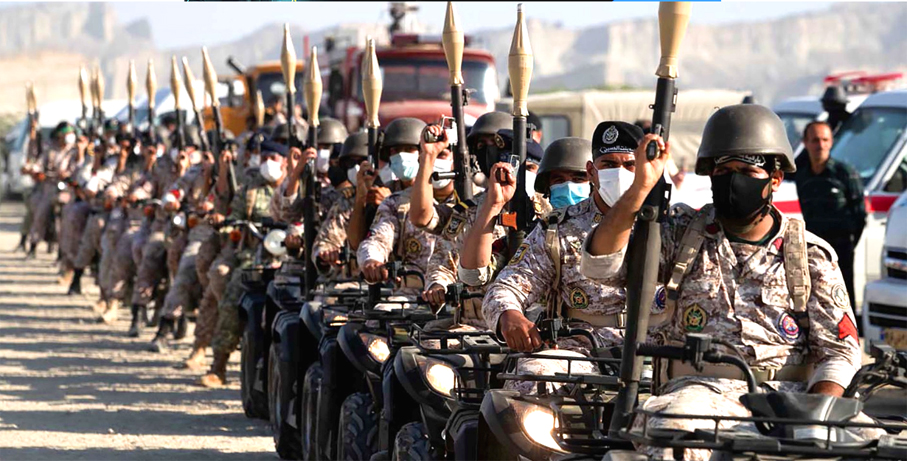
As the US-Israeli aggression against Iran enters its fourth week, with none of the stated objectives materialising, the spectre of a ground invasion has moved from whispered contingency to urgent operational planning.
However, as Iranian armed forces have repeatedly warned, any American soldier setting foot on Iranian territory will step into a meticulously prepared kill zone designed to inflict losses unseen since World War II.
The unprovoked and illegal aggression that began on February 28, 2026 – amid indirect nuclear talks – has exposed a fundamental miscalculation in American strategy.
Despite weeks of unbridled and indiscriminate aerial bombardment and claims of having struck over 7,000 targets, Iran’s retaliatory capabilities remain undiminished, it continues to inflict heavy blows on the enemy, its leadership structure has decentralised into autonomous divisions, and the Axis of Resistance continues to strike US assets across the region.
As American Marine expeditionary units prepare to converge on the Persian Gulf and the 82nd Airborne Division stands ready, military planners in Washington confront an uncomfortable reality: air power alone cannot achieve desired goals, yet a ground invasion would trigger a cascade of catastrophic consequences that no amount of American firepower can contain.
Iran has made its position emphatically clear: ground aggression constitutes a red line, and any crossing of that will be met with surprises that would leave the United States and its Israeli ally unable to remove their soldiers’ coffins from Iranian soil.
How is Iran’s geography built for defence?
Iran is not Iraq. This single geographic fact forms the foundation of any analysis of a potential ground invasion.
Spanning 1.65 million square kilometres, Iran is four times the size of Iraq, with terrain that offers natural defensive advantages unlike anything American forces faced in 2003.
The Zagros Mountain range, running from northwest to southeast along the Iraqi border, presents a formidable barrier to any mechanised advance from the west.
These mountains channel invading forces into predictable avenues of approach – precisely where Iranian defenders have concentrated their anti-armour capabilities for decades.
Beyond the rough terrain, the sheer scale of occupation would dwarf any previous American experience. Iran’s population exceeds 93 million people – more than two and a half times the population of Iraq at the time of the 2003 invasion. Even a conservative counterinsurgency ratio would require hundreds of thousands of American troops to maintain order across the country’s urban centres.
The logistical apparatus required to support such a force would be among the largest in military history, and every gallon of fuel, every meal, every artillery shell would have to travel through supply lines under constant multi-domain attack from the moment they entered Iranian territory.
How is Iran’s anti-access defence architecture built?
Iran has spent more than four decades constructing a defensive system designed specifically to counter any external aggression, including that from the US or its proxies.
This integrated anti-access and area denial architecture transforms the Persian Gulf region into a high-risk environment for any foreign hostile force.
The system operates in layers, each designed to complicate an adversary’s operational calculus and impose costs at every stage of an invasion.
Before any ground invasion could begin, American forces would have to contend with Iran’s extensive unmanned aerial vehicle surveillance network.
Platforms like the Mohajer-6, with 15 hours of endurance, provide persistent intelligence coverage across the Persian Gulf, tracking naval movements and monitoring ground force concentrations while transmitting targeting data to strike platforms in near real-time.
This reconnaissance layer compresses reaction time from minutes to seconds, allowing defensive forces to engage threats before they approach Iranian shores.
Any American ground invasion would require air supremacy to protect advancing forces from aerial attack.
Yet Iran’s layered air defence network, centred on the islands of Abu Musa, Greater Tunb, and Lesser Tunb in the Persian Gulf, has been designed to deny precisely that.
These islands, described in military literature as Iran’s ‘unsinkable aircraft carriers’, function as multi-mission platforms hosting surveillance systems, air defence batteries, and offensive strike capabilities.
What makes amphibious operations risky?
For any ground invasion, the ability to land forces by sea would be essential. Yet Iran’s anti-ship missile arsenal makes amphibious operations in the Persian Gulf extraordinarily risky.
Deployed on mobile coastal launchers across Abu Musa and the Iranian coastline, it can strike targets deep into the Strait of Hormuz.
Complementing Qader are the Khalij Fars anti-ship ballistic missiles, with optical seeker for terminal guidance, and the Hormuz family of anti-radiation missiles specifically designed to target the radar emissions of Aegis-equipped warships.
The Zolfaghar Basir extends this threat envelope to 700 kilometres, pushing potential engagement zones well into the Gulf of Oman.
At the apex of this capability are the Fattah-1 and Fattah-2 hypersonic missiles, capable of speeds reaching Mach 15 and extreme manoeuverability, designed to defeat even the most advanced missile defence systems.
Beyond conventional missiles, the IRGC Navy operates hundreds of small, fast attack craft capable of swarm tactics against larger warships.
These speedboats, armed with rockets and missiles, can attack from multiple directions simultaneously to overwhelm defensive systems.
Below the surface, Iran’s Ghadir-class midget submarines, optimised for the shallow waters of the Persian Gulf, can lie in wait on the seabed to ambush passing vessels with torpedoes.
Iran also possesses one of the largest naval mine inventories in the region, numbering in the thousands, including advanced influence mines triggered by a ship’s magnetic field or acoustic signature.
Iranian military officials have made clear that a ground invasion would cross a red line with consequences far beyond anything the United States has yet experienced.
‘A ground attack on Iranian soil is one of our red lines,’ a military source stated, ‘and just as we had a surprise against every enemy operation, we will show it again in this case also.
‘Iran is ready, so that if the terrorist Trump makes a mistake in this regard, the response will come in such a way that he will not even be able to remove the coffins of his soldiers from Iranian land.’
The IRGC has made its position clear: ‘The soldiers of Islam are waiting with eagerness to see and deliver a severe blow to the American carrier in the depths of the battlefield, and are fully prepared to give the American marines a close-up view of naval surprises.’
Having tested the battlefield for more than eight years during the war Western-backed Ba’athist Iraq imposed on Iran during the 1980s, Iranian forces know their terrain and their capabilities.
For the United States, the choice is not simply whether to invade but whether the objectives of the war justify the costs of that invasion.
Iran’s military doctrine has been shaped by one overriding imperative: to make those costs so high that no American president can sustain public support for a ground war.