
THE United States Army has exhausted most of its worldwide stock of highly accurate long-range missiles during five months of war against Iran, leaving officials worried about the military’s readiness for any further conflict.
The extent of the shortfall revealed that the weapons involved are principally the Army’s surface-to-surface systems, the Army Tactical Missile System (ATACMS) and the Precision Strike Missile (PrSM).
Two of the sources said the US had used ‘virtually all’ of them. Each of these munitions costs more than a million dollars and allows accurate strikes from a safe distance.
With precision weapons so heavily depleted, Trump may be forced to fall back on piloted bombing runs, which carry far more risk, should he order another large-scale assault on Iran.
Asked about the stockpile figures, the White House released a statement from Trump saying the country had ‘far more munitions than anyone in the world’ and ‘far more than we need’.
‘Our defence companies are, at this moment, making more munitions than they have ever made before, in addition to expanding their plants and equipment at record levels,’ Trump said.
The figures have circulated in Washington over the past week amid tense exchanges within the administration about how much longer the bombardment can go on before stocks fall to a level that would cripple any response to a crisis elsewhere.
One source said the run-down followed a decision to avoid the more dangerous methods of hitting Iranian targets, among them sending pilots to drop bombs.
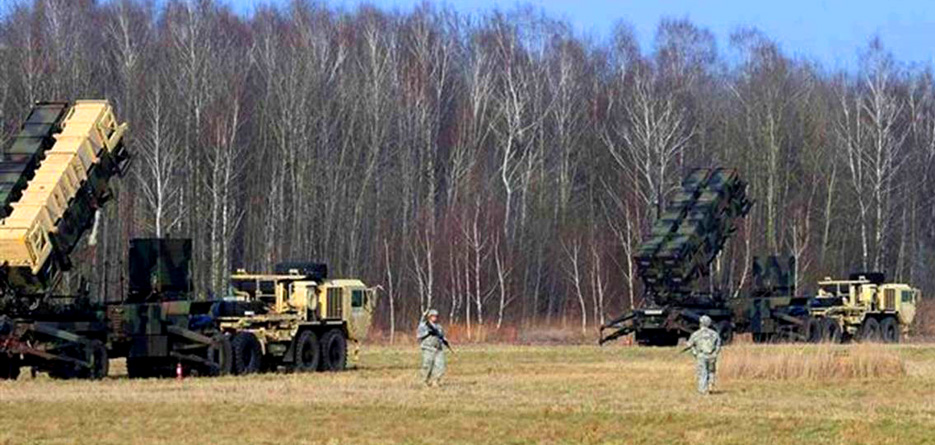
For weeks, military leaders have been warning Trump that stocks of defensive weapons were falling, among them the Patriot interceptors used against ballistic missiles.
Last week several outlets reported that Trump had decided against another mass offensive inside Iran partly because of these warnings.
A report published last week by the Centre for Strategic and International Studies estimated that roughly 65 per cent of Patriot interceptors, which are defensive munitions, had been fired between February and July, and that THAAD interceptor stocks were at least 38 per cent below their level at the start of the war.
A little under half the global supply of Tomahawk cruise missiles, generally fired from ships, is also believed to have been expended since the war began.
• See feature