‘IRAN has not held any direct talks with the United States, but has only received messages through some mediators regarding the US’ desire for negotiations,’ Iranian Foreign Ministry spokesman Esmaeil Baghaei said yesterday.
‘It seems quite natural that when the US raises the issues of negotiations and diplomacy, sensitivities will be increased,’ Baghaei said.
‘It is not clear how much, even inside the US, its claims about diplomacy and negotiations are being taken seriously,’ he continued.
‘Reactions show that the extent of global trust in the US claims in the field of diplomacy is very limited.
‘Unlike the opposite party, which constantly changes its position and makes contradictory statements and adopts a contradictory attitude, Iran has been pursuing a clear stance on negotiations with the US, he added.
Baghaei noted that based on the issues conveyed to Iran, under whatever title such as the 15-point plan, the other side has made ‘very excessive, unrealistic and irrational’ demands.
He emphasised that Iran did not participate in a four-sided meeting in Islamabad on Saturday hosted by Pakistani Prime Minister Shehbaz Sharif and attended by the foreign ministers of Saudi Arabia, Turkey and Egypt.
He appreciated regional and neighbouring countries’ concern about peace and security, but affirmed Iran’s rational demand that any country or party that deals with the issue of war in the region should pay attention to the issue of which party has launched the war.
‘It is necessary to be realistic and fair and stop expecting only one side to exercise self-restraint,’ he said.
The US and Israel started a fresh round of unlawful military aggression on Iran on February 28, some eight months after they carried out unprovoked attacks on the country. The attacks killed Leader of the Islamic Revolution Ayatollah Seyyed Ali Khamenei as well as military commanders.
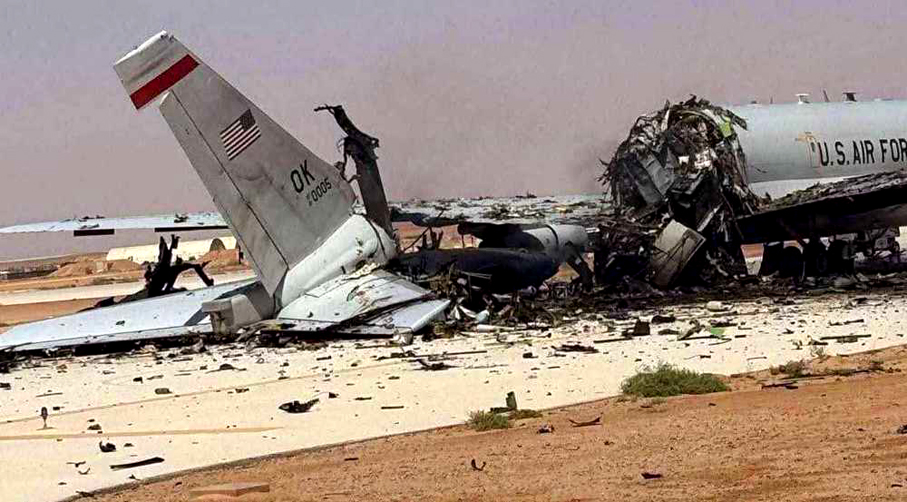
Iran swiftly retaliated by launching barrages of missile and drone attacks on the Israeli-occupied territories as well as on US bases in regional countries.
Baghaei said Iran’s self-defence policies cannot be regarded as an attack on regional countries or interpreted as a ‘hostile’ move against any state.
‘We expect neighbouring countries to abide by their commitments under international law, moral obligations and the principles of brotherhood and neighbourliness and not allow the United States and the Zionist regime (Israel) to exploit their territory and facilities to attack a neighbouring state,’ he added.