BY CLARA SANCHEZ GUEVARA
TRUMP stopped buying oil from Venezuela to break it. He couldn’t and he came back; and it cannot be said with ‘its tail between its legs’, because it was done with an invasion, bombing, missiles, and destruction in military and civilian areas.
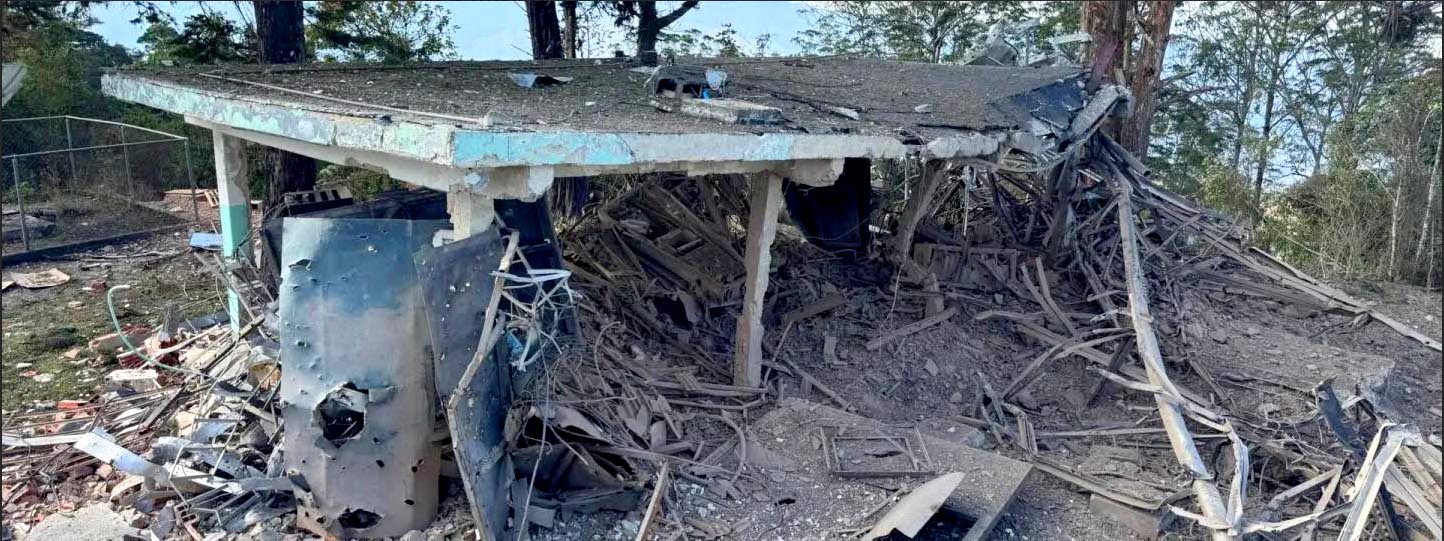
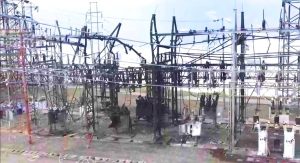
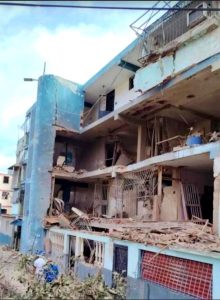
These included homes, buildings, a university, five scientific research centres (mathematics, physics, chemistry, ecology, and nuclear technology), storage infrastructure for high-cost medications for patients with chronic illnesses, a hospital haemodialysis unit, including communication antennas, electrical substations, a port, and an airport.
With more than 100 fatalities and 135 wounded; as the final blow, the kidnapping of President Nicolás Maduro and his wife, First Lady Cilia Flores; burning all bridges and leaving only the threat of military force as a method of coercion to Venezuela in any negotiation process, coercion, and of course, destruction.
Since 2014, the U.S. has abandoned persuasion, seeking common ground, creating shared interests, arbitration, or mediation with Venezuela and began an initially invisible bombing campaign, spearheaded by Barack Obama, with those first missiles disguised as Unilateral Coercive Measures (UCMs – sanctions) that rained down on the population throughout the country, reaching 1,081 by the end of 2025.
This placed Venezuela as the third most sanctioned country in the world and, over the years, established an economic, financial, and commercial blockade, along with other political, diplomatic, and military actions.
This allowed for constant attacks on the leader of the Bolivarian Revolution both internationally and nationally, with the objective of imposing a regime change aligned with US foreign policy.
As always, and since 1947 with the Truman era, democracy, freedom, and human rights were the initial justification for attacking Venezuela.
Drug trafficking was the final narrative used to justify the invasion.
There, the interventionist governments of the Obama, Trump, and Biden White Houses relied on an anti-national and unpatriotic elite to achieve their objectives, initiating a destabilisation process by constructing crisis scenarios starting in 2014.
Where government opponents and followers of Venezuelan opposition leaders – who had devolved into an extremist, violent, fascist type – burned, beheaded, and disembowelled people for appearing to be Chavistas and for not complying with the sit-ins they imposed in some areas of the country where they won mayoral and gubernatorial positions.
At the same time, a food crisis was fabricated and then morphed into a humanitarian crisis, using the slogan ‘man-made’ to blame President Nicolás Maduro and justify a military intervention disguised as humanitarian aid in the name of the international community.
In fact, a military intervention was attempted by force in 2019.
In 2020, amidst the Covid-19 pandemic, Trump, even in his final days in office and after losing his re-election bid to Joe Biden, implemented the first steps of the naval blockade to prevent ships carrying fuel and additives imported by Venezuela from reaching the country.
In fact, four tankers carrying one million barrels of fuel were seized in 2020 and auctioned off in the US in 2021.
These were the first steps in the piracy of oil tankers that, by 2025, would no longer be arriving in Venezuela, but rather leaving the country with oil, through a blatant military deployment authorised by Trump since mid-year.
This deployment escalated from an economic blockade to a naval one, under the guise of fighting drug trafficking.
The turning point was the death of Commander Hugo Chávez, with which the US projected the end of the Bolivarian Revolution.
This did not happen, nor is it happening now. The main problem identified as the insurgency within the government of Nicolás Maduro, a former factory worker and bus driver who has demonstrated over the years the aptitude of a great statesman in the face of the US.
This leadership being an essential component for the establishment of national power. From oil-producing country to world’s largest reserves under the Bolivarian Revolution.
With Venezuela, the strategic and geopolitical objective is logical and evident, although there are still those who wish to deny it: The vast oil reserve, officially recognised as such since 2010 thanks to the Bolivarian Revolution.
Otherwise, the country wouldn’t be considered to have the world’s largest oil reserves.
Previously, under the so-called Oil Opening, which was nothing more than the privatisation of the entire national industry during the neoliberal era of the 1990s, Venezuela’s conventional oil reserves hovered around 75 billion barrels (BMB).
These reserves rose to 87.324 BMB in 2006, to 99.377 BMB in 2007, and to 296.5 BMB by 2010, surpassing Saudi Arabia and increasing Venezuela’s geopolitical importance and strategic positioning not only in South America but also globally.
This led to the certification of an estimated 235 billion barrel (BMB) reservoir, previously classified as bitumen and primarily controlled by Exxon Mobil, as conventional oil.
Venezuela’s oil production capacity, through the PDVSA (Venezuela’s nationalised oil company), gave it the position of the world’s sixth-largest oil producer until 2014 and the fifth-largest company on the planet.
‘Oil production in Venezuela reached a total of 2,899,000 barrels per day, as well as 4,818,000 cubic feet per day of net natural gas, through 18,516 active wells, 324 drilling rigs, 2,444 oil fields, and 3,022 km of main pipelines in 264 oil fields, supported by a refining capacity of 2,822,000 barrels per day’, whose impact extended throughout the national economy.
Of that refining capacity, only 1,303 barrels were processed within the country; the rest was processed through the Venezuelan company CITGO, located in the US.
With Trump’s Executive Orders 13808 of 2017 and 13857 of 2019, which imposed Juan Guaidó as interim president – a self-proclaimed position he assumed from a platform in a public square in Caracas – Venezuela was effectively stripped of its resources, limiting this process to the oil industry and, consequently, national revenue.
While all exploitation processes were carried out under the Hydrocarbons Law approved in 2001, which also triggered a coup against President Hugo Chávez, primarily because it increased the country’s majority shareholding from 30% to 60%, raised royalties from 1% to 33%, and increased income tax from 34% to 50%.
These benefits were enjoyed by the entire Venezuelan population until 2015.
At the beginning of the 21st century, Venezuela left behind the privatisation of its oil industry and developed a migration process under the concept of a new oil sovereignty policy that allowed joint exploitation with companies from various countries.
By 2014 the PDVSA had formed 47 joint ventures.
However, this was not a reason for the US to completely suspend oil imports from Venezuela. These imports began to decline, initially due to falling demand amid the US economic recession triggered by the global financial crisis of 2007-2008.
This crisis drove crude oil prices to record highs, making them volatile and prone to upward price fluctuations until 2013 (exceeding $100 per barrel).
Simultaneously, this energy dependence made the US vulnerable. Later, the fracking and shale oil revolution boosted domestic oil production, leading the US Congress to lift the export ban on crude oil that had been in place since 1973.
It was Trump who scared away Venezuela’s oil companies with his policy of sanctions, terrorism, persecution, and economic warfare against national and international businesses.
And finally, the greatest failure is expressed in the non-collapse of the national government, which, on the contrary, grew the Venezuelan economy from 2021 for five consecutive years amidst the blockade, leading regional growth for the last three years and closing in 2025 at 8.5%, demonstrating a high capacity for the country’s economic recovery despite the US.
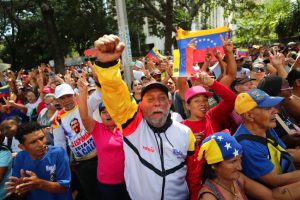
Bolivarian Venezuela continues to maintain sovereign control over its oil.
Faced with this scenario of a reborn Venezuela, Trump had to construct an honourable-horrific exit from the US failure of more than a decade, involving three White House presidents, including himself on two occasions, who have literally been unable to subdue Venezuela under President Nicolás Maduro.
The Venezuelan president had already publicly outlined his negotiation proposals on numerous occasions, including on January 1st, 2026, when he reiterated: ‘The US government knows this, because we have told many of its spokespeople that if they want to seriously discuss an agreement to combat drug trafficking, we are ready.
‘If they want Venezuelan oil, Venezuela is ready for US investment, as with Chevron, whenever, wherever, and however they want.
‘The US should know that if they want comprehensive economic development agreements, they are also welcome to pursue them. We have said this time and time again.’
However, Trump decided to burn bridges, leaving him with the military threat of a second, third, or fourth attack on the Venezuelan population, to continue coercing them.
This threat, of course, extends to the entire leadership of the Bolivarian Revolution, including interim president Delcy Rodríguez, with whom he is negotiating according to the standards set by the president he has hijacked.
But his irrational, fundamentalist, religious, right-wing, racist, xenophobic, reactionary, fascist, expansionist, and imperialist personality prevented him from reaching a diplomatic agreement, so as not to appear humiliated.
Final considerations: Faced with this scenario, not only nationally but globally, the Bolivarian Revolution has the most crucial task it has ever undertaken: To avoid war and maintain peace at all costs, as it has done on other occasions, to guarantee the survival of the population and, consequently, of the nation.
This is the scenario of destruction to which the US seeks to drag Venezuela, leaving military invasion as its only option up its sleeve.
This invasion would encompass, in every sense, an attempted occupation by force, in order to impose regime change.
For the US, dividing the country into several pieces is to avoid a protracted armed conflict, which, in their view, they have always lost, even though it leaves countries devastated after years of occupation.
Therefore, they must want to contain the conflict, preventing its spread. This is also their weakness: That it could ignite their backyard and accelerate their decline amidst the emergence of a multi-polar world, which they acknowledge has arisen.
Consequently, the exercise of military force remains its only option when its economic power is no longer sufficient to contain and demonstrate its ability to secure a share of the global pie, thereby maintaining its position as a power centre in this emerging world, in the face of China and Russia, with whom it competes.
Finally, international competition for strategic natural resources intensifies once again, driven by the imperial logic of plunder.