The West Bank is witnessing an increasing acceleration in the pace of Israeli settlements, with the expansion of infrastructure projects and the construction of bypass roads together with the escalation of settlement building demonstrating an organised plan to reshape the area’s geography and impose ‘long-term field realities’.
These policies are deepening the isolation of Palestinian communities and dismembering them, which limits any possibility of urban development and undermines the geographical connection between cities and towns.
The National Bureau for the Defence of Land and Resistance to Settlements revealed in its weekly report that the occupation government has approved the allocation of an additional 1.075 billion shekels to build new roads serving settlements during the years 2026-2028, by a joint decision from the Israeli Finance Minister Bezalel Smotrich and the Minister of Transportation Miri Regev.
This is on top of the seven billion shekels that the government previously allocated for colonial road projects in the West Bank, under a policy aimed at facilitating settlement expansion and linking settlements to each other and to Israel – away from Palestinian communities.
The report also noted that recent years have witnessed a notable expansion in bypass road projects, either those that have already started to be implemented or those being planned, including the Jaba bypass axis, the Qalandia tunnel, the Eastern Ring Road in Jerusalem, and the Funduq bypass road east of Qalqilya, in addition to projects to expand Route 60, which crosses the West Bank from its north to its south.
The report considers that these roads are not limited in function to facilitating the movement of settlers, but are used as a tool to reshape Palestinian geography, by isolating Palestinian villages and communities from each other, so limiting Palestinian urban expansion, and imposing field realities that strengthen long-term Israeli control over the West Bank.
The National Bureau pointed out that the occupation authorities have paved more than 952 kilometres of bypass roads during the past years, which has directly affected Palestinian agricultural lands and movement, and transportation between cities and towns.
In parallel with the road projects, the report pointed to an unprecedented acceleration in settlement construction, as the so-called ‘Higher Planning Council’ of the occupation army has discussed plans to build 643 new settlement units in a number of settlements established on West Bank lands.
The total settlement units approved since the beginning of this year has now reached about 3,732, including 1,338 units in the Kedumim settlement, where the Israeli Finance Minister Bezalel Smotrich lives.
The report also revealed plans to establish two new settlements in the Jordan Valley area under the names ‘Bezeq’ and ‘Tamoun’, within a broader plan aimed at creating 18 new settlements in the region, thereby strengthening Israeli control over the Palestinian Jordan Valley.
The report also documented a wide series of field violations in the West Bank governorates, including the demolition of homes and facilities, the seizure of lands, and the uprooting of hundreds of olive trees, in addition to attacks carried out by settlers against Palestinian citizens and their property in Jerusalem, al-Khalil, Ramallah, Nablus, Salfit, Bethlehem, and the Jordan Valley.
This data reflects an integrated plan that combines the expansion of settlement infrastructure, the acceleration of settlement construction, and the escalation of violations, thereby consolidating the isolation of the West Bank and imposing a new geographical and political reality on the occupied Palestinian territory.
Israeli settlements extend and spread over vast areas of the West Bank to form an integrated colonial structure based on reshaping geography, demography, and the legal system to serve the occupation’s long-term project of complete control.
These settlements are distributed according to strategic planning that links settlement blocs, bypass roads, and military zones, chopping up Palestinian land into separate enclaves and undermining any possibility of establishing a contiguous geographical entity
This expansion is not random, but is based on official policies supported by administrative and legal measures that redefine land use and ownership, giving preference to settlers at the expense of the Palestinians, the indigenous owners of the land.
West Bank settlements are communities established by the Israeli occupation on Palestinian lands occupied since 1967.
Some began as military sites and then turned into civilian settlements, and some were established from the beginning within a clear political plan to impose permanent ‘facts on the ground’.
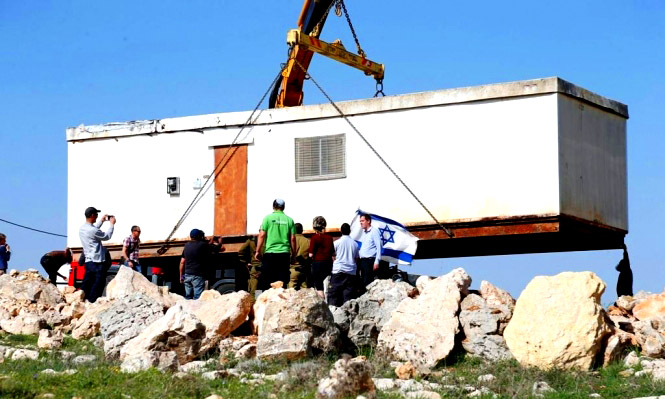
In addition to the settlements recognised by the occupation authorities, there are outposts that were often established faster and more violently, and later protection and services were provided to them in preparation for their legalisation.
In official Israeli discourse, these settlements are presented as neighbourhoods, towns, or ‘areas of natural growth’.
But on the ground, the meaning is completely different.
This is an organised seizure of land and resources, encircling Palestinians with a network of checkpoints, military roads, and closed areas, so that the Palestinian presence itself turns into a besieged, threatened presence that can be reduced at any moment.
The settlement project began after the occupation of the West Bank and East Jerusalem in the 1967 war, but it was not a fleeting reaction or just an ideological impulse of some extremist Zionist gangs.
Since the early years, successive Israeli governments have supported settlement as a strategic tool.
The goal was clear: to prevent any full withdrawal from the occupied land, and to impose a reality that makes the establishment of a geographically contiguous Palestinian state impossible.
In the 1970s and 1980s, the pace of establishing settlements accelerated on mountain tops, near Jerusalem, in the Jordan Valley, and around major Palestinian cities.
These sites were chosen carefully.
Some control vital passages, some cut off communication between the north and south of the West Bank, and some surround Jerusalem and isolate it from its natural Palestinian extension.
After the Oslo Accords, settlement did not recede as was promoted at the time, but actually expanded at a greater pace under the cover of the political process.
This is one of the most blatant aspects of the scheme. While the talk was about a settlement and negotiations, bulldozers were working, and maps were being rewritten on the ground.
Therefore, trying to understand settlement outside of the context of Oslo, or as if it were a sudden deviation, misleads more than it explains.
According to data from research centres and field reports, until the end of 2024 and the beginning of 2025, the settlement scene consisted of a vast and overlapping network.
By the beginning of 2025, research data indicates the existence of about 200 official settlements established in the West Bank, and about 305 outposts, including 125 independent outposts and 180 linked to existing settlements, totalling about 710 settlement and military sites when counting the military bases linked to the settlement infrastructure.
Settlement expansion does not only happen through the announcement of a new settlement. Sometimes the path begins by paving a bypass road that devours wide agricultural lands.
Sometimes a mountain is confiscated under the pretext that it is state land, then a small outpost is established on it, then the outpost is surrounded by military guards, then electricity and water arrive, and after time, it becomes an established settlement.
There is also the method of security buffer zones around settlements.
The confiscated area is not limited to the houses built by the settlers, but extends to a wide perimeter that Palestinians are prevented from accessing or farming their land in it. In grazing areas, settlement groups have used this logic to expel Palestinian Bedouin and agricultural communities from vast areas without a clear official announcement, but rather through continuous intimidation and daily violence.
The occupation uses the law as a tool of confiscation, but it also uses organised chaos. This is an important point.
Not everything that happens goes through a declared government decision, but many of the attacks that appear as individual initiatives happen under the eyes and protection of the army, and are later translated into a fixed reality.
Over the past two years, the West Bank and Jerusalem have witnessed an unprecedented settlement escalation, coinciding with the recording of 8,691 attacks by settlers against Palestinians and their property.
During the same period, the approval of thousands of new settlement units accelerated, alongside the declaration of tens of thousands of dunums as state lands, including more than 26,000 dunums declared since the end of 2022, an area equivalent to about half of what has been confiscated using this tool since the Oslo Accords.