
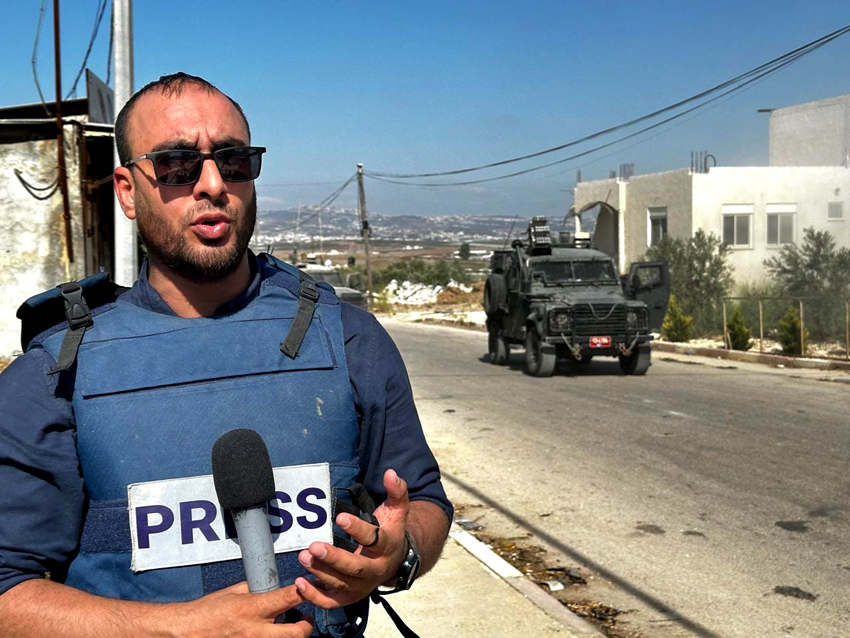
A PALESTINIAN journalist held by Israel for 22 months without charge or trial has returned to the Jenin refugee camp where he was born to find it emptied of its people, bulldozed and occupied by Israeli troops, and the work of reporting from the northern West Bank more dangerous than at any time in his career.
Mujahed al-Saadi, a freelance reporter who has covered Jenin and the surrounding area since 2012, was seized from his home in the city’s al-Saada neighbourhood on 19th September, 2024.
Soldiers beat him and took him away in his pyjamas, his brother told a press freedom group.
He was placed in administrative detention, the system under which Israel holds Palestinians on secret evidence for renewable six-month terms, and was moved from Megiddo prison to Ktzi’ot in the Negev before his release in July.
‘I didn’t expect Jenin could change so much in the 22 months; I was locked up in the occupation’s prisons,’ al-Saadi wrote in a dispatch for Drop Site News, the independent outlet he has contributed to since before his arrest.

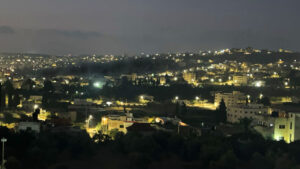
‘When I returned after my release in July, it was as if an earthquake had struck the entire area.’
His first day back in the field, he said, was overwhelming, and he called the months since ‘the most difficult I’ve experienced as a journalist working in the field for over a decade’.
While he was in prison, Israel carried out the largest displacement of Palestinians in the West Bank since 1967.
On 21st January 2025, hours after Palestinian Authority forces withdrew from the camp at the end of their own military campaign there, which began on 5th December 2024, Israeli forces launched what they called Operation Iron Wall.
It spread to the Tulkarm and Nur Shams camps and forcibly displaced 33,000 Palestinians from the three, destroying or badly damaging homes, roads, water and sewage systems and telecommunications.
Israeli troops remain in the camps and have barred residents from returning.
Satellite images taken in October 2024 and on 14th November this year show alleys bulldozed into wide roads and hundreds of homes destroyed or heavily damaged.
Al-Saadi remembered a camp in 2024 that was still crowded with people spilling out of its streets, homes and meeting places despite repeated incursions.
‘At night, the camp is now a patch of darkness surrounded by the other lit areas of the city,’ he wrote.
He added: ‘The city is no longer the “Mother of Gardens”, as it was once known.’
After more than 600 days of displacement, the camp’s former residents are scattered across villages around the city, exhausted by poverty and dependent on aid that arrives only intermittently.
Israel has also set up a military base and observation post in the al-Jabriyat neighbourhood in the heart of Jenin, in an area that under the Oslo Accords falls under full Palestinian Authority control.
Al-Saadi said some 14 settlements and military camps had been established in the towns around the city, carving the governorate into pockets cut off by checkpoints and frequent road closures.
At the checkpoints soldiers inspect phones and social media accounts, and journalists’ equipment is routinely destroyed, confiscated or stolen.
Troops open fire without justification, he said, and hold reporters for hours of interrogation.
‘Even just writing about settlements, for example, or the history of Palestine can make you a target of Israeli security forces,’ he wrote.
A journalist could be detained merely for possessing certain material, he said, let alone for publishing it.
To report on the families driven from the camp, he now needs more than two days just to arrange to reach them.
‘I would say that working as a journalist in the West Bank today, particularly reporting from the northern cities like Jenin, has become one of the most dangerous jobs in the world,’ he wrote.
Jenin’s journalists have long paid that price.
Al-Saadi was present in May 2022 when Israeli forces shot dead the Al Jazeera correspondent Shireen Abu Akleh in the city.
Ali al-Samoudi, the producer wounded beside her, was seized from his son’s home in Jenin in April 2025 and held for a year without charge.
He was released on 30th April this year showing signs of starvation and torture.
The Palestinian Journalists’ Syndicate said in September that Israel was holding 39 Palestinian journalists, 21 of them in administrative detention, and the Committee to Protect Journalists (CPJ) has recorded 118 journalists arrested in connection with the war.
The number of Palestinians held in administrative detention rose from 791 in 2022 to 3,563 in 2025, according to the Israeli rights group B’Tselem.
In Gaza, Israel has killed journalists on a scale without precedent.
The CPJ says Israel has killed more journalists and media workers than any government since it began keeping records in 1992.
Its count stands at 189 Palestinian journalists and media workers killed in the war in Gaza and two more in Israeli detention, and it has confirmed at least 74 murders of press members across Gaza, Lebanon, Iran and Yemen, warning that the true number of targeted killings may be far higher.
Gaza’s Government Media Office puts the number killed at 263, nine of them since the October 2025 ceasefire.
The syndicate estimates that about 1,200 journalists worked in Gaza, meaning more than a fifth of them have been killed.

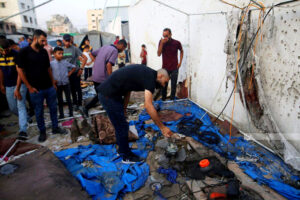
On 10th August, 2025, an Israeli strike on a press tent outside al-Shifa Hospital in Gaza City killed six journalists, among them the Al Jazeera correspondent Anas al-Sharif.
The Israeli military admitted targeting him and claimed he led a Hamas cell, an accusation the network had already rejected as baseless.
Two weeks later, a double strike on Nasser Hospital in Khan Younis, the second hitting as rescuers arrived, killed five journalists, including Reuters cameraman Hussam al-Masri and Mariam Abu Daqqa, a freelancer for the Associated Press.
Under international pressure, Benjamin Netanyahu’s office called it a ‘tragic mishap’.
The killings did not stop with the ceasefire.
On 8th April an Israeli drone struck the car of the Al Jazeera Mubasher correspondent Mohammed Washah in Gaza City, killing him, and on 30th September a drone strike killed Muhammad Abdel Aziz al-Najjar.
Israel has barred foreign journalists from entering Gaza independently since October 2023 and last month told its supreme court that they still could not enter without a military escort.
Al-Saadi ended his dispatch with the camp he grew up in. ‘The camp is no longer what it once was,’ he wrote, ‘and neither are we’.