
IRAN’S Foreign Ministry spokesman warns about the implications of the Israel’s rampant incursions into Syria and Tel Aviv’s territorial ambitions in the Arab country for the broader West Asia region’s security.
Esmaeil Baghaei was speaking at a press conference on Monday, identifying the issue as a ‘shared regional concern’, and underlining the importance of stability as a region-wide imperative.
The official explained that Syrian security was inseparable from that of the wider West Asian stability, singling out the continued Israeli ‘acts of aggression’ and the recent appearance of senior Israeli officials inside Syria’s occupied parts.
‘One of the key, shared anxieties among regional nations is the continuation of attacks by the Zionist regime against Syria,’ Baghaei said, adding that Tel Aviv had pushed deeper into the country ‘over recent weeks’.
Baghaei underscored that ‘the issues in the region are all interconnected’, naming ‘tragic (Israeli-manufactured) crises’ in the Gaza Strip and Lebanon as cases in point.
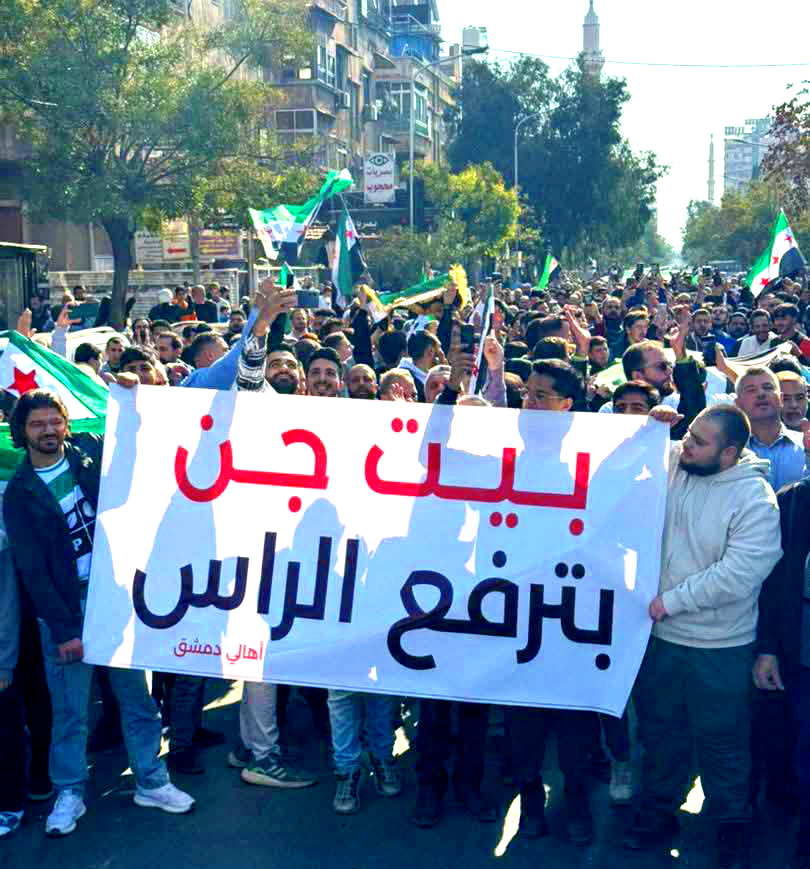
Last year, the Israeli regime backed up increasingly ferocious onslaughts throughout Syria by the so-called Hay’at Tahrir al-Sham (HTS) Takfiri terrorist group with airstrikes targeting the country’s civilian and defensive infrastructure.
The HTS-led militants toppled the government of President Bashar al-Assad as a result.
Various reports have shown that, during the escalation, the regime conducted more than 1,000 airstrikes on the Syrian territory and over 400 ground raids into the south.
Following the collapse of the Assad government, Tel Aviv also widened its grip over the occupied Golan Heights by taking control of a demilitarised buffer zone, in defiance of a 1974 Disengagement Agreement.
Last month, senior Israeli officials, including Prime Minister Benjamin Netanyahu, visited the buffer zone, prompting expressions of alarm on the part of the United Nations.
The spokesman dismissed the idea that Saudi Arabia was acting as a mediator between Iran and the new regime in Syria.
Tehran rather consults with Riyadh on issues concerning Syria, not in order to open ‘new (communication) channels’, but rather towards fostering regional security awareness and collective solutions.
‘Our dialogue is not about creating a bilateral conduit, but about contributing to regional and security conditions and ensuring mutual understanding of emerging perspectives,’ Baghaei said.
He emphasised that such diplomatic engagement has become ‘a fixed agenda within Iranian diplomacy’, involving Saudi Arabia as well as other member states of the Arab League.
In the same context, the official stated, Saudi Deputy Foreign Minister Saud bin Mohammed Al-Sati recently travelled to Tehran, holding talks with Iranian officials that focused on Syria.
Baghaei described the United States as the ‘largest threat to international peace’, citing repeated coercive pressure against Venezuela, Cuba, and Nicaragua as well as American rhetoric targeting Brazil and Mexico.
He highlighted unprecedented US demands such as closure of Venezuela’s national airspace, which he called a breach of global aviation safety norms.
The official also denounced diplomatic threats towards South Africa, including attempts to influence its participation in the G20 Summit.
He, meanwhile, condemned Washington for enabling the Israeli regime’s aggression in Syria, Gaza, and Lebanon, warning that ‘the US’s law-breaking is becoming a global template for some other actors’.
Baghaei also condemned Australia for labelling the Islamic Revolution Guards Corps (IRGC) as a ‘terrorist entity’, calling the decision ‘legally baseless and shaped by Israeli intelligence inputs’.
He pointed to statements by regional police authorities in Sydney confirming no Iranian link to attacks on Jewish community sites, and referenced similar claims previously rejected by officials in Mexico as well as recent cases in Africa.
‘We urge all nations to be alert to Israel’s systematic efforts to poison Iran’s foreign relations,’ he said.
The spokesman addressed the Israeli regime’s constant warnings about alleged potential of emergence of an additional regional crisis, saying the nature exhibited by the regime over the past eight decades had featured constant crisis-engineering.
He added that the Islamic Republic draws on the strategic legacy of the 12-day-long defensive and retaliatory operations staged by the country against an imposed and illegal war by Tel Aviv and Washington in June, stressing that Tehran was ‘fully prepared for any contingency and will prevent Israel from exporting insecurity into Iran’.
Baghaei affirmed the importance of the rail route linking Iran and China, saying the project enjoyed ‘shared political will among all involved states for fast operationalisation.’
He confirmed active coordination between Iran’s Ministry of Roads and Urban Development and Beijing, noting ‘productive recent talks’ and expressing hope for a near-term breakthrough on relevant implementation.
- President Masoud Pezeshkian has expressed Iran’s readiness to deliver humanitarian aid to Indonesia, after catastrophic floods and landslides left widespread devastation across the Southeast Asian nation.
In a message to Indonesian President Prabowo Subianto on Monday, Pezeshkian said he was deeply saddened by the tragedy, which has claimed lives and left many injured, in the ‘friendly and brotherly’ Muslim country.
‘The government of the Islamic Republic of Iran announces its full readiness to provide humanitarian and relief assistance to the people in affected areas. It also hopes that, with the grace of God, the consequences of this natural disaster will be swiftly overcome and conditions will be normal,’ he added.
Pezeshkian also extended his condolences, on behalf of the Iranian government and people, to President Prabowo and the nation of Indonesia over the devastating disaster.
He prayed for divine mercy for people who lost their lives in the cyclone-driven downpours and wished a swift recovery for the injured.
Heavy rainfall unleashed widespread flooding and landslides in parts of Indonesia, Sri Lanka, Thailand, and Malaysia, killing at least 1,150 people and leaving hundreds more missing.
Indonesia’s disaster-mitigation agency says the death toll has climbed to 604, with entire homes swept away and thousands of buildings submerged. Another 464 people remain missing as rescue teams continue searching through devastated areas.
Meteorologists say the current extreme weather in Southeast Asia may have stemmed from the interaction of two active systems, Typhoon Koto in the Philippines and a rare tropical cyclone that formed in the Malacca Strait, Cyclone Senyar.
Meanwhile, Iranian Foreign Minister Abbas Araghchi says it is the United States that must return to diplomacy with the Islamic Republic by regaining its trust.
During a phone conversation on Monday, Araghchi and Japan’s Minister for Foreign Affairs Motegi Toshimitsu discussed the latest developments in bilateral relations and international issues.
The Iranian minister informed his Japanese counterpart on Tehran’s stance regarding its peaceful nuclear programme and the moves by the United States and European troika – Britain, France, and Germany – in this regard.
Iran had held five rounds of talks on a replacement for the 2015 nuclear deal before the US-Israeli airstrikes on the country and its nuclear facilities in mid-June.
The United States and its European allies have repeatedly called for any future agreement to address not only Iran’s nuclear activities but also its ballistic missile programme. Tehran has consistently rejected that demand, insisting its military capabilities are non-negotiable.
On August 28, the European trio invoked the ‘snapback’ mechanism to restore UN sanctions, further complicating diplomacy to resolve tensions.
Araghchi also offered his congratulations once again to Motegi on his appointment as Japan’s foreign minister and expressed hope that Tehran and Tokyo would continue close and effective cooperation, given the history of constructive mutual ties.
The Japanese foreign minister, for his part, reiterated his country’s commitment to playing a constructive role in promoting peace and stability in West Asia.
Motegi said Japan supports political initiatives to resolve international issues.
According to a press release by Japan’s Ministry of Foreign Affairs, Motegi emphasised the need for the resumption of talks between the United States and Iran toward a resolution of Iran’s nuclear issue.
He called on Iran to immediately resume full cooperation with the International Atomic Energy Agency (IAEA).
On September 9, the Iranian foreign minister and IAEA Director General Rafael Grossi reached an agreement on practical modalities to resume cooperation after a meeting in the Egyptian capital of Cairo.
It came after the Iranian Parliament unanimously passed legislation requiring the administration to suspend all cooperation with the IAEA following the Israeli-US aggression against three nuclear sites in a grave violation of the United Nations Charter, international law, and the Nuclear Non-Proliferation Treaty (NPT).
However, the IAEA’s Board of Governors narrowly approved an anti-Iran resolution on November 20, prompting Tehran to declare the Cairo agreement null and void.