
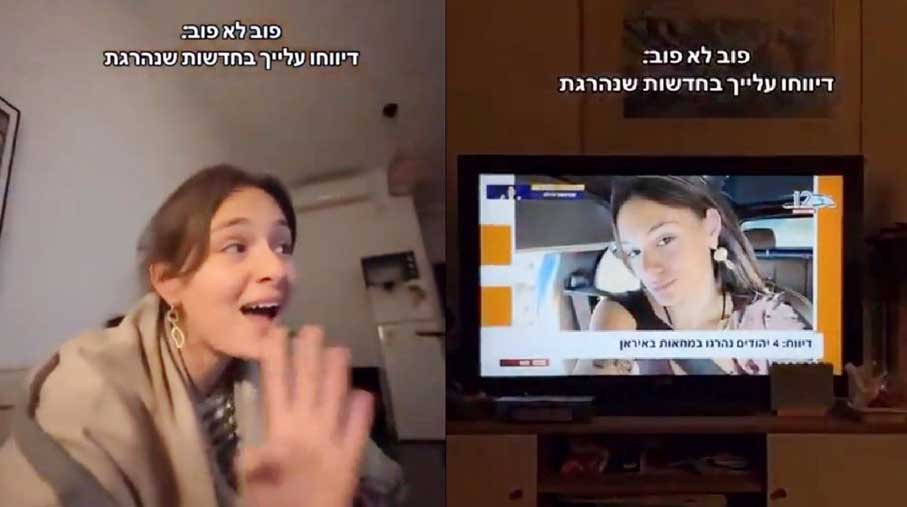
IRANIAN Foreign Ministry spokesman Esmail Baghaei says the Israeli media is running a campaign of fabricated stories regarding casualties in recent terrorist riots in Iran, citing a viral video in which a Hebrew-speaking woman debunks Israeli reports that she had been killed.
Baghaei shared the video on X (formerly Twitter), stating that Israel’s Channel 12 had broadcast the woman’s photograph, identifying her as a victim of violence inside Iran.
In the clip, the woman, identified as Noya Zion, displays her own picture on a screen and confirms that she is alive, safe at home, and has never travelled to Iran.
In his post, Baghaei remarked that the case was not much of a ‘surprise,’ characterising it as a reflection of a broader pattern of disinformation.
He argued that the incident demonstrates how ‘fake characters are posthumously recruited for the “rule of lies”,’ describing the tactic as part of a ‘systematic, Hitler-fashioned campaign of Große Lüge, disinformation, and false narratives against the Iranian nation.’
Große Lüge is the German term for the ‘Big Lie,’ a propaganda technique originally coined by Adolf Hitler that involved the deliberate and gross distortion of the truth to manipulate public perception into believing falsehoods.
Hitler accused the Jews of using the technique against Germany and triggering World War II, which resulted in a big loss for the European country.
Iranian officials have repeatedly criticised Western media outlets for circulating mass-scale false reports regarding casualties.
They argue these reports are intended to tarnish the country’s international image.
Certain Western reports have claimed up to 80,000 deaths occurred after what they label as ‘peaceful protests’ were suppressed by security forces.
But official Iranian records tell a different story. According to a recent official report, 3,117 people lost their lives in the riots.
Of that total, the government identifies 2,427 as ‘martyrs, innocent civilians, and security personnel killed by terrorists’.
Iranian officials have blamed the violence on foreign-backed terrorist groups, including the Mojahedin Khalq Organisation (MKO) and the monarchists, as well as armed separatist groups.

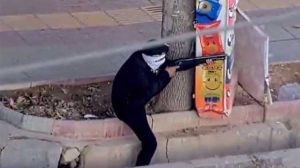
On January 8th and 9th, these groups launched a wave of armed attacks intended to create mass casualties and destabilise urban centres in various cities across the country.
For more than four decades, Western sanctions have exerted considerable pressure on Iran’s economy with the aim of provoking public anger against the government – a strategy openly admitted by US Treasury Secretary Scott Bessent at the Davos summit last week.
Late last month, residents in several cities took to the streets to protest against soaring prices, market instability, and the growing strain on households – caused by these sanctions.
These protests, which first started in Tehran’s Grand Bazaar, were infiltrated by organised groups connected to foreign intelligence networks, primarily those of the United States and Israel.
The armed rioters and terrorists carried knives, firearms, and incendiary materials, and moved through the streets targeting public property, religious sites, clinics, banks and commercial areas.
The northern province of Gilan, particularly its capital Rasht, experienced the most severe unrest. On January 8th, rioters unleashed the most destructive violence the city had ever witnessed.
That night, foreign-backed terrorist groups targeted Rasht’s historic urban core. Local authorities and eyewitnesses reported the burning of dozens of mosques, government offices, bank branches, and nearly 400 shops within the city’s famed bazaar.
Among the attacked sites was the Imam Sajjad Clinic, a public medical centre serving nearby neighbourhoods.
Nurse Marzieh Nabavi-Nia tragically lost her life, burned alive after rioters set fire to parts of the building and blocked streets, exacerbating the devastation.
Accounts from local witnesses and Nabavi-Nia’s colleagues describe a rapid, coordinated attack by heavily armed terrorists taking instructions from abroad.
A group of foreign-backed armed rioters ambushed the Imam Sajjad Clinic, set the building ablaze, and blocked rescue teams from entering for hours.
Inside, panic spread through the wards. Staff shouted warnings, urging one another to flee as smoke filled the hallways.
Yet, according to those present, 31-year-old nurse Nabavi-Nia remained at the bedside of a child still connected to an IV line, even as the fire advanced.
‘Come on, go! They’re coming!’ a colleague reportedly told her. ‘Let this child finish; then I’ll come,’ Nabavi-Nia replied.

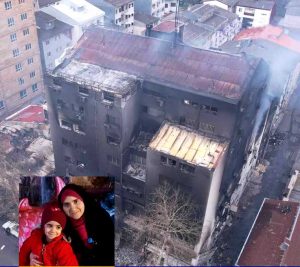
As the fire intensified, escape routes were cut off. While staff and local residents managed to rescue four patients and medical personnel, the young nurse was trapped inside.
According to evidence, the rioters acted with support from foreign intelligence networks, and the attack on the clinic was part of a coordinated effort spanning multiple provinces.
Speaking at her sister’s funeral, Masomeh Nabavi-Nia held the President of the United States, Donald Trump, directly responsible for her sister’s tragic death.
‘Since the 12-day war, he is officially responsible for military operations against the people of Iran,’ she stated.
Masomeh also identified the son of the Shah, Reza Pahlavi, calling him a foolish and treacherous ‘prince’, responsible for her sister’s death
‘He is responsible for the deaths of the victims of last Thursday and Friday in our Iran,’ the grief-stricken sister said.
Nabavi-Nia’s brother, Majid Nabavi-Nia, described the moment the family confronted the reality of the attack and his sister’s death.
‘When we saw her small coffin, we understood the scale of what had happened,’ he said, describing the shock and grief that swept over them as they realised how the attack had claimed the life of their sister, who was devoted to her family.
Nabavi-Nia was the youngest in her family and the mother of a three-year-old daughter Zainab. Her mother, Mariam Mirzaei, described her as studious, kind-hearted, and deeply committed to her work.
‘Marzieh completed an internship at Al-Zahra Hospital during the COVID-19 pandemic before joining Imam Sajjad Clinic,’ Mirzaei said in a choked voice.
Her father, Mohammad Nabavi-Nia, said she had studied midwifery and nursing but chose to work as a nurse.
‘She felt the profession would help her serve the distressed. She saw service to patients as her responsibility,’ the grieving father told the media.
Her family describes the young woman as someone who saw her role as a nurse as more than a job.
They recall that Nabavi-Nia treated every patient with the same sense of duty she showed at home, often staying beyond her work hours to ensure no one was left unattended.
Her commitment to care was an extension of her character, her family stated.
In the days following the gruesome act of terrorism, people gathered at the site where Imam Sajjad Clinic once stood, offering and condolences. Nabavi-Nia’s husband was among those who came.
Their daughter, Zainab, tells her grandmother that she dreams of her mother drawing pictures for her. The three-year-old often asks about her mother, remembering the care and love she once received.
To her colleagues, Nabavi-Nia was a pillar of calm dedication.
They describe her as focused and composed even in the most demanding situations, consistently attentive to patients’ needs and willing to go beyond her duties to ensure proper care.
Staff recall how she remained steady with patients and stayed at her post even as the situation became increasingly dangerous.
Fatemeh Jafarpoor, a colleague who managed nurse scheduling, remembered speaking with Nabavi-Nia just hours before the terrorist attack.
When the clinic was attacked, Jafarpoor repeatedly called her number, desperate for a response.
‘She was on the eighth floor. She couldn’t speak clearly. She whispered, “Forgive me”,’ recalled Jafarpoor, describing her final moments. Jafarpoor said she learned of her colleague’s death at 3.00am.
She described Nabavi-Nia as the kind of nurse every administrator hoped to have – punctual, composed, and attentive to every detail.
‘She was committed to every patient she treated,’ Jafarpoor said.
The tragic death of Nabavi-Nia has come to symbolise the events of that night.
Locals point to her killing as a stark example of how quickly peaceful protests were hijacked by terrorist groups operating with support from US and Israeli intelligence agencies, leaving civilians and public institutions vulnerable.
Her death, alongside the destruction of mosques, government offices, banks, and hundreds of shops, highlights the human toll of these foreign-backed coordinated attacks and the peril faced by innocent Iranians caught in the crossfire of US-backed terrorism.
• See editorial