
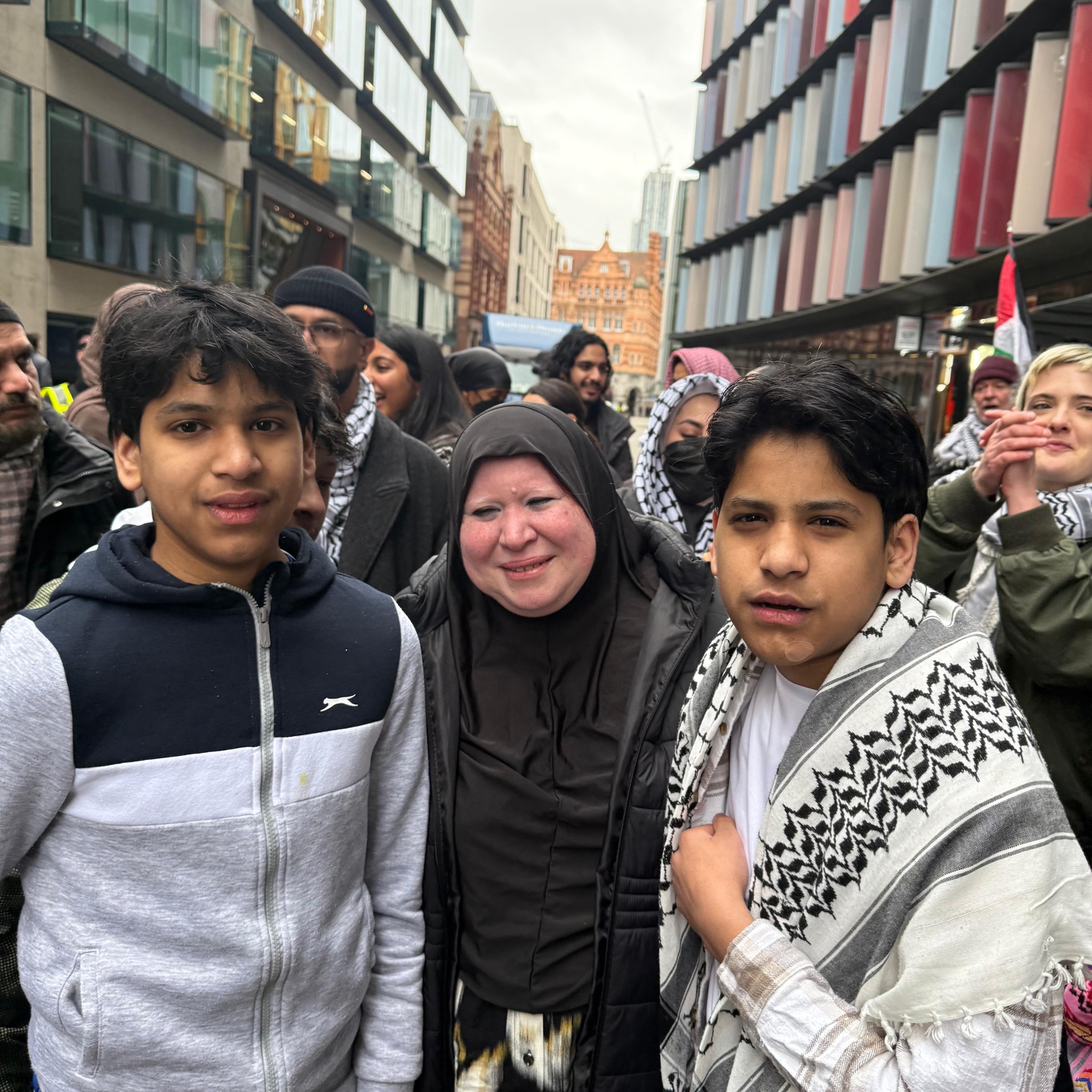
Special interview with Samina, the mother of Qesser Zuhrah and Salaam Mahmood, both hunger strikers who were arrested for criminal damage to an Elbit factory that makes arms for Israel
ON THE morning of 15 July 2025, our family was sleeping. My youngest son and I had been up and down with a tummy bug, but at 4:30 we were all in bed.
However, I was worried and had a feeling that something was wrong.
At 6:30 I heard banging on the door, and I called my son in the next room: ‘Zamen, can you go and check? There’s banging and something may be wrong with the neighbour.’
I was thinking there was something to do with the neighbours; I couldn’t imagine it was my door.
Before Zamen could check, my door was broken down and strangers entered my house.
I am a registered blind disabled person. I am severely partially sighted.
I was in my room with my 13-year-old twin boys and, with the banging and the breaking down of the door, they were terribly scared and ran towards me, trying to hide behind me.
Then strangers came into my room, four to five visored, helmeted strangers.
I thought they were some sort of gangsters and that they were going to kill me and my children.
I was begging them: ‘Don’t kill me, don’t kill my children.’
Then my older son came into my room and said, ‘Mum, calm down, this is the police.’
I was shocked. In all my life I had never thought the police would do anything like this, break into the home of a disabled mother and her children.
I was held in the room with my children.
What my son told me was more shocking still: they had come for my son Salaam Mahmood and taken him away.
(Zamen arrested first by mistake.)
My son was taken out of the house just in the shorts he was sleeping in. They wouldn’t even let him put on trousers.
They took Salaam away without me even seeing him.
The police then took me and Salaam’s brothers into the sitting room.

They said: ‘We are counter-terrorism police. We are here to arrest Salaam Mahmood in connection with the break-in at the Elbit site at Filton near Bristol.’
They said they had a search warrant and were going to search the flat.
They said the twins should get ready and go to school.
They told me that Hasnaat, who was sick and not going to school, and I should leave the house and stay out until 7pm.
I asked where we could go; they just said we had to go.
I said I had to use the toilet. They said yes, but they said I could not close the door. A policewoman held it half open.
There were 15 to 20 people in my flat, with four or five of them in the corridor.
As a woman and a Muslim woman, I was very upset.
I asked if I could get dressed, but they would not give me any privacy. I decided I would have to leave in my night clothes with a coat on top.
I asked to take my medicine with me. I had to explain my conditions before they let me.
This was intrusive and embarrassing.
We then had to unlock our phones and the police wanted to check our email, Facebook, Instagram and WhatsApp, even my bank account.
They then confiscated all our phones, including the children’s. They confiscated my bank cards, my purse and our keys.
Then we had to leave. I asked about my broken door; they said they would get someone.
We went downstairs and out into the square. I was crying.
There were some people around, some Peabody workers.
Our landlord saw us and they were very kind and gave us water and some sandwiches.
The school found out and a teacher came down to support us, and Peabody staff took us into their office.
A schoolfriend lent my boys his phone and they called their father.
At 10:30 an officer came down and handed over our phones.
Then we started to call friends. I told them the situation and that the police had come and arrested Salaam.
My children’s father arrived and brought us food, and at 3pm a police officer came and told us we could return to our flat.
When we returned, there were two big bags full of stuff and the police gave us a list of everything of ours they were taking.
They took all of Salaam’s older brother’s clothes, Salaam’s laptop and phone, one of my 13-year-old’s laptops, my hammer from my DIY box, and some clothes and shoes. I’m not sure what else they took.
They said the search was completed.
I had no idea where my son was and I could not contact or speak to my son for two days.
Then he called me and told me he was in Chelmsford Prison, a long way from where I live.
After a month I was able to visit my son. I’d never visited a prison before. It was a frightening experience for a mother.
After his arrest I was traumatised. Anyone walking in my corridor, anyone banging in the block, and I was afraid we were being raided again.
I could not sleep. I was taking sleeping pills and antidepressants from my doctor and all the time worrying about Salaam and my daughter Qesser Zuhrah.
I am the proud mother of two of the Filton 24, Qesser Zuhrah and Salaam Mahmood.
My daughter Qesser Zuhrah was arrested in November 2024 for the same charges.
At that time, she was 19 years old. She became the UK’s youngest political prisoner.
I didn’t know; my children didn’t tell me until 20 June 2025.
My children were worried about me and my family problems.
Qesser was away at university. I was worried I hadn’t seen her and she hadn’t visited her brothers.
Eventually, though, a family friend told me my daughter was in prison and Salaam confirmed it was true.
On 30 June, Salaam and I went to Woolwich Crown Court to attend her court hearing.
On 1 July Salaam went to Birmingham to arrange his university accommodation and I attended court alone.
Three days later Salaam came home and, as a family, we were all in a traumatised situation because of Qesser’s arrest.
Then less than two weeks later they arrested Salaam.
Qesser was a very good student at school and was studying at UCL, one of our best universities.
Salaam was at the University of Birmingham, a leading university for computer science.
My children were also brought up to care about right and wrong, other people and humanity.
They learned this at home, at school and in our society.
They have been charged with helping to destroy machines that kill children, that Israel is using every day in Gaza.
In fact, they have been charged with standing up for what is right.
Qesser has spent 15 months in prison without trial, Salaam eight months.

Qesser went on hunger strike on 2 November with seven co-defendants for 48 days.
It was very brave of all of them, but I was very afraid. Qesser had already been in prison for a year, her health was suffering and her treatment at Bronzefield was very bad.
On day 46 her condition was deteriorating; she was lying on the floor of her cell, and an ambulance was not called for 24 hours.
As Qesser lay in her cell, I was confined to bed with migraine.
As Qesser was on hunger strike, Salaam was moved to Belmarsh, a prison with a bad reputation but near to my home so I could visit.
Then, just before Ramadan started, an important time for Muslims and our families, I got a call at 8am from Salaam who said they were moving him, but he didn’t know where to.
Later that day we found out he had been taken back to Chelmsford.
With all of this, in January 2026 the first trial of the first six of the Filton 24 was ending.
They were found innocent of the most serious charge of aggravated burglary.
The jury didn’t reach verdicts on the lesser charges, but bail with severe conditions was granted to the six and to the rest of the Filton 24, excepting Sam Corner, including Qesser and Salaam, and I could go to Chelmsford and collect my son Salaam.

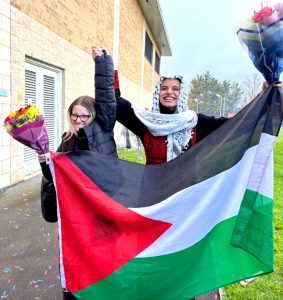
Qesser was collected by her friends and supporters at Bronzefield.
While I was enjoying the freedom of my children and hoping this meant well for Qesser and Salaam, the Government decided to retry the six defendants for criminal damage.
This time the prosecution somehow secured four convictions, and four people are now back in prison awaiting sentencing on 12 June.
Qesser’s trial is in September and now I am fearful for her and for Salaam.
The Elbit factory was manmade. The fences, the buildings and the weapons they made were all manmade.
Everything we make we can remake, but these weapons were made to kill people: men, women and children, irreplaceable, loved and unique.

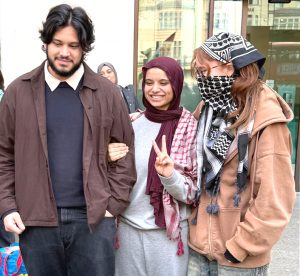
Destroying property and weapons to save lives should not be a crime; it should be a duty. In fact, these weapons should not be being made in Britain anyway.
I am very proud of my children and their values.
I have met and spoken with many of the Filton 24; they are all fine, brave young people.
They are accused of risking their liberty and their futures to save lives in Gaza and of trying to shame our complicit government into stopping support for Israel’s genocide against Gaza and the Palestinian people.
I support my children, I support Palestine and I support the struggle.