
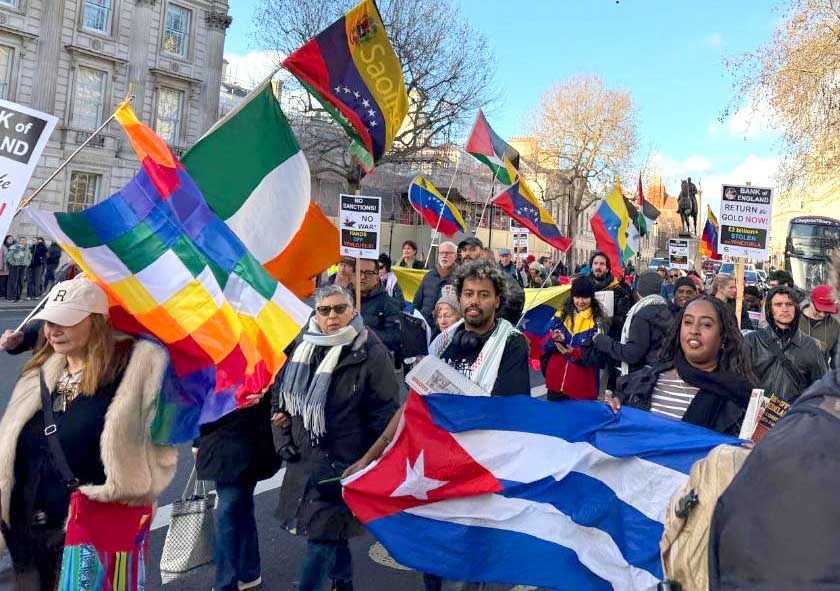
From Venezuelan journalist Carolina Graterol
‘WHEN I first arrived to London, in the early 90s, I noticed something unusual: mangos and beef from Venezuela being sold at Harrods!
‘Little did I know that this discovery would start an investigation where I found out that the Vestey Group, a meat products company owned by Britain’s aristocratic Vestey family, had cattle ranches in Venezuela.
‘In 2005 the late president Hugo Chávez nationalised four Vestey cattle ranches and, in 2010, Chávez ordered the confiscation of 717,000 acres (350,000 hectares) from this British company, a move that escalated disputes over compensation for earlier seizures and for which the Maduro government had to pay $104.6 million dollars compensation in January 2021.
‘At the time, Chávez said: “This is social property, it cannot be converted, as they have done, into property for just a few people, so they can enrich themselves whilst polluting waterways and rivers”.
‘It is important to note that Samuel Vestey, 3rd Baron Vestey, was a close friend of the late Queen Elizabeth II and King Charles, while his wife, Lady Celia Vestey, was a godmother to Prince Harry. So Chávez was really talking about a very few…
‘This incident is one of the many initiated by the radical Land Law from 2001 and another Law for Land in urban areas from early 2002 passed under presidential decree by Hugo Chávez, that allowed land distribution from above in order to empower grassroots movements.

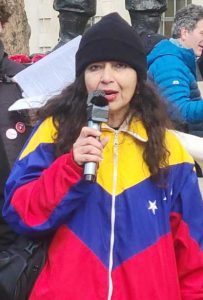
‘I started talking about land because this element is essential to understand the communal movement in Venezuela.
‘It is the territorialisation of the communes that defines the geographical space where a community lives, organises itself and exercises its sovereignty and participation, with the aim of satisfying its needs, self-managing public policies and developing its culture and local economies. I want you to reflect on the geopolitical implications of this for a later discussion….
‘In reality a commune is a much more sophisticated neighbours’ organisation and, in many ways, similar to the ones that already existed among the poor in Caracas and other cities and towns in Venezuela (called collectives)
‘The urban land committees (CTU) were the first ever tools for popular participation, which allowed barrio residents to gain formal ownership over land they had occupied and improved.
‘These committees made collective organisation a precondition to individual ownership. This was done in the hope to avoid these social demands for land to end up reinforcing capitalist private property.
‘Other mechanisms, like the technical water tables, tried to bring neighbours together to collectively manage local access to clean water, just to put an example.

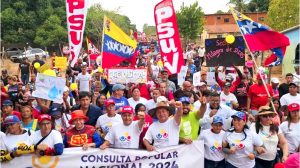
‘It is a mistake to believe that the Venezuelan State created the communes. The Communal Councils and communes were enshrined by law in 2006 and 2010, but before that people had been organising from below by building radically democratic and participatory self-government from the bottom up.
‘However, the distribution of land by the Bolivarian Revolution, contributed to the economic justice that is a prerequisite for the attaining of political freedom for the majorities, a thesis supported by postcolonial writers such as Mahmoud Mamdani, the Columbian University professor and father of the recent elected mayor of New York City.
‘Sadly, Zohran Mamdani is repeating the same lies about the Venezuelan government and President Nicolás Maduro that we see daily in the big media.
‘I went to Venezuela as International Observer for the Presidential elections in 2024. I was a witness of the violence orchestrated by Maria Corina Machado.
‘At one point, we were under a marquee at the Venezuelan Electoral Council after the elections. At one point the staff from the Electoral Council had to take us to a secure place in the building, as hordes of violent thugs, paid for by Maria Corina, were coming with bullets and Molotov bombs to attack us.
‘In my city of birth in Venezuela a group of thugs toppled down a statue of an indigenous Chief called Coromoto.
‘My aunt sent me the video where young people destroyed a symbol of resistance and independence against our Colonial past.
‘A cousin also sent me a video where policemen were running away from a group of violent protesters armed with weapons.
‘I was relieved when the government put all those thugs in jail after the three days of rampant violence the country witnessed, during which innocent people lost their lives, and schools, clinics, polling stations, hospitals, food storage centres, tube stations, trains and buses were burnt down.
‘Finally, Trump might be right when he says Venezuela is a threat to the US – as Obama told us in his infamous executive order in 2015 – because Venezuela is demonstrating to many people in our planet that another world is possible. One where the governments take care of the needs of the people rather than making sure the billionaires are happy.’