
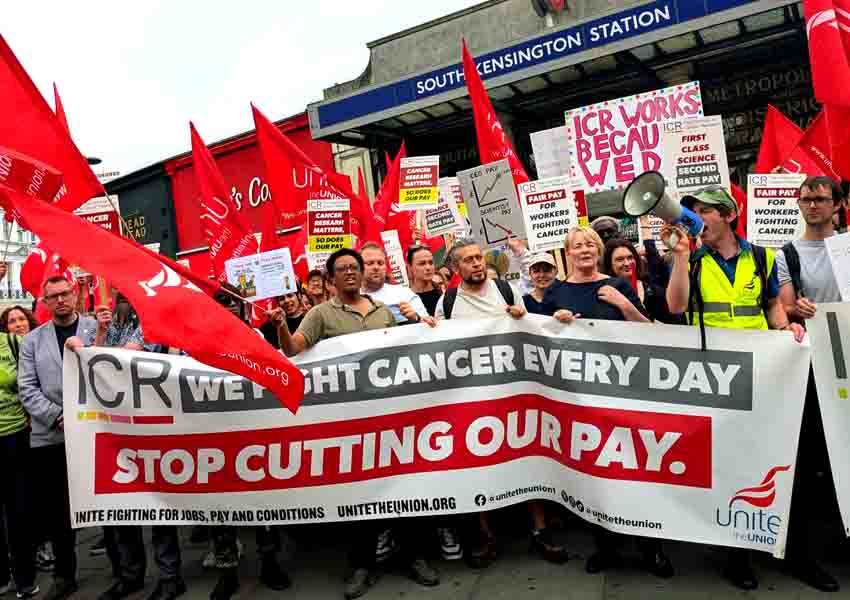
AROUND 200 workers rallied at the the Institute of Cancer Research (ICR) near South Kensington Tube station yesterday, on their final day of strike action in the first industrial dispute in the institute’s history.
Unite members chanted, ‘We know where the money is. What do we want? Fair pay. When do we want it? Now. We fight cancer every day.’
Researchers, laboratory support staff and site workers have rejected a 3.75 per cent pay offer, after a performance-based pay model imposed in 2019 stripped out the annual increments that once rewarded service.
Pay has fallen by 16 per cent in real terms over six years, while the institute sits on hundreds of millions of pounds in reserves and pays its chief executive £457,000, around ten times the average wage on site.
Leanne Carmichael, a scientific officer at the ICR for ten years, said management had promised the new model would track the cost of living and recognise long service.
‘Lo and behold, here we are, and look what’s happened: they haven’t kept their end of the deal,’ she said. ‘Here we are, 16 per cent worse off. We are not able to make ends meet.
‘We are not able to put food on the table. We are not able to send our kids to after-school clubs. It is unacceptable, and I’ve had enough.’
Unite general secretary Sharon Graham accused the employer of crying poverty while feathering its own nest, noting the chief executive’s pay had risen by more than 50 per cent in five years as workers’ pay was suppressed.
‘The money is there. We know they have the reserves,’ she said. ‘If he went on strike, nobody would notice. It’s only when you go on strike that people will notice, because you do all the work.’
Fire Brigades Union general secretary Steve Wright told the strikers their fight was every worker’s fight. He said firefighters were statistically more likely to develop cancer than the general public, and that the World Health Organisation’s recognition of that risk in 2022 rested on research by people like those on the picket line.
‘Your research has made our members safer,’ he said. ‘I’ll stand here with practical solidarity.’
Justice for Grenfell campaigner Moira Samuels marked the ninth anniversary of the fire, which killed 72 people, 18 of them children.
She said the trade unions had held the bereaved and survivors together through the years that followed, and that many who escaped the fire now feared cancer from its effects.
‘Why should profits always drive what’s important for our class?’ she asked.