
THE UNITED States has no option but to abandon its excessive demands and fully respect the rights of the Iranian people – diplomacy is the only solution to the crisis, Iran’s Deputy Foreign Minister Saeed Khatibzadeh has said.
He made the remarks in an interview with IRIB in Ankara, Turkey, on Monday, where he elaborated on the Foreign Ministry’s principal measures during the illegal US-Israeli war and negotiations between Tehran and Washington in the Pakistani capital of Islamabad.
Diplomacy, Khatibzadeh stated, is the sole solution to the ongoing crisis in the region.
‘The United States has tried war and may again imagine that it can achieve something by remaining on the path of war.’
Iran, he said, is resolute in defending its national security and territorial integrity and will never compromise in this regard.
Iran’s adversaries had sought to disintegrate the country and had lined up certain armed groups but they failed.
Khatibzadeh said: ‘The enemies thought they could create confusion among the Iranian people and then push them to act against their own country. However, the overwhelming majority of the people stood up against this.’
Iranians are facing a ‘vile’ enemy, whose scale of shamelessness, hostility, and crime is immeasurable.
‘Yet despite all this, a people, a nation, and a country like Iran has no choice but to emerge victorious in this national battle, in this national resistance. Defeat is not an option,’ he said.
The Iranian diplomat placed a premium on standing strong for the sake of an ancient history. ‘The will of a nation shows that it can come out victorious; and we will be victorious.
‘The great people of Iran know that the country does not act in blind obedience to orders, Khatibzadeh said.
The Islamic Republic, he added, moves along the path it has defined based on its own strategic framework.
‘We will continue our strong resistance to protect the high interests of this country and its people and we fear no threat.’
Khatibzadeh assured the Iranian nation that the Islamic Republic would accept no commitments beyond international law.
‘If the United States reaches this level of rationality, there will be no obstacle, and a mutual understanding can be reached very quickly. It seems, however, that the US currently does not intend to fully understand that matter.’
He said messages have been exchanged between Tehran and Washington and other countries are currently aware of Iran’s position.

The United States and Israel launched their illegal war of aggression against Iran on February 28. They assassinated Leader of the Islamic Revolution Ayatollah Seyyed Ali Khamenei and struck nuclear facilities, schools, hospitals and civilian infrastructure.
On April 8th, Iran’s Supreme National Security Council (SNSC) announced that there was an agreement to a Pakistan-brokered temporary ceasefire after the US accepted Iran’s 10-point proposal.
Senior Iranian and American negotiators held approximately 21 hours of talks in Islamabad on April 11 without reaching an agreement, with Iranian officials blaming Washington for its excessive demands and shifting positions.
With the two-week ceasefire set to expire on April 22, United States president Donald Trump announced that an American delegation would be in Islamabad on Monday for talks with Iran.
However, Iranian Foreign Ministry spokesman Esmail Baghaei told reporters on Monday that Tehran has no plans to take part in the talks in Islamabad, as tensions remain high with the US continuing its illegal blockade of Iranian ports.
The naval blockade, coupled with US excessive demands and shifting positions, have hindered progress in the talks.
After the recent imposed war and its outcome, and with the bitter experience of previous rounds of talks between Tehran and Washington, Iran has made one thing abundantly clear this time: it will not negotiate at any cost.
As the definitive victor in the 40-day war of aggression, which was launched in the middle of nuclear talks, Tehran is now setting the terms, not the other way around.
The party requesting a ceasefire this time is not Iran. It is the United States.
After exhausting its 47-year-old arsenal of political and military options, Washington has failed to achieve any of its stated objectives. It has gained nothing. In fact, it has lost on both the military and diplomatic fronts. And it has lost the battle of narratives as well.
The Americans forfeited the right to transit the Strait of Hormuz – a right they possessed before their latest military adventure against Iran. They have lost leverage over global energy markets. They have lost their military bases across West Asia.
And perhaps most significantly, they have lost the last fragments of their hegemony.
The United States entered this war with lofty ambitions. It leaves with empty hands.
That outcome is partly due to President Donald Trump’s deeply flawed foreign policy priorities and miscalculations, and partly due to the Zionist lobby’s pressure on his administration.
As is now widely known, the ‘Israel First’ policy has completely overshadowed ‘America First’.
The Trump administration has effectively declared itself in service to the largest American military outpost in West Asia – not to the American people.
The welfare of ordinary Americans ranks near the very bottom of this administration’s agenda, more so than under any previous US administration in history.
That dynamic was on full display in Trump’s social media post last Sunday. He lavished praise on the Israeli regime, calling it a ‘great ally’ of the US – ‘whether people like it or not.’
Trump knows Americans don’t like it. That simply doesn’t matter to him.
Despite the losses – both in terms of the leadership and infrastructure – Iran holds the upper hand in this war, which continues despite the smokescreen of the ceasefire.

The ‘regime change’ fantasy, which has failed repeatedly over the past 47 years – including three times in the last year alone – was finally nipped in the bud during this war.
The martyred Leader of the Islamic Revolution’s successor was elected by the Assembly of Experts in the middle of the war, despite the enemy’s attempt to bomb the gathering.
The martyred military commanders were also quickly replaced. That is because the Islamic Republic of Iran does not depend on individuals. It depends on institutions, and the institutional framework remains untouched by assassinations.
The way Iran retaliated after the initial wave of aggression on February 28 demonstrated how the system only grows stronger and more resilient in the face of adversity. Iran not only punished the enemy – two major military powers – but forced them to seek a ceasefire.
Today, Tehran holds the initiative with full authority. It is a reality Washington refuses to fully acknowledge, even though it knows the realities on the ground all too well.
It’s not just Iran’s significant and remarkable gains on the battlefield that have caught the attention of military and political pundits across the globe; the popular and spontaneous mobilisation of people across the country has also sent a powerful message to the enemy.
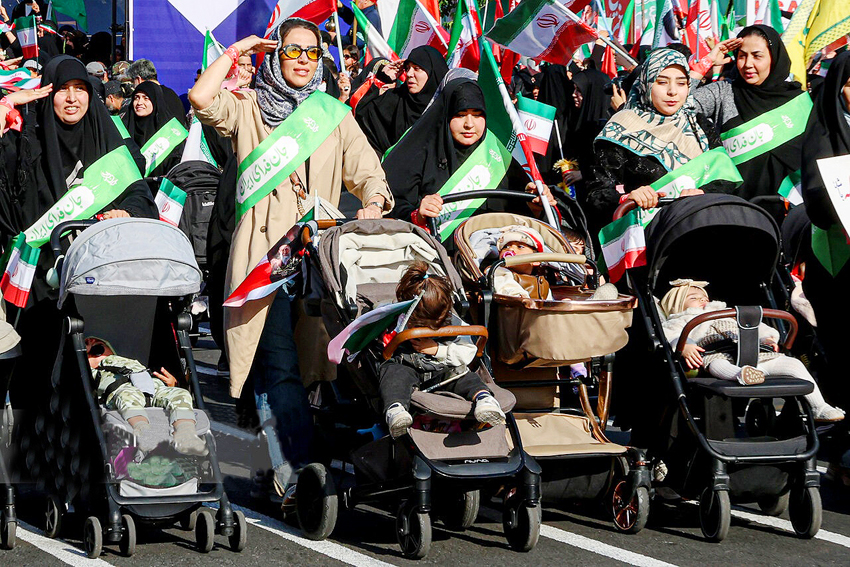
For over 50 days, millions of Iranians have been taking to the streets daily and nightly in unwavering support of the Iranian armed forces and the country’s leadership. This level of sustained public solidarity has no parallel anywhere else in the world.
In the United States itself, millions took to the streets to condemn Trump’s pro-war policies, while in the occupied territories, settlers are still refusing to leave their underground shelters.
Iran maintains – and now fully asserts – its undeniable sovereignty over the Strait of Hormuz, one of the world’s most strategic waterways, situated between the Persian Gulf and the Gulf of Oman, through which about 25 per cent of global seaborne oil trade and 20 per cent of global liquefied natural gas transits.
Before the 40-day war, it was free for all, including American vessels. But, as the Islamic Revolution Guards Corps (IRGC) Navy commander stated recently, it’s a ‘new order’ in the strategic waterway now, and everyone is obliged to comply.
As American political scholar Robert Pape wrote in a recent New York Times article, Iran has emerged as one of the world’s great powers after this war. Its global and regional credibility has been enhanced, and it is now an architect of a new regional and global order.
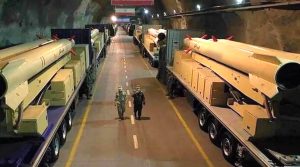
The Iranian armed forces demonstrated their defensive and offensive power in this war with unmatched capabilities on multiple fronts. They showed how asymmetric warfare can decimate the most powerful militaries, even those with huge military arsenals.
And, unlike the US and its regional proxies, Iran still holds many unused leverage cards, assets that have not yet been played. So there are more surprises in the pipeline.
The logic is simple and clear: the victorious party with the upper hand sets the conditions and defines the field. The defeated party comes to the table empty-handed, offering concessions, accepting terms, and begging for an off-ramp.
Iran understands this reality perfectly. It is the victor, both in strategic and military terms. Therefore, it will not – and should not – accept conditions from the losing side
In fact, Iran’s only motivation for any future negotiation is to force the US to submit to its conditions for a final and permanent end to the war.
Iran is not willing to simply extend the ceasefire and leave the window open for the aggressor. It wants the window shut.
This is why Tehran has shown no intention of hastily entering the next round of talks with the US, nor has it been swayed by American propaganda and media theatrics.